
{R}R Dev Notes
Found total of 29 articles.
Azure Front Door: a practical introduction
What Azure Front Door is, who it's for, what it costs, how it compares to Cloudflare and CloudFront, and a walkthrough of the settings that matter when putting it in front of an Azure App Service.
2026-05-11
Chapter 21: Decentralized Identity — DIDs, Verifiable Credentials, and OID4VC
Chapter 21 of the OpenID: Modern Identity series — decentralized identity: DIDs (Decentralized Identifiers) without a central authority, Verifiable Credentials with selective disclosure, and OpenID for Verifiable Credentials (OID4VC) as the bridge from centralized to decentralized identity.
2026-03-27
Chapter 20: Passwordless Authentication — Passkeys, WebAuthn, and the End of the Password
Chapter 20 of the OpenID: Modern Identity series — passwordless authentication: passkeys as friendly public-key credentials, WebAuthn as the underlying browser API, and the FIDO2 ecosystem including hardware security keys.
2026-03-26
Chapter 19: Observability and Operations — Identity You Can Actually Run
Chapter 19 of the OpenID: Modern Identity series — observability and operations for identity systems: structured authentication logging with correlation IDs, distributed tracing of login flows, and immutable audit trails aligned to regulatory requirements.
2026-03-25

OpenClaw Engineering, Chapter 8: Event-Driven Workflows
How OpenClaw agents spring into action automatically via hooks, webhooks, and TypeScript handlers—without waiting for human invocation. From internal events to CI/CD pipelines.
2026-03-23
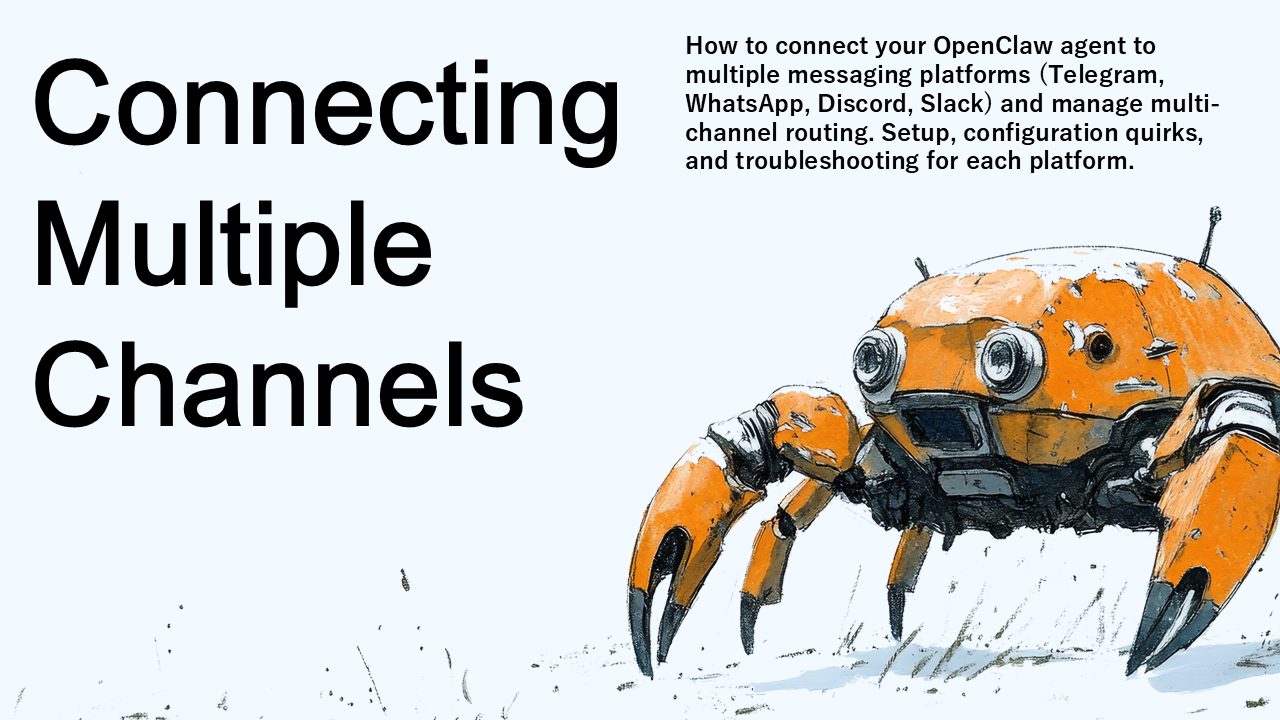
OpenClaw Engineering, Chapter 5: Connecting Multiple Channels
How to connect your OpenClaw agent to multiple messaging platforms (Telegram, WhatsApp, Discord, Slack) and manage multi-channel routing. Setup, configuration quirks, and troubleshooting for each platform.
2026-03-20
Chapter 13: Threat Modeling OpenID Systems — Thinking Like the Adversary
Chapter 13 of the OpenID: Modern Identity series — threat modeling for OIDC systems: token theft vectors and defenses, replay attacks and nonce validation, CSRF and state parameter mismanagement, redirect abuse and mix-up attacks.
2026-03-19
Chapter 12: User Lifecycle Management — Provisioning, SCIM, and the De-Provisioning Problem
Chapter 12 of the OpenID: Modern Identity series — user lifecycle management: JIT and bulk provisioning, SCIM for cross-system sync, de-provisioning done right, role mapping from IdP claims, and identity architecture for multi-tenant SaaS.
2026-03-18
Chapter 10: Single Sign-On at Scale — Identity as Infrastructure
Chapter 10 of the OpenID: Modern Identity series — running identity at organizational scale: corporate IdPs (AD, Entra ID), the CIAM vendor ecosystem (Okta, Auth0, Entra ID), multi-tenant isolation, account linking, and external user access.
2026-03-16

Chapter 9: SPA and Mobile Patterns — Auth in Hostile Environments
Chapter 9 of the OpenID: Modern Identity series — SPAs and mobile apps in hostile environments: XSS and CSRF defense, PKCE in the browser, the Backend-for-Frontend pattern, native app patterns, and refresh token rotation with reuse detection.
2026-03-15
Chapter 7: Your First OpenID Application — The Handshake, End to End
Chapter 7 of the OpenID: Modern Identity series — building a real OIDC login end to end: the minimal flow, state and nonce, strict redirect URI matching, sessions from tokens, and the three flavors of logout.
2026-03-13
Chapter 6: Discovery and Metadata — How Clients and Providers Find Each Other
Chapter 6 of the OpenID: Modern Identity series — how OIDC discovery, .well-known/openid-configuration, JWKS, and Dynamic Client Registration allow clients and providers to find each other without hand-crafted configuration.
2026-03-12
Chapter 5: Tokens in Depth — What's Actually in That JWT
Chapter 5 of the OpenID: Modern Identity series — what's really inside an ID Token, Access Token, and Refresh Token, how JWTs are structured, how to validate signatures correctly, and how DPoP and mTLS bind tokens to their legitimate holders.
2026-03-11
Chapter 3: Core Concepts — The Vocabulary of OpenID Connect
Chapter 3 of the OpenID: Modern Identity series — the IdP/RP/user triangle, claims and JWTs, the three OIDC token types, consent and scopes, sessions vs tokens, and the boundary between authentication and authorization.
2026-03-09
Chapter 2: From OpenID to OpenID Connect — How the Industry Got This One Right
Chapter 2 of the OpenID: Modern Identity series — tracing how the industry moved from the original OpenID and SAML through OAuth 2.0 to OpenID Connect, and when to reach for each standard.
2026-03-08
OpenID: Modern Identity for Developers and Architects — A 22-Part Blog Series
Introduction and index for the 22-part blog series based on OpenID: Modern Identity for Developers and Architects by Sho Shimoda — with links to every chapter from Why Identity Is Hard through Identity in AI Systems.
2026-03-06
Art of Coding, Chapter 15: Code as a Team Sport
Code as a team sport: shared ownership, documentation as craft, and respecting the reader. The human practices that make software sustainable and teams thrive.
2026-01-12
Art of Coding, Part VI: The Human Side of Code
The human side of code: collaboration, culture, and the practices that make software sustainable. How teams thrive when they value people as much as process.
2026-01-11
Art of Coding, Chapter 14: Code Reviews and Pair Programming
Code reviews as mentorship and collaboration. How to write for reviewers, offer critique with respect, and build a team culture grounded in feedback.
2026-01-10
Art of Coding, Chapter 13: Testing as a Design Discipline
Testing is a design discipline. How well-written tests reveal awkward APIs, improve code clarity, and become the most reliable documentation of system behavior.
2026-01-09
Art of Coding, Chapter 12: Version Control as a Storytelling Tool
Git is not just a backup system—it's a narrative tool. How clean commits and thoughtful branching strategies turn version control into a form of storytelling.
2026-01-08
Monitoring, Logging, and Telemetry|Mastering Microsoft Teams Bots 5.3
Learn how to monitor and support your Microsoft Teams bot in production using logging, Azure Application Insights, and alerts. This section shows how to track user events, diagnose failures, and create telemetry that makes your bot reliable and supportable.
2025-04-17

Teams App Manifest and Packaging|Mastering Microsoft Teams Bots 5.2
Transform your bot into a full Teams app. This section walks through how to create a Teams app manifest, add branding, define scopes, and package your bot into a distributable .zip file for sideloading, internal use, or submission to the Microsoft App Store.
2025-04-16
Deploying to Azure|Mastering Microsoft Teams Bots 5.1
Learn how to deploy your Microsoft Teams bot to Azure for production use. This section walks through setting up an Azure App Service, configuring environment variables, connecting to Bot Channels Registration, and testing your bot in the cloud.
2025-04-15

Localization and Multi-Tenant Support|Mastering Microsoft Teams Bots 4.4
Prepare your Microsoft Teams bot for real-world deployment. This section covers how to support multiple languages using localization, and how to safely handle multiple organizations with multi-tenant support — including tenant isolation, data security, and consent flows.
2025-04-14

Message Extensions|Mastering Microsoft Teams Bots 4.3
Learn how to build search- and action-based Message Extensions in Microsoft Teams. This section shows how to let users interact with your bot directly from the message composer — to search records, fill forms, or insert rich cards — all without leaving the chat.
2025-04-13
Bot Authentication and Identity|Mastering Microsoft Teams Bots 2.3
Learn how Microsoft Teams bots authenticate users and access secure data. This section covers SSO, OAuth 2.0, and the Microsoft Graph API, giving your bot the ability to understand identity and act on behalf of users—safely and seamlessly.
2025-04-07
Hello World Bot|Mastering Microsoft Teams Bots 2.2
Build your first Microsoft Teams bot with a simple Hello World response. This hands-on section walks you through using the Bot Framework SDK, setting up a local project with Node.js or .NET, using Ngrok to expose your endpoint, and testing your bot directly in Teams.
2025-04-06
Setting Up Your Environment|Mastering Microsoft Teams Bots 2.1
Start your Microsoft Teams bot development journey with a solid foundation. This section walks you through the essential tools—Node.js, .NET SDK, Ngrok, Azure CLI—and explains why setting up your dev environment the right way is critical to building bots successfully.
2025-04-05
Categories
Tags
Search Logs
Hello World bot 1194
Deploy Teams bot to Azure 1155
IT assistant bot 1151
Microsoft Bot Framework 1064
Teams bot development 1037
Teams production bot 1016
bot for sprint updates 1010
Teams app zip 995
Zendesk Teams integration 993
Microsoft Teams Task Modules 986
Bot Framework Adaptive Card 982
Bot Framework example 975
Task Modules 968
Teams chatbot 968
C 959
Teams bot tutorial 959
Azure CLI webapp deploy 958
Teams bot packaging 955
Bot Framework proactive messaging 948
Graph API token 947
Bot Framework CLI 941
Adaptive Card Action.Submit 936
Bot Framework prompts 924
Azure App Service bot 916
Microsoft Graph 915
Azure Bot Services 896
Adaptive Cards 886
Azure bot registration 883
ServiceNow bot 871
proactive messages 829
Development & Technical Consulting
Working on a new product or exploring a technical idea? We help teams with system design, architecture reviews, requirements definition, proof-of-concept development, and full implementation. Whether you need a quick technical assessment or end-to-end support, feel free to reach out.
Contact Us