
{R}R Dev Notes
Found total of 42 articles.
The Engineering of Intent, Chapter 38: Multi-Agent Conflict Resolution — Protocols for Agentic Tie-Breaking
Chapter 38 of The Engineering of Intent blog series. When multiple specialized agents block the same PR with incompatible demands, the answer is a protocol for Agentic Tie-Breaking. A teaser on triaging stacked concerns vs. real conflicts, three resolution protocols, Architect Agent design, and the four governance failure modes.
2026-05-24
The Engineering of Intent, Chapter 6: Autonomous Orchestration Frameworks
Chapter 6 of The Engineering of Intent blog series. Editors run one agent at a time; orchestration runs many. A teaser on task-specific personalities, memory banks, when to orchestrate (and when not), the 14,000-test case study, and the economics of multi-agent pipelines.
2026-04-22
Frictionless SaaS, Chapter 22: AI, Automation, and the Future of Frictionless Design
In the AI era, features are commoditized overnight. So what actually becomes defensible? A teaser for Chapter 22 of Frictionless SaaS, covering the AI-Era SaaS Framework and the Experience Moat — the only lasting competitive advantage left.
2026-04-12
Frictionless SaaS Chapter 16: The Power of Self-Service
Chapter 16 preview of Frictionless SaaS: the Self-Serve Maturity Model, the Independence Principle, and how self-serve billing and account management turn scalability into a competitive moat.
2026-04-06
Frictionless SaaS Chapter 15: Continuous Optimization and the Data-Intuition Balance
Chapter 15 preview of Frictionless SaaS: the Experiment-Learn-Ship cycle, the Data-Intuition Balance, staged rollouts, and the retention operating model that turns improvement into a flywheel.
2026-04-05
Frictionless SaaS Chapter 14: Experience Observability and Friction Detection
Chapter 14 preview of Frictionless SaaS: experience observability, synthetic and real-user monitoring, and the friction detection engine that surfaces retention issues before they become churn.
2026-04-04
Frictionless SaaS Chapter 13: SaaS Metrics, Cohort Analysis, and the North Star
Chapter 13 preview of Frictionless SaaS: the SaaS Metrics Pyramid, Net Revenue Retention, cohort-based optimization, and how to choose a North Star that actually drives retention and revenue.
2026-04-03

Frictionless SaaS, Chapter 6: The Activation Event - The One Metric That Predicts Everything Else
Chapter 6 of the Frictionless SaaS blog series. Activation isn't a moment - it's a specific, measurable event. How to define it, why precision matters, and how the Micro-Success Ladder turns a single activation action into a path most users will actually walk.
2026-03-27
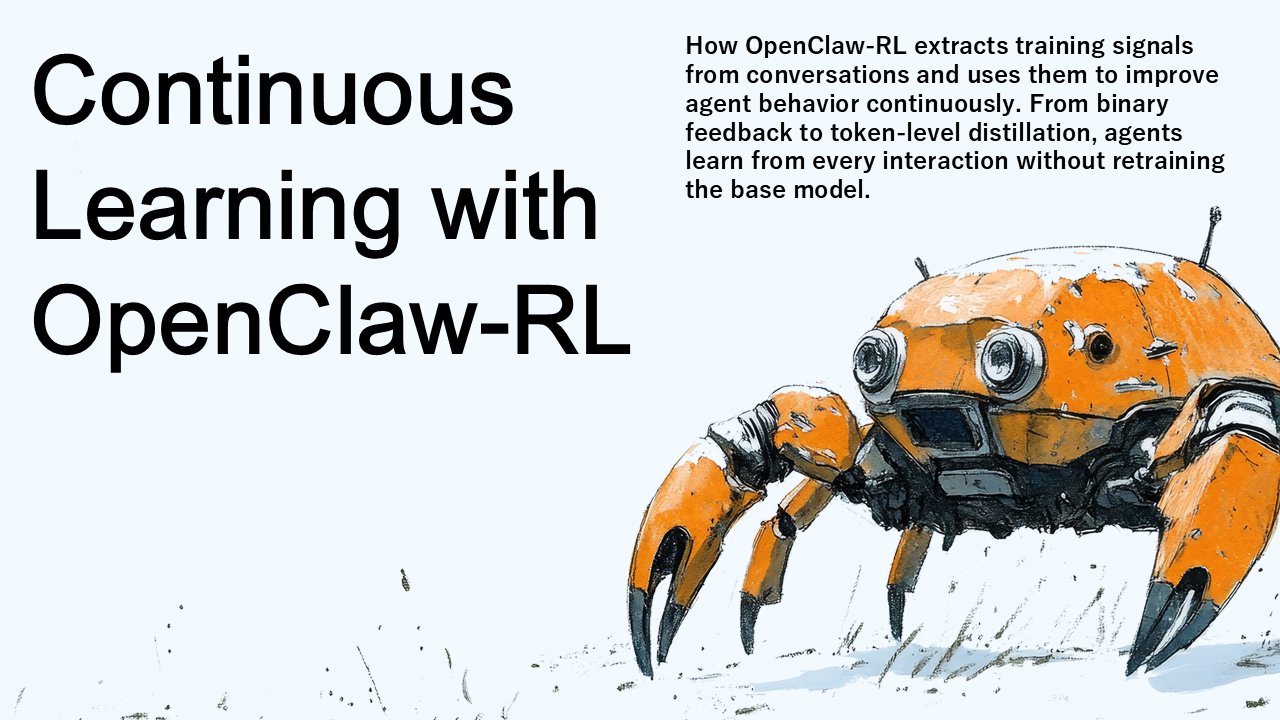
OpenClaw Engineering, Chapter 11: Continuous Learning with OpenClaw-RL
How OpenClaw-RL extracts training signals from conversations and uses them to improve agent behavior continuously. From binary feedback to token-level distillation, agents learn from every interaction without retraining the base model.
2026-03-26
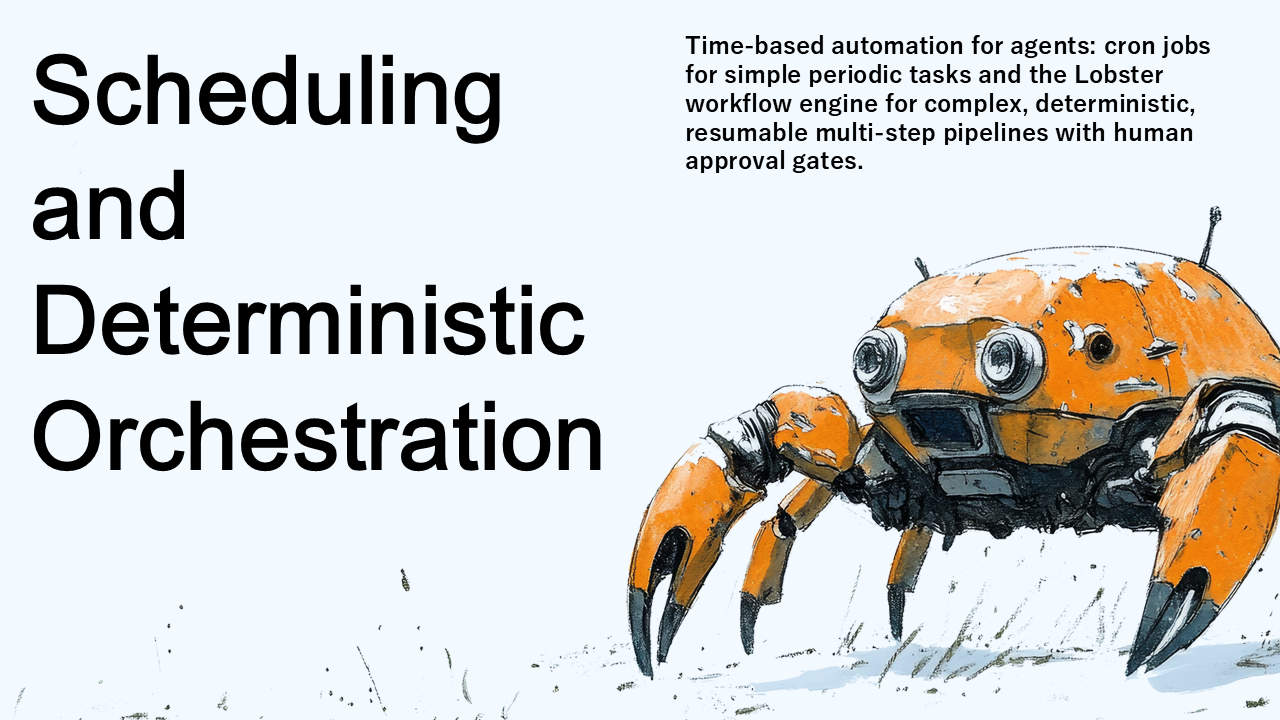
OpenClaw Engineering, Chapter 9: Scheduling and Deterministic Orchestration
Time-based automation for agents: cron jobs for simple periodic tasks and the Lobster workflow engine for complex, deterministic, resumable multi-step pipelines with human approval gates.
2026-03-24
Frictionless SaaS: The Complete Series Index — Your Guide to All 24 Chapters
The complete reader's guide to the Frictionless SaaS blog series. An introduction to the thesis — that in the AI era, features are commoditized and experience is the only lasting competitive advantage — plus direct links to all 25 posts across the 24 chapters of the book.
2026-03-20
Chapter 19 – Measuring AI Effectiveness
Chapter 19 of Master Claude Chat, Cowork and Code tackles the question every team eventually asks: is our AI actually working? Learn to build metrics frameworks, structured evaluations, and workflow acceleration measurements that prove (or disprove) AI's value.
2026-03-19
Chapter 12: CLAUDE.md — Designing Guardrails That Shape How Claude Thinks
Chapter 12 of Master Claude Chat, Cowork and Code explores CLAUDE.md as a living constitution for AI behavior — positive constraints over prohibitions, complete financial and startup examples, instruction decay, hierarchical files, and anti-patterns to avoid.
2026-03-13
Chapter 10: Safe Legacy Code Refactoring — Horror Stories and the Discipline That Prevents Them
Chapter 10 of Master Claude Chat, Cowork and Code tackles the hardest problem in AI-assisted development — refactoring legacy code without introducing subtle bugs. Covers characterization tests, incremental verification, PR review, and catching hallucinations.
2026-03-11
Master Claude Chat, Cowork and Code – The Complete Blog Series
The complete index for the Master Claude Chat, Cowork and Code blog series — 20 chapter teasers covering everything from prompting fundamentals to multi-agent architectures, security governance, and the future of AI-powered work.
2026-03-01
Art of Coding, Chapter 8: Performance without Sacrificing Clarity
Chasing speed too early blinds you to real bottlenecks. Clarity first, measurement second, optimization third—that's the order.
2026-01-02
8.2 Rayleigh Quotient
An intuitive and comprehensive explanation of the Rayleigh quotient, why it estimates eigenvalues so accurately, how it connects to the power method and inverse iteration, and why it forms the foundation of modern eigenvalue algorithms. Ends with a natural transition to the QR algorithm.
2025-10-08
Chapter 8 — Eigenvalues and Eigenvectors
A deep, intuitive introduction to eigenvalues and eigenvectors for engineers and practitioners. Explains why spectral methods matter, where they appear in real systems, and how modern numerical algorithms compute eigenvalues efficiently. Leads naturally into the power method and inverse iteration.
2025-10-06
Chapter 7 — QR Decomposition
A deep, intuitive introduction to QR decomposition, explaining why orthogonality and numerical stability make QR essential for least squares, regression, kernel methods, and large-scale computation. Covers Gram–Schmidt, Modified GS, Householder reflections, and why QR is often preferred over LU and normal equations.
2025-10-01
6.3 Applications in ML, Statistics, and Kernel Methods
A deep, intuitive explanation of how Cholesky decomposition powers real machine learning and statistical systems—from Gaussian processes and Bayesian inference to kernel methods, Kalman filters, covariance modeling, and quadratic optimization. Understand why Cholesky is essential for stability, speed, and large-scale computation.
2025-09-30
6.1 SPD Matrices and Why They Matter
A deep, intuitive explanation of symmetric positive definite (SPD) matrices and why they are essential in machine learning, statistics, optimization, and numerical computation. Covers geometry, stability, covariance, kernels, Hessians, and how SPD structure enables efficient Cholesky decomposition.
2025-09-28
Chapter 6 — Cholesky Decomposition
A deep, narrative-driven introduction to Cholesky decomposition explaining why symmetric positive definite matrices dominate real computation. Covers structure, stability, performance, and the role of Cholesky in ML, statistics, and optimization.
2025-09-27
5.4 Practical Examples
Hands-on LU decomposition examples using NumPy and LAPACK. Learn how pivoting, numerical stability, singular matrices, and performance optimization work in real systems, with clear Python code and practical insights.
2025-09-26
5.3 LU in NumPy and LAPACK
A practical, in-depth guide to how LU decomposition is implemented in NumPy and LAPACK. Learn about partial pivoting, blocked algorithms, BLAS optimization, error handling, and how modern numerical libraries achieve both speed and stability.
2025-09-25
Chapter 5 — LU Decomposition
An in-depth, accessible introduction to LU decomposition—why it matters, how it improves on Gaussian elimination, where pivoting fits in, and what modern numerical libraries like NumPy and LAPACK do under the hood. Includes a guide to stability, practical applications, and a smooth transition into LU with and without pivoting.
2025-09-22
4.4 When Elimination Fails
An in-depth, practical explanation of why Gaussian elimination fails in real numerical systems—covering zero pivots, instability, ill-conditioning, catastrophic cancellation, and singular matrices—and how these failures motivate the move to LU decomposition.
2025-09-21
4.3 Pivoting Strategies
A practical and intuitive guide to pivoting strategies in numerical linear algebra, explaining partial, complete, and scaled pivoting and why pivoting is essential for stable Gaussian elimination and reliable LU decomposition.
2025-09-20
4.0 Solving Ax = b
A deep, accessible introduction to solving linear systems in numerical computing. Learn why Ax = b sits at the center of AI, ML, optimization, and simulation, and explore Gaussian elimination, pivoting, row operations, and failure modes through intuitive explanations.
2025-09-17

3.4 Exact Algorithms vs Implemented Algorithms
Learn why textbook algorithms differ from the versions that actually run on computers. This chapter explains rounding, floating-point errors, instability, algorithmic reformulation, and why mathematically equivalent methods behave differently in AI, ML, and scientific computing.
2025-09-16
3.3 Conditioning of Problems vs Stability of Algorithms
Learn the critical difference between problem conditioning and algorithmic stability in numerical computing. Understand why some systems fail even with correct code, and how sensitivity, condition numbers, and numerical stability determine the reliability of AI, ML, and scientific algorithms.
2025-09-15
3.2 Measuring Errors
A clear and intuitive guide to absolute error, relative error, backward error, and how numerical errors propagate in real systems. Essential for understanding stability, trustworthiness, and reliability in scientific computing, AI, and machine learning.
2025-09-14

3.1 Norms and Why They Matter
A deep yet accessible exploration of vector and matrix norms, why they matter in numerical computation, and how they influence stability, conditioning, error growth, and algorithm design. Essential reading for AI, ML, and scientific computing engineers.
2025-09-13
Chapter 3 — Computation & Mathematical Systems
A clear, insightful introduction to numerical computation—covering norms, error measurement, conditioning vs stability, and the gap between mathematical algorithms and real implementations. Essential reading for anyone building AI, optimization, or scientific computing systems.
2025-09-12

2.3 Overflow, Underflow, Loss of Significance
A clear and practical guide to overflow, underflow, and loss of significance in floating-point arithmetic. Learn how numerical computations break, why these failures occur, and how they impact AI, optimization, and scientific computing.
2025-09-10

2.2 Machine Epsilon, Rounding, ULPs
A comprehensive, intuitive guide to machine epsilon, rounding behavior, and ULPs in floating-point arithmetic. Learn how precision limits shape numerical accuracy, how rounding errors arise, and why these concepts matter for AI, ML, and scientific computing.
2025-09-09
2.1 Floating-Point Numbers (IEEE 754)
A detailed, intuitive guide to floating-point numbers and the IEEE 754 standard. Learn how computers represent real numbers, why precision is limited, and how rounding, overflow, subnormals, and special values affect numerical algorithms in AI, ML, and scientific computing.
2025-09-08
1.4 A Brief Tour of Real-World Failures
A clear, accessible tour of real-world numerical failures in AI, ML, optimization, and simulation—showing how mathematically correct algorithms break inside real computers, and preparing the reader for Chapter 2 on floating-point reality.
2025-09-06
1.3 Computation & Mathematical Systems
A clear explanation of how mathematical systems behave differently inside real computers. Learn why stability, conditioning, precision limits, and computational constraints matter for AI, ML, and numerical software.
2025-09-05
1.2 Floating-Point Reality vs. Textbook Math
Floating-point numbers don’t behave like real numbers. This article explains how rounding, cancellation, and machine precision break AI systems—and why it matters.
2025-09-04
1.1 What Breaks Real AI Systems
Many AI failures come from numerical instability, not algorithms. This guide explains what actually breaks AI systems and why numerical linear algebra matters.
2025-09-03

1.0 Why Numerical Linear Algebra Matters
A deep, practical introduction to why numerical linear algebra matters in real AI, ML, and optimization systems. Learn how stability, conditioning, and floating-point behavior impact models.
2025-09-02
Numerical Linear Algebra: Understanding Matrices and Vectors Through Computation
Learn how linear algebra actually works inside real computers. A practical guide to LU, QR, SVD, stability, conditioning, and the numerical foundations behind modern AI and machine learning.
2025-09-01
Categories
Tags
Search Logs
Hello World bot 1208
Deploy Teams bot to Azure 1174
IT assistant bot 1172
Microsoft Bot Framework 1077
Teams bot development 1060
Teams production bot 1032
bot for sprint updates 1028
Teams app zip 1016
Zendesk Teams integration 1014
Microsoft Teams Task Modules 1002
Bot Framework Adaptive Card 997
Task Modules 989
Teams chatbot 987
Bot Framework example 985
Teams bot packaging 971
Teams bot tutorial 970
C 969
Bot Framework proactive messaging 968
Graph API token 964
Azure CLI webapp deploy 962
Bot Framework CLI 953
Adaptive Card Action.Submit 943
Bot Framework prompts 943
Azure App Service bot 926
Microsoft Graph 921
Azure Bot Services 907
Adaptive Cards 894
Azure bot registration 889
ServiceNow bot 882
identity in Teams 843
Development & Technical Consulting
Working on a new product or exploring a technical idea? We help teams with system design, architecture reviews, requirements definition, proof-of-concept development, and full implementation. Whether you need a quick technical assessment or end-to-end support, feel free to reach out.
Contact Us