
{R}R Dev Notes
Found total of 34 articles.
The Forward Deployed Engineer, Chapter 6: The Soft Stack — Diplomacy and Strategy
Chapter 6 of The Forward Deployed Engineer blog series. The "soft stack" is the part of the FDE skillset most often dismissed as soft. A teaser on MECE, the Pyramid Principle, stakeholder mapping, Managing the Skeptic, the Diplomatic Register, and stress inoculation.
2026-06-01
The Engineering of Intent, Chapter 4: The Model Context Protocol (MCP)
Chapter 4 of The Engineering of Intent blog series. MCP is to agents what HTTP was to the early Web — a common protocol that turns bespoke integrations into reusable infrastructure. A teaser on host/client/server roles, the anatomy of a good tool, the six anti-patterns, and the security pitfalls every team trips over.
2026-04-20
The Engineering of Intent, Chapter 3: Context Momentum and Path Dependence
Chapter 3 of The Engineering of Intent blog series. Agents amplify project momentum — good patterns propagate, bad ones propagate just as fast. A teaser on the First Prompt Trap, context rot, the physics of convention drift, and the ten-thousand-dollar rule for decision rigor.
2026-04-19
Frictionless SaaS, Chapter 22: AI, Automation, and the Future of Frictionless Design
In the AI era, features are commoditized overnight. So what actually becomes defensible? A teaser for Chapter 22 of Frictionless SaaS, covering the AI-Era SaaS Framework and the Experience Moat — the only lasting competitive advantage left.
2026-04-12
Frictionless SaaS, Chapter 21: Operations and Scalability Without Friction
Why growing SaaS companies hit a wall that is not a product problem or a sales problem — it is an operations problem. A teaser for Chapter 21 of Frictionless SaaS covering the Event-Driven Operations Architecture and the Scalability Without Headcount Principle.
2026-04-11
Frictionless SaaS, Chapter 19: Self-Serve Monetization and Growth
The Self-Serve Growth Engine, the Expansion Revenue Framework, and the Seamless Handoff Principle — how to turn upgrades into a natural moment instead of a sales call.
2026-04-09
Frictionless SaaS, Chapter 18: Building Knowledge Into Your Product
The Zero-Support Design Model, Contextual Help Architecture, and four AI Assistant Design Patterns that turn your product into its own best documentation.
2026-04-08
Frictionless SaaS Chapter 16: The Power of Self-Service
Chapter 16 preview of Frictionless SaaS: the Self-Serve Maturity Model, the Independence Principle, and how self-serve billing and account management turn scalability into a competitive moat.
2026-04-06

Frictionless SaaS Chapter 14: Experience Observability and Friction Detection
Chapter 14 preview of Frictionless SaaS: experience observability, synthetic and real-user monitoring, and the friction detection engine that surfaces retention issues before they become churn.
2026-04-04
Frictionless SaaS Chapter 13: SaaS Metrics, Cohort Analysis, and the North Star
Chapter 13 preview of Frictionless SaaS: the SaaS Metrics Pyramid, Net Revenue Retention, cohort-based optimization, and how to choose a North Star that actually drives retention and revenue.
2026-04-03
Frictionless SaaS Chapter 11: Lifecycle Messaging and Engagement
Chapter 11 preview of Frictionless SaaS: the Lifecycle Messaging Architecture, the Message-Moment Fit Principle, and the Customer Feedback Loop Framework for turning communication into a retention engine.
2026-04-01
Frictionless SaaS Chapter 9: Eliminating Friction and Building Consistency
Chapter 9 preview of Frictionless SaaS: the Friction Audit Matrix, the Consistency Principle, perceived speed, and information ergonomics - the retention levers most teams ignore.
2026-03-30

Frictionless SaaS, Chapter 8: Designing for Habit - Why Retention Is Your Real Growth Engine
Chapter 8 of the Frictionless SaaS blog series. Retention is the multiplier on every dollar of acquisition you'll ever spend. The Habit Loop Engine, the Return Reason Architecture, and the DAU/WAU signals that tell you whether you're building a habit or a one-night stand.
2026-03-29

Frictionless SaaS, Chapter 6: The Activation Event - The One Metric That Predicts Everything Else
Chapter 6 of the Frictionless SaaS blog series. Activation isn't a moment - it's a specific, measurable event. How to define it, why precision matters, and how the Micro-Success Ladder turns a single activation action into a path most users will actually walk.
2026-03-27
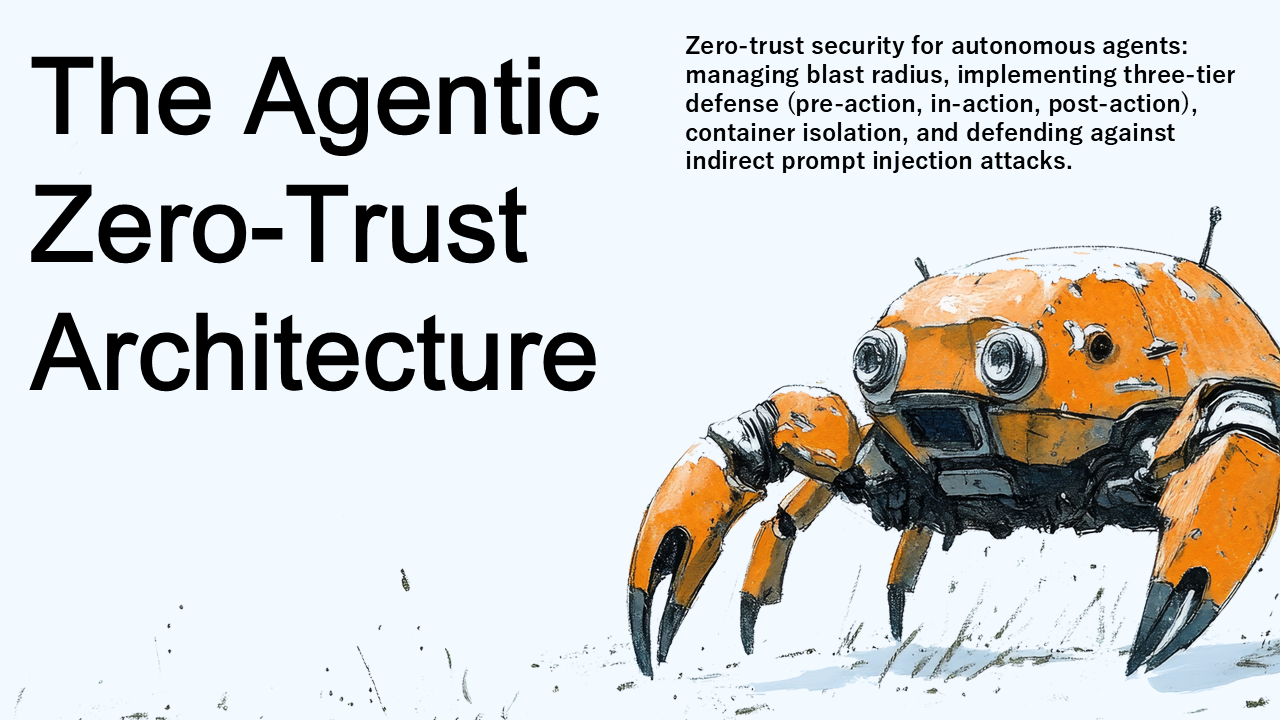
OpenClaw Engineering, Chapter 12: The Agentic Zero-Trust Architecture
Zero-trust security for autonomous agents: managing blast radius, implementing three-tier defense (pre-action, in-action, post-action), container isolation, and defending against indirect prompt injection attacks.
2026-03-27
Frictionless SaaS, Chapter 5: Just-In-Time Learning - Teach Users at the Exact Moment They Need It
Chapter 5 of the Frictionless SaaS blog series. Users don't want to learn your product - they want to solve their problem. Just-In-Time Learning teaches at the moment of need, and the Skippable Onboarding Principle respects the users who already know what they're doing.
2026-03-26
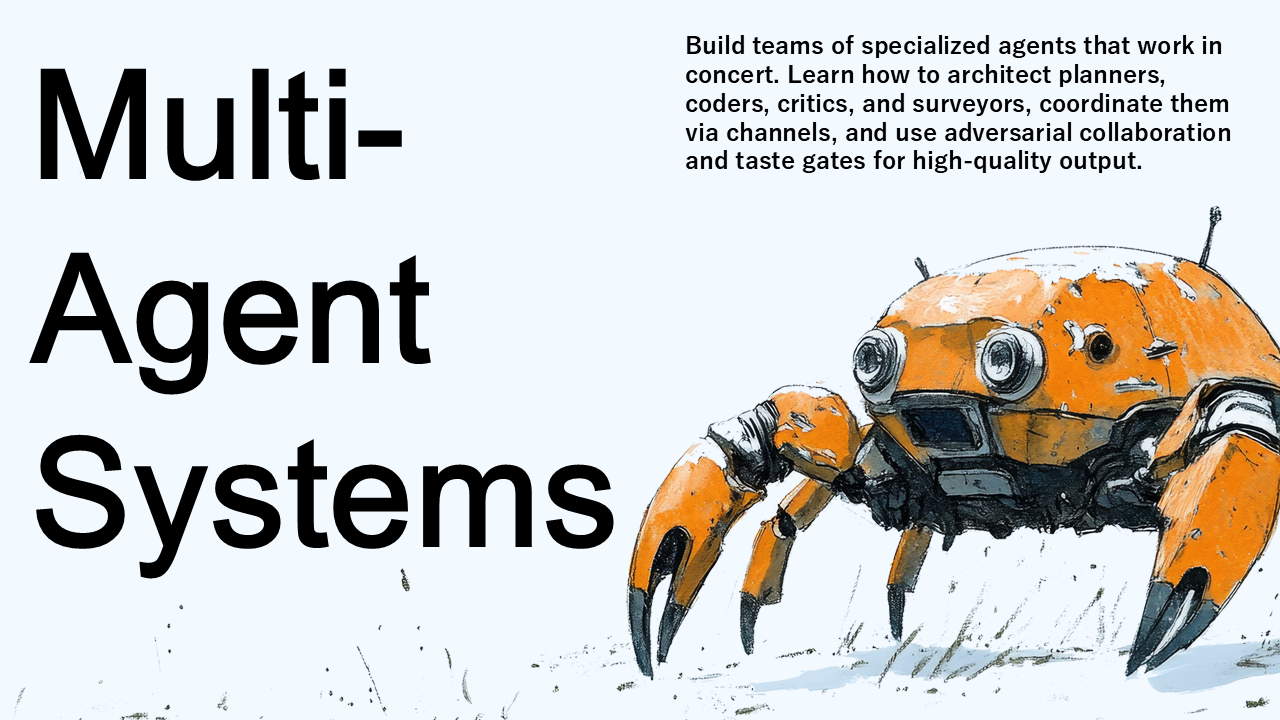
OpenClaw Engineering, Chapter 10: Multi-Agent Systems
Build teams of specialized agents that work in concert. Learn how to architect planners, coders, critics, and surveyors, coordinate them via channels, and use adversarial collaboration and taste gates for high-quality output.
2026-03-25
Frictionless SaaS, Part 0: How Users Actually Find, Judge, and Try Your Product
Kicking off a blog series based on the book "Frictionless SaaS." This first post introduces Chapters 0.1 through 0.3 — Discovery, the Landing Page, and Freemium & Entry Points — the three friction points every user hits before they ever sign up.
2026-03-21
Frictionless SaaS: The Complete Series Index — Your Guide to All 24 Chapters
The complete reader's guide to the Frictionless SaaS blog series. An introduction to the thesis — that in the AI era, features are commoditized and experience is the only lasting competitive advantage — plus direct links to all 25 posts across the 24 chapters of the book.
2026-03-20
Chapter 18 – Sub-Agents and Multi-Agent Collaboration
Chapter 18 of Master Claude Chat, Cowork and Code explores multi-agent architecture — how to decompose complex problems into specialized sub-agents, coordinate parallel execution, and synthesize results into coherent outputs.
2026-03-18
Chapter 17 – Guardrails and Governance
Chapter 17 of Master Claude Chat, Cowork and Code moves from understanding risks to implementing controls — permission isolation, tool allow-lists, human-in-the-loop approval workflows, validation hooks, and enterprise-grade audit logging.
2026-03-18
Chapter 12: User Lifecycle Management — Provisioning, SCIM, and the De-Provisioning Problem
Chapter 12 of the OpenID: Modern Identity series — user lifecycle management: JIT and bulk provisioning, SCIM for cross-system sync, de-provisioning done right, role mapping from IdP claims, and identity architecture for multi-tenant SaaS.
2026-03-18
Chapter 16 – Execution Risks and Isolation
Chapter 16 of Master Claude Chat, Cowork and Code confronts the real security risks of AI systems that execute commands and manipulate files — from command injection to data exposure — and explains the isolation models that keep things safe.
2026-03-17
Chapter 14 – Connecting Systems with the Model Context Protocol (MCP)
Chapter 14 of Master Claude Chat, Cowork and Code explores the Model Context Protocol — the universal bridge that lets Claude connect to Slack, GitHub, Jira, Google Drive, and more, turning isolated AI into a deeply integrated workflow partner.
2026-03-15
Chapter 8: Securing Backend APIs — Bearer Tokens, Scopes, and Service-to-Service
Chapter 8 of the OpenID: Modern Identity series — securing backend APIs with bearer tokens, scope design for least privilege, token introspection versus local JWT validation, and the three mechanisms for service-to-service authentication.
2026-03-14
Chapter 12: CLAUDE.md — Designing Guardrails That Shape How Claude Thinks
Chapter 12 of Master Claude Chat, Cowork and Code explores CLAUDE.md as a living constitution for AI behavior — positive constraints over prohibitions, complete financial and startup examples, instruction decay, hierarchical files, and anti-patterns to avoid.
2026-03-13
Chapter 5: Tokens in Depth — What's Actually in That JWT
Chapter 5 of the OpenID: Modern Identity series — what's really inside an ID Token, Access Token, and Refresh Token, how JWTs are structured, how to validate signatures correctly, and how DPoP and mTLS bind tokens to their legitimate holders.
2026-03-11
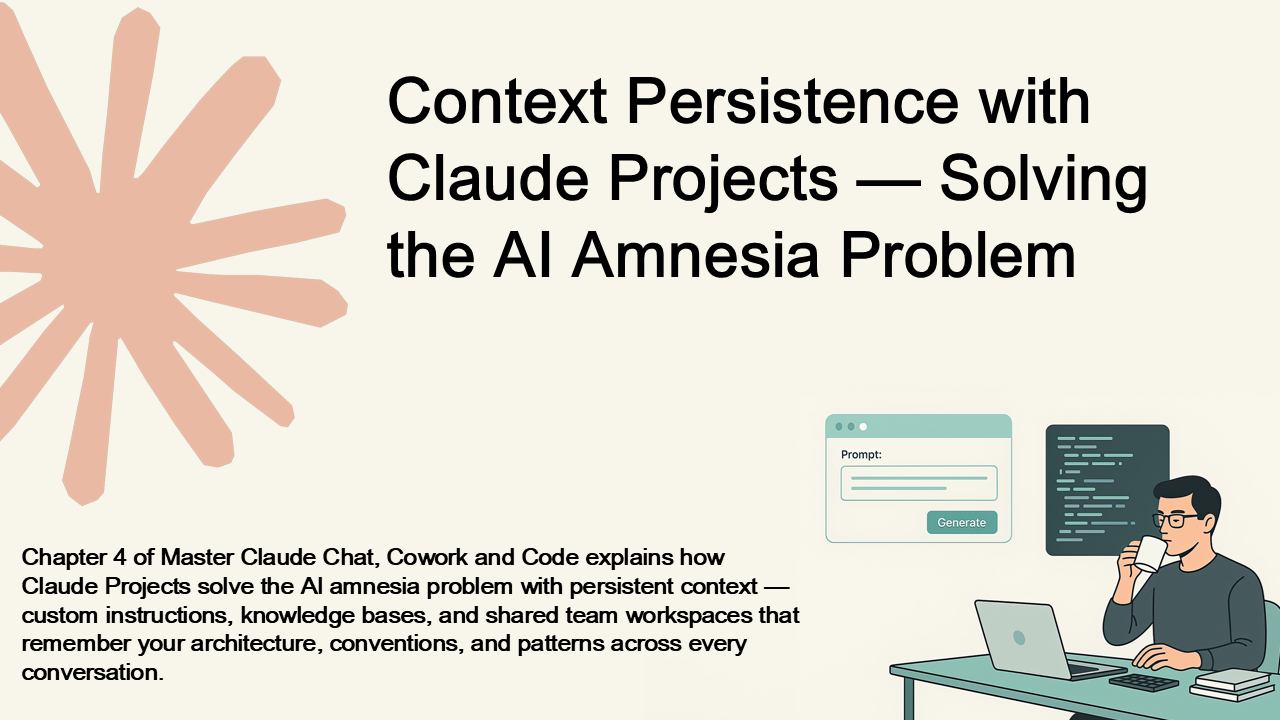
Master Claude, Chapter 4: Context Persistence with Claude Projects — Solving the AI Amnesia Problem
Chapter 4 of Master Claude Chat, Cowork and Code explains how Claude Projects solve the AI amnesia problem with persistent context — custom instructions, knowledge bases, and shared team workspaces that remember your architecture, conventions, and patterns across every conversation.
2026-03-05
Art of Coding, Chapter 14: Code Reviews and Pair Programming
Code reviews as mentorship and collaboration. How to write for reviewers, offer critique with respect, and build a team culture grounded in feedback.
2026-01-10
Art of Coding, Chapter 13: Testing as a Design Discipline
Testing is a design discipline. How well-written tests reveal awkward APIs, improve code clarity, and become the most reliable documentation of system behavior.
2026-01-09
Art of Coding, Chapter 9: Design Patterns as a Language of Developers
Design patterns compress complex architectural ideas into shared language. But they're tools for solving problems, not decorations for code.
2026-01-04
8.4 PCA and Spectral Methods
An intuitive, in-depth explanation of PCA, spectral clustering, and eigenvector-based data analysis. Covers covariance matrices, graph Laplacians, and why eigenvalues reveal hidden structure in data. Concludes Chapter 8 and leads naturally into SVD in Chapter 9.
2025-10-10
8.2 Rayleigh Quotient
An intuitive and comprehensive explanation of the Rayleigh quotient, why it estimates eigenvalues so accurately, how it connects to the power method and inverse iteration, and why it forms the foundation of modern eigenvalue algorithms. Ends with a natural transition to the QR algorithm.
2025-10-08
3.3 Conditioning of Problems vs Stability of Algorithms
Learn the critical difference between problem conditioning and algorithmic stability in numerical computing. Understand why some systems fail even with correct code, and how sensitivity, condition numbers, and numerical stability determine the reliability of AI, ML, and scientific algorithms.
2025-09-15
Categories
Tags
Search Logs
Hello World bot 1179
IT assistant bot 1131
Deploy Teams bot to Azure 1129
Microsoft Bot Framework 1047
Teams bot development 1014
Teams production bot 998
bot for sprint updates 982
Teams app zip 973
Zendesk Teams integration 971
Microsoft Teams Task Modules 968
Bot Framework Adaptive Card 963
Bot Framework example 956
Teams chatbot 950
Azure CLI webapp deploy 948
Task Modules 947
Teams bot tutorial 944
C 943
Teams bot packaging 938
Bot Framework proactive messaging 934
Graph API token 931
Bot Framework CLI 929
Adaptive Card Action.Submit 924
Bot Framework prompts 907
Azure App Service bot 903
Microsoft Graph 903
Azure Bot Services 878
Adaptive Cards 877
Azure bot registration 871
ServiceNow bot 861
proactive messages 813
Development & Technical Consulting
Working on a new product or exploring a technical idea? We help teams with system design, architecture reviews, requirements definition, proof-of-concept development, and full implementation. Whether you need a quick technical assessment or end-to-end support, feel free to reach out.
Contact Us