
{R}R Dev Notes
Found total of 100 articles.
Chapter 20 – The Next Decade of AI Coworkers
Chapter 20 of Master Claude Chat, Cowork and Code looks ahead — from conversational AI to embedded infrastructure, from chat interfaces to computer use, and the trust and responsibility questions that will define how AI reshapes work over the next decade.
2026-03-20
Frictionless SaaS: The Complete Series Index — Your Guide to All 24 Chapters
The complete reader's guide to the Frictionless SaaS blog series. An introduction to the thesis — that in the AI era, features are commoditized and experience is the only lasting competitive advantage — plus direct links to all 25 posts across the 24 chapters of the book.
2026-03-20
OpenClaw Engineering, Chapter 5: Connecting Multiple Channels
How to connect your OpenClaw agent to multiple messaging platforms (Telegram, WhatsApp, Discord, Slack) and manage multi-channel routing. Setup, configuration quirks, and troubleshooting for each platform.
2026-03-20
Chapter 14: Hardening Your Identity Stack — Setting the Defaults That Keep You Safe
Chapter 14 of the OpenID: Modern Identity series — hardening defaults that neutralize common attacks: strict redirect URI matching, audience validation to solve the confused deputy problem, token lifetime tuning, and refresh token binding, rotation, and revocation.
2026-03-20
Chapter 19 – Measuring AI Effectiveness
Chapter 19 of Master Claude Chat, Cowork and Code tackles the question every team eventually asks: is our AI actually working? Learn to build metrics frameworks, structured evaluations, and workflow acceleration measurements that prove (or disprove) AI's value.
2026-03-19
Chapter 13: Threat Modeling OpenID Systems — Thinking Like the Adversary
Chapter 13 of the OpenID: Modern Identity series — threat modeling for OIDC systems: token theft vectors and defenses, replay attacks and nonce validation, CSRF and state parameter mismanagement, redirect abuse and mix-up attacks.
2026-03-19
Chapter 18 – Sub-Agents and Multi-Agent Collaboration
Chapter 18 of Master Claude Chat, Cowork and Code explores multi-agent architecture — how to decompose complex problems into specialized sub-agents, coordinate parallel execution, and synthesize results into coherent outputs.
2026-03-18
Chapter 17 – Guardrails and Governance
Chapter 17 of Master Claude Chat, Cowork and Code moves from understanding risks to implementing controls — permission isolation, tool allow-lists, human-in-the-loop approval workflows, validation hooks, and enterprise-grade audit logging.
2026-03-18
Chapter 12: User Lifecycle Management — Provisioning, SCIM, and the De-Provisioning Problem
Chapter 12 of the OpenID: Modern Identity series — user lifecycle management: JIT and bulk provisioning, SCIM for cross-system sync, de-provisioning done right, role mapping from IdP claims, and identity architecture for multi-tenant SaaS.
2026-03-18
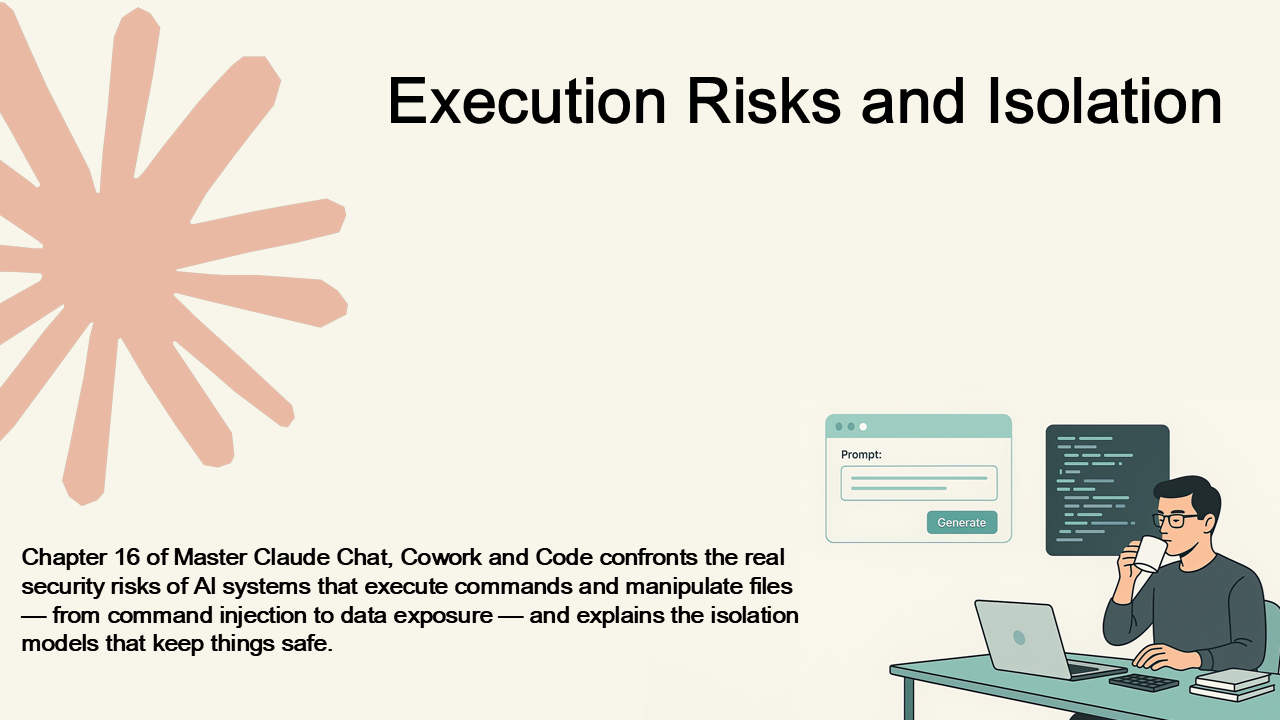
Chapter 16 – Execution Risks and Isolation
Chapter 16 of Master Claude Chat, Cowork and Code confronts the real security risks of AI systems that execute commands and manipulate files — from command injection to data exposure — and explains the isolation models that keep things safe.
2026-03-17
Chapter 11: MFA and Conditional Access — Dispersing Authentication Risk
Chapter 11 of the OpenID: Modern Identity series — MFA fundamentals across the three factor categories, risk-based adaptive authentication, and step-up authentication using the OIDC acr and amr claims to match assurance to operation sensitivity.
2026-03-17
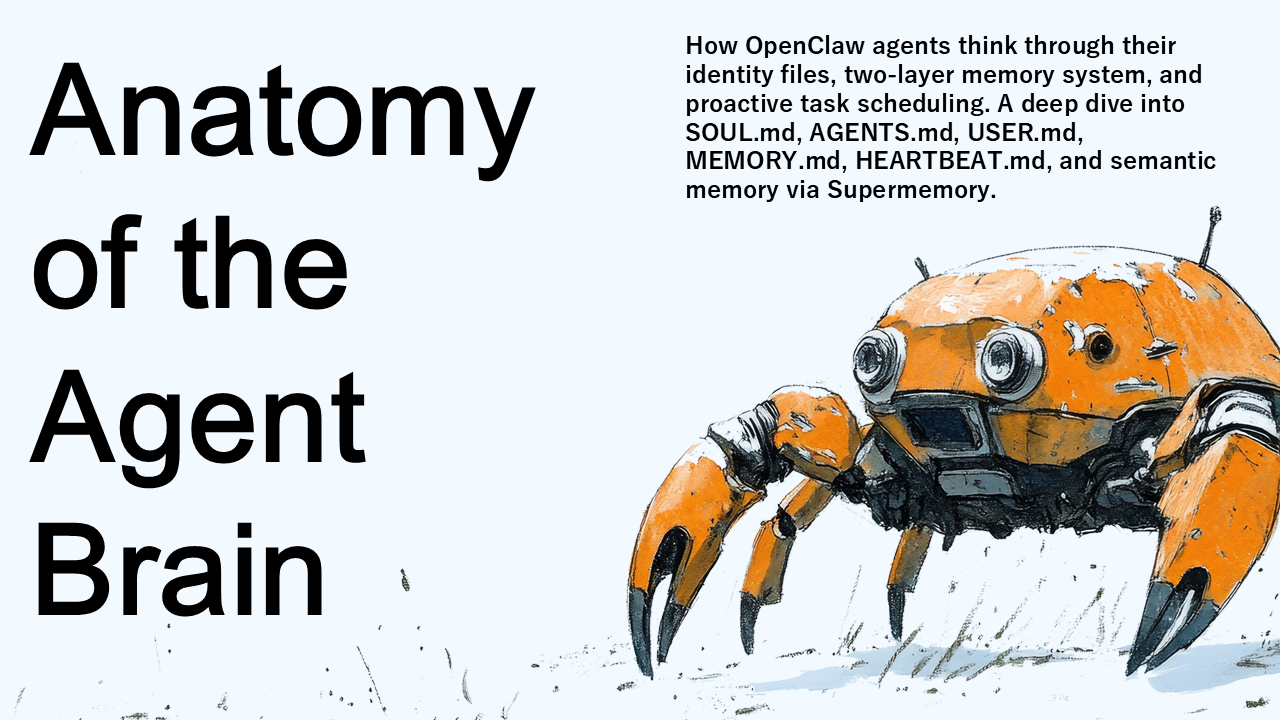
OpenClaw Engineering, Chapter 2: Anatomy of the Agent Brain
How OpenClaw agents think through their identity files, two-layer memory system, and proactive task scheduling. A deep dive into SOUL.md, AGENTS.md, USER.md, MEMORY.md, HEARTBEAT.md, and semantic memory via Supermemory.
2026-03-17
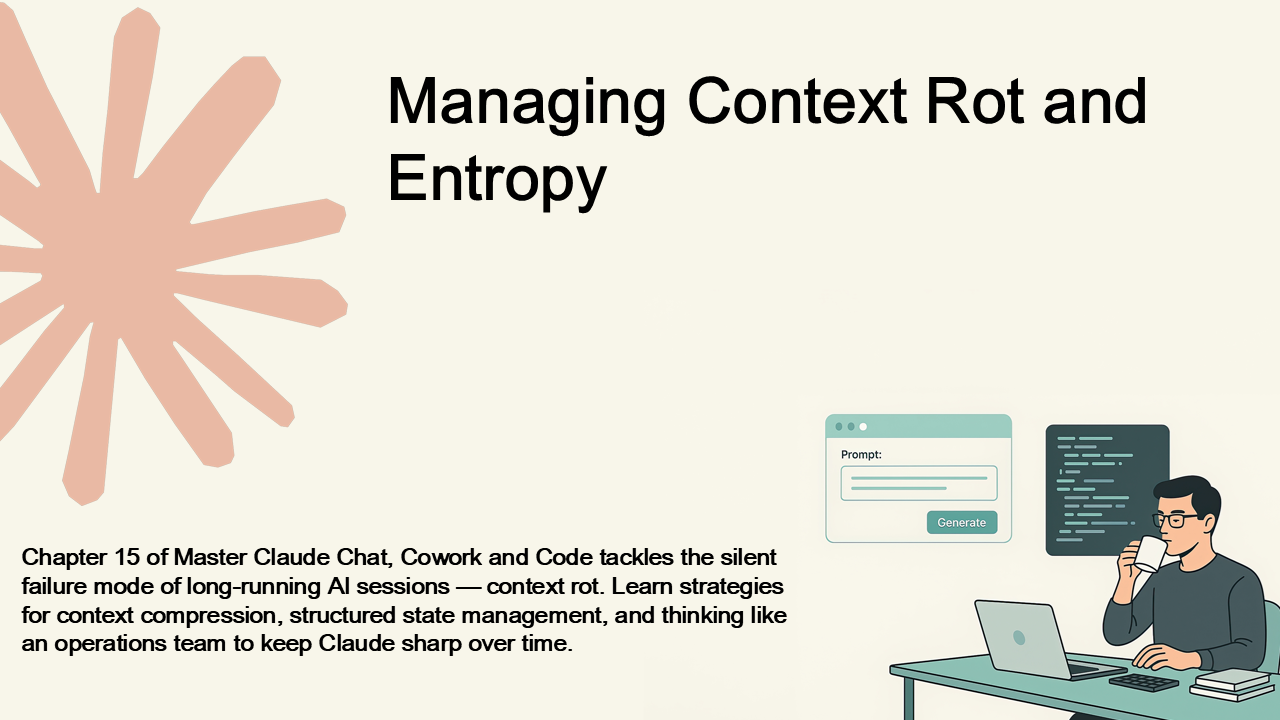
Chapter 15 – Managing Context Rot and Entropy
Chapter 15 of Master Claude Chat, Cowork and Code tackles the silent failure mode of long-running AI sessions — context rot. Learn strategies for context compression, structured state management, and thinking like an operations team to keep Claude sharp over time.
2026-03-16
Chapter 10: Single Sign-On at Scale — Identity as Infrastructure
Chapter 10 of the OpenID: Modern Identity series — running identity at organizational scale: corporate IdPs (AD, Entra ID), the CIAM vendor ecosystem (Okta, Auth0, Entra ID), multi-tenant isolation, account linking, and external user access.
2026-03-16
Chapter 9: SPA and Mobile Patterns — Auth in Hostile Environments
Chapter 9 of the OpenID: Modern Identity series — SPAs and mobile apps in hostile environments: XSS and CSRF defense, PKCE in the browser, the Backend-for-Frontend pattern, native app patterns, and refresh token rotation with reuse detection.
2026-03-15
Chapter 8: Securing Backend APIs — Bearer Tokens, Scopes, and Service-to-Service
Chapter 8 of the OpenID: Modern Identity series — securing backend APIs with bearer tokens, scope design for least privilege, token introspection versus local JWT validation, and the three mechanisms for service-to-service authentication.
2026-03-14
Chapter 7: Your First OpenID Application — The Handshake, End to End
Chapter 7 of the OpenID: Modern Identity series — building a real OIDC login end to end: the minimal flow, state and nonce, strict redirect URI matching, sessions from tokens, and the three flavors of logout.
2026-03-13
Chapter 12: CLAUDE.md — Designing Guardrails That Shape How Claude Thinks
Chapter 12 of Master Claude Chat, Cowork and Code explores CLAUDE.md as a living constitution for AI behavior — positive constraints over prohibitions, complete financial and startup examples, instruction decay, hierarchical files, and anti-patterns to avoid.
2026-03-13
Chapter 5: Tokens in Depth — What's Actually in That JWT
Chapter 5 of the OpenID: Modern Identity series — what's really inside an ID Token, Access Token, and Refresh Token, how JWTs are structured, how to validate signatures correctly, and how DPoP and mTLS bind tokens to their legitimate holders.
2026-03-11
Chapter 9: Claude Code Fundamentals — The CLI Agent That Rewrites Your Codebase
Chapter 9 of Master Claude Chat, Cowork and Code introduces Claude Code — a CLI agent that reads, analyzes, and modifies codebases directly from the terminal. Covers architecture, multi-file refactoring, Git worktrees, and permission management.
2026-03-10
Chapter 3: Core Concepts — The Vocabulary of OpenID Connect
Chapter 3 of the OpenID: Modern Identity series — the IdP/RP/user triangle, claims and JWTs, the three OIDC token types, consent and scopes, sessions vs tokens, and the boundary between authentication and authorization.
2026-03-09
Chapter 2: From OpenID to OpenID Connect — How the Industry Got This One Right
Chapter 2 of the OpenID: Modern Identity series — tracing how the industry moved from the original OpenID and SAML through OAuth 2.0 to OpenID Connect, and when to reach for each standard.
2026-03-08
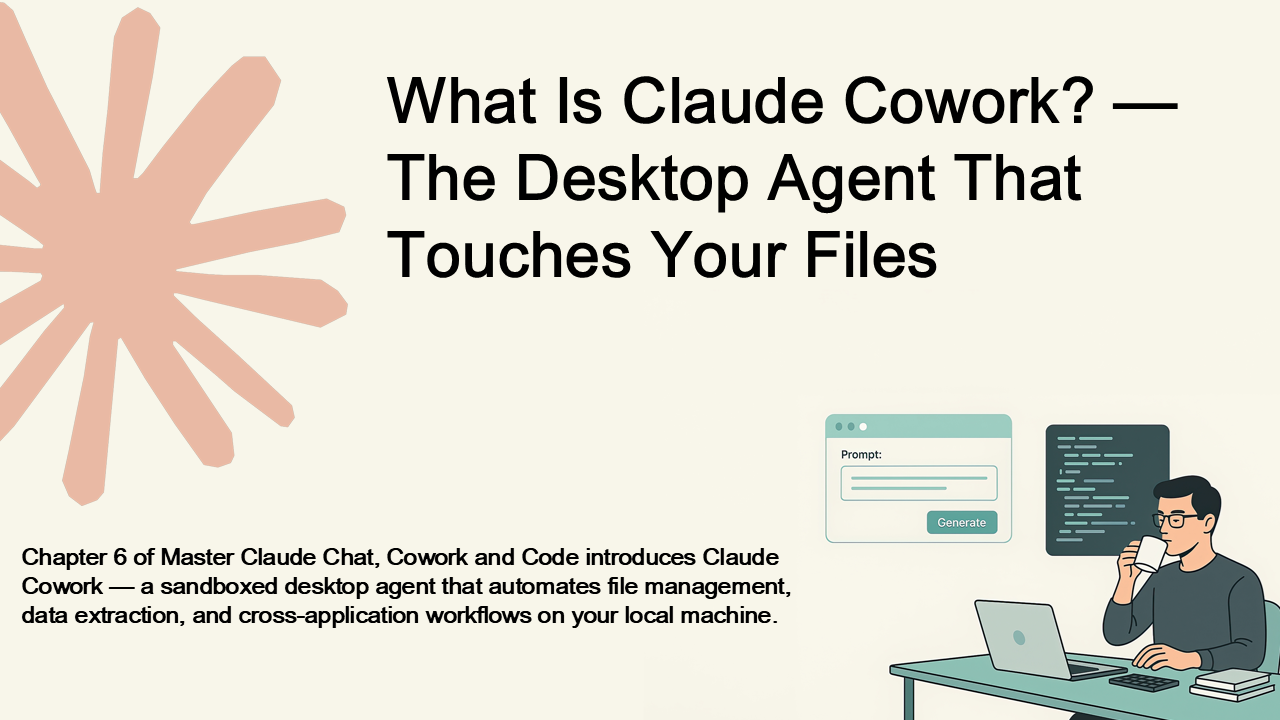
Chapter 6: What Is Claude Cowork? — The Desktop Agent That Touches Your Files
Chapter 6 of Master Claude Chat, Cowork and Code introduces Claude Cowork — a sandboxed desktop agent that automates file management, data extraction, and cross-application workflows on your local machine.
2026-03-07
Chapter 1: Why Identity Is Hard — The Trust Problem Behind Every Login
Chapter 1 of the OpenID: Modern Identity book series — why identity is a trust problem first and a technology problem second, and why authentication and authorization must never be conflated.
2026-03-07
Chapter 5: Rapid Prototyping with Artifacts — From Conversation to Live Application
Chapter 5 of Master Claude Chat, Cowork and Code explores how Claude Artifacts collapse the feedback loop between idea and execution — turning conversations into live, interactive applications in seconds.
2026-03-06
OpenID: Modern Identity for Developers and Architects — A 22-Part Blog Series
Introduction and index for the 22-part blog series based on OpenID: Modern Identity for Developers and Architects by Sho Shimoda — with links to every chapter from Why Identity Is Hard through Identity in AI Systems.
2026-03-06
Master Claude, Chapter 4: Context Persistence with Claude Projects — Solving the AI Amnesia Problem
Chapter 4 of Master Claude Chat, Cowork and Code explains how Claude Projects solve the AI amnesia problem with persistent context — custom instructions, knowledge bases, and shared team workspaces that remember your architecture, conventions, and patterns across every conversation.
2026-03-05
Master Claude, Chapter 3: Understanding Entropy and Prompting Fundamentals — Why Your Prompts Fail and How to Fix Them
Chapter 3 of Master Claude Chat, Cowork and Code explains why some prompts work and others fail — through the lens of entropy and probability. Covers XML-structured prompting, chain-of-thought reasoning, multishot examples, and a standard prompt template you can use immediately.
2026-03-04
Master Claude, Chapter 2: The Three Pillars of Claude — Chat, Cowork, and Code
Claude is not one product — it is three. Chat for reasoning, Cowork for desktop automation, Code for terminal-based development. Chapter 2 of Master Claude Chat, Cowork and Code explains the architecture of each and the decision framework for choosing the right one.
2026-03-03
Master Claude Chat, Cowork and Code – The Complete Blog Series
The complete index for the Master Claude Chat, Cowork and Code blog series — 20 chapter teasers covering everything from prompting fundamentals to multi-agent architectures, security governance, and the future of AI-powered work.
2026-03-01
Art of Coding, Chapter 13: Testing as a Design Discipline
Testing is a design discipline. How well-written tests reveal awkward APIs, improve code clarity, and become the most reliable documentation of system behavior.
2026-01-09
Art of Coding, Chapter 12: Version Control as a Storytelling Tool
Git is not just a backup system—it's a narrative tool. How clean commits and thoughtful branching strategies turn version control into a form of storytelling.
2026-01-08
Art of Coding, Chapter 7: Error Handling and Resilience
Designing for failure, not avoiding it. How graceful error handling, clear logging, and balanced defense build systems that endure.
2026-01-01

Use Case: Sales Assistant Bot|Mastering Microsoft Teams Bots 6.3
Learn how to build a Sales Assistant Bot for Microsoft Teams. From surfacing leads to logging calls and syncing with CRMs, this section shows how bots can empower sales teams to move faster, close deals, and automate follow-ups — all within Teams.
2025-04-20
Use Case: Project Management Assistant Bot|Mastering Microsoft Teams Bots 6.2
Explore how to build a Project Management Assistant Bot for Microsoft Teams that delivers task summaries, reminders, and updates directly in the chat. Learn how this bot improves team productivity by integrating with tools like Jira or Trello and surfacing key information within the Teams workflow.
2025-04-19
Use Case: Helpdesk Assistant Bot|Mastering Microsoft Teams Bots 6.1
Explore how to build a Helpdesk Assistant Bot in Microsoft Teams. Learn how bots can reduce IT load by handling FAQs, logging support tickets, and notifying users — all within Teams. This section explains features, user experience, and implementation strategies.
2025-04-18
Monitoring, Logging, and Telemetry|Mastering Microsoft Teams Bots 5.3
Learn how to monitor and support your Microsoft Teams bot in production using logging, Azure Application Insights, and alerts. This section shows how to track user events, diagnose failures, and create telemetry that makes your bot reliable and supportable.
2025-04-17

Teams App Manifest and Packaging|Mastering Microsoft Teams Bots 5.2
Transform your bot into a full Teams app. This section walks through how to create a Teams app manifest, add branding, define scopes, and package your bot into a distributable .zip file for sideloading, internal use, or submission to the Microsoft App Store.
2025-04-16

Localization and Multi-Tenant Support|Mastering Microsoft Teams Bots 4.4
Prepare your Microsoft Teams bot for real-world deployment. This section covers how to support multiple languages using localization, and how to safely handle multiple organizations with multi-tenant support — including tenant isolation, data security, and consent flows.
2025-04-14

Message Extensions|Mastering Microsoft Teams Bots 4.3
Learn how to build search- and action-based Message Extensions in Microsoft Teams. This section shows how to let users interact with your bot directly from the message composer — to search records, fill forms, or insert rich cards — all without leaving the chat.
2025-04-13
Proactive Messaging|Mastering Microsoft Teams Bots 4.2
Learn how to build bots that initiate conversations in Microsoft Teams. This section explains proactive messaging — including when and how to use it, how to store conversation references, and best practices to ensure your bot helps without interrupting.
2025-04-12
Task Modules|Mastering Microsoft Teams Bots 4.1
Learn how to use Task Modules in Microsoft Teams to embed rich, interactive modal experiences inside your bot. This section explains how to launch, return data from, and design secure webviews that turn chat into structured user interaction.
2025-04-11
Conversation Flow and Dialogs|Mastering Microsoft Teams Bots 3.3
Learn how to build intelligent conversation flows in Microsoft Teams bots using dialogs. This section explains how to guide users through multi-turn interactions, manage state, use prompts and waterfalls, and decide when to use dialogs versus Task Modules.
2025-04-10
Rich Responses with Adaptive Cards|Mastering Microsoft Teams Bots 3.2
Learn how to create rich, interactive messages in Microsoft Teams using Adaptive Cards. This section explains how to design, send, and handle cards in your bot — making your bot feel less like a chat and more like a true app experience inside Teams.
2025-04-09
Message Handling|Mastering Microsoft Teams Bots 3.1
Learn how to build responsive and intelligent Microsoft Teams bots by handling messages effectively. This section covers activity types, keyword detection, mentions, markdown formatting, conversation context, and tips for scaling from simple replies to powerful, workflow-driven bots.
2025-04-08
Bot Authentication and Identity|Mastering Microsoft Teams Bots 2.3
Learn how Microsoft Teams bots authenticate users and access secure data. This section covers SSO, OAuth 2.0, and the Microsoft Graph API, giving your bot the ability to understand identity and act on behalf of users—safely and seamlessly.
2025-04-07
Hello World Bot|Mastering Microsoft Teams Bots 2.2
Build your first Microsoft Teams bot with a simple Hello World response. This hands-on section walks you through using the Bot Framework SDK, setting up a local project with Node.js or .NET, using Ngrok to expose your endpoint, and testing your bot directly in Teams.
2025-04-06
Overview of Microsoft Teams Bot Capabilities|Mastering Microsoft Teams Bots 1.3
Explore the full range of capabilities bots can offer in Microsoft Teams. This section breaks down interactive contexts, features like Adaptive Cards, proactive messaging, user authentication, Graph API integration, and what limitations still exist. Get a developer’s guide to what’s possible.
2025-04-04
Overview of Microsoft Teams Architecture|Mastering Microsoft Teams Bots 1.2
Get a developer-friendly introduction to how Microsoft Teams is built. This section explains Teams architecture—channels, tabs, bots, messaging extensions, and Graph API—and shows how each component fits into the broader platform. A must-read before building your first bot.
2025-04-03
Why Build Bots for Microsoft Teams?|Mastering Microsoft Teams Bots 1.1
Discover why Microsoft Teams bots are transforming the workplace. This section explores the real-world impact of building bots in Teams, from automating tasks and integrating external services to enabling context-aware digital assistants. Learn how bots can save time, boost productivity, and bring automation into the flow of daily work.
2025-04-02
Categories
Tags
Search Logs
Hello World bot 1195
Deploy Teams bot to Azure 1156
IT assistant bot 1152
Microsoft Bot Framework 1064
Teams bot development 1037
Teams production bot 1016
bot for sprint updates 1012
Teams app zip 996
Zendesk Teams integration 994
Microsoft Teams Task Modules 987
Bot Framework Adaptive Card 983
Bot Framework example 975
Task Modules 971
Teams chatbot 970
C 959
Teams bot tutorial 959
Azure CLI webapp deploy 958
Teams bot packaging 957
Bot Framework proactive messaging 948
Graph API token 947
Bot Framework CLI 941
Adaptive Card Action.Submit 936
Bot Framework prompts 924
Azure App Service bot 916
Microsoft Graph 915
Azure Bot Services 897
Adaptive Cards 886
Azure bot registration 883
ServiceNow bot 871
proactive messages 829
Development & Technical Consulting
Working on a new product or exploring a technical idea? We help teams with system design, architecture reviews, requirements definition, proof-of-concept development, and full implementation. Whether you need a quick technical assessment or end-to-end support, feel free to reach out.
Contact Us