
{R}R Dev Notes
Found total of 12 articles.
The Engineering of Intent, Chapter 32: Vibe Coding in Platform and Infrastructure
Chapter 32 of The Engineering of Intent blog series. Platform work is slow-moving by nature, but every improvement compounds across the whole engineering org. A teaser on infrastructure-as-code, CI evolution, internal-tool velocity, and the deployment-tool rebuild that dropped deploys from 40 minutes to 12.
2026-05-18
The Engineering of Intent, Chapter 29: Vibe Coding in the Backend
Chapter 29 of The Engineering of Intent blog series. Backends are unusually well suited to agentic development — but each subdomain has characteristic failure modes. A teaser on API design, migrations, job idempotency, caching, auth, and the billing-service rewrite that shipped in four months via extraction rather than vibes.
2026-05-15
Azure Front Door: a practical introduction
What Azure Front Door is, who it's for, what it costs, how it compares to Cloudflare and CloudFront, and a walkthrough of the settings that matter when putting it in front of an Azure App Service.
2026-05-11
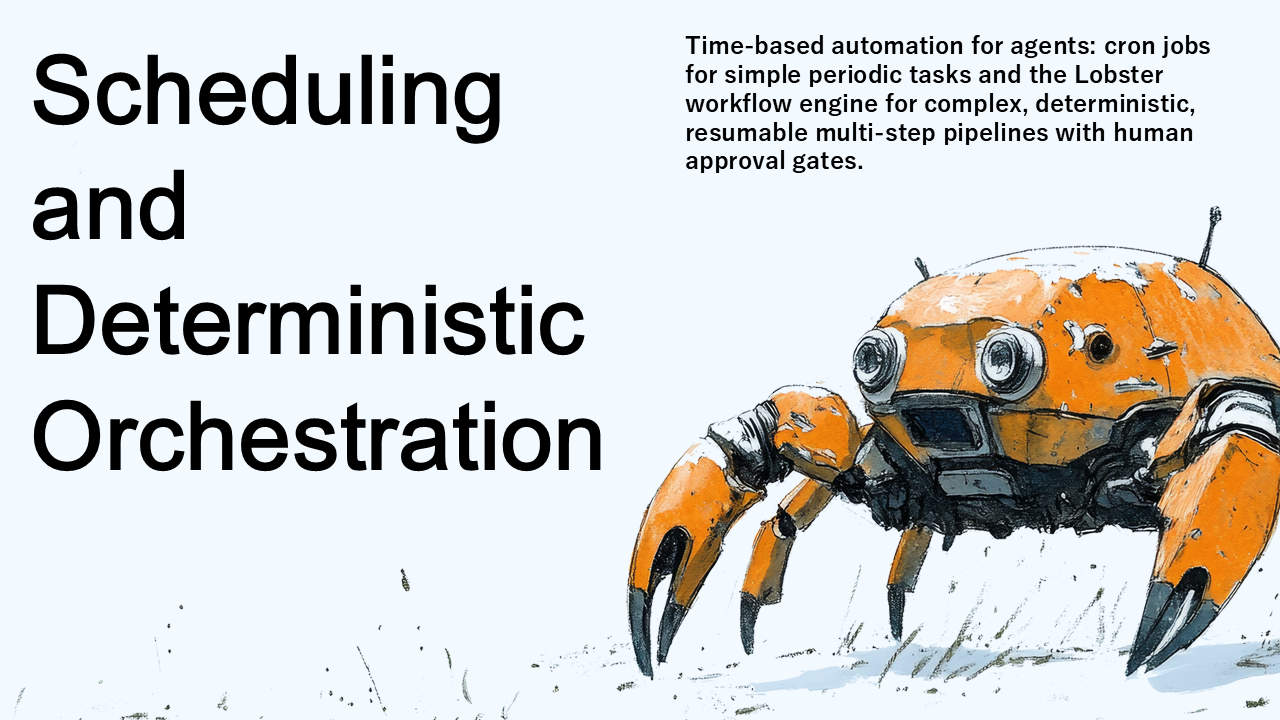
OpenClaw Engineering, Chapter 9: Scheduling and Deterministic Orchestration
Time-based automation for agents: cron jobs for simple periodic tasks and the Lobster workflow engine for complex, deterministic, resumable multi-step pipelines with human approval gates.
2026-03-24
OpenClaw Engineering, Chapter 8: Event-Driven Workflows
How OpenClaw agents spring into action automatically via hooks, webhooks, and TypeScript handlers—without waiting for human invocation. From internal events to CI/CD pipelines.
2026-03-23
OpenClaw Engineering, Chapter 4: Managing the Gateway and Models
Configuring your running gateway with the onboard wizard, diagnostics, and openclaw.json. How to connect model providers, manage API keys securely, and route different queries to different models.
2026-03-19
OpenClaw Engineering, Chapter 2: Anatomy of the Agent Brain
How OpenClaw agents think through their identity files, two-layer memory system, and proactive task scheduling. A deep dive into SOUL.md, AGENTS.md, USER.md, MEMORY.md, HEARTBEAT.md, and semantic memory via Supermemory.
2026-03-17
OpenClaw Engineering, Chapter 1: The OpenClaw Paradigm
The first chapter teaser in a new series on OpenClaw Engineering. Why autonomous agents need a different foundation, the four-layer architecture (Gateway, Nodes, Channels, Skills), and the three principles that hold it all together.
2026-03-16
Chapter 11: CI/CD Integration and Automation — Claude Code in Your Pipeline
Chapter 11 of Master Claude Chat, Cowork and Code shows how to deploy Claude Code into CI/CD pipelines — GitHub Actions, GitLab CI, automated PR reviews, security audits, documentation sync, cost management, and production safety patterns.
2026-03-12
Chapter 8: Scheduled Tasks and Autonomous Execution — Making Claude Work While You Sleep
Chapter 8 of Master Claude Chat, Cowork and Code covers scheduled automation with Claude Cowork — cron-based recurring workflows, sleep/connectivity handling, error strategies, and applying GTD principles to AI task automation.
2026-03-09
Chapter 7: Plugins and Domain Specialization — Turning Claude Into Your Organization's Expert
Chapter 7 of Master Claude Chat, Cowork and Code explores how plugins transform Claude from a generalist into a domain expert — with pre-built plugins for Sales, Finance, Marketing, and Legal, slash commands, and organization-managed customization.
2026-03-08
Use Case: Project Management Assistant Bot|Mastering Microsoft Teams Bots 6.2
Explore how to build a Project Management Assistant Bot for Microsoft Teams that delivers task summaries, reminders, and updates directly in the chat. Learn how this bot improves team productivity by integrating with tools like Jira or Trello and surfacing key information within the Teams workflow.
2025-04-19
Categories
Tags
Search Logs
Hello World bot 1185
IT assistant bot 1140
Deploy Teams bot to Azure 1137
Microsoft Bot Framework 1052
Teams bot development 1025
Teams production bot 1004
bot for sprint updates 994
Microsoft Teams Task Modules 979
Zendesk Teams integration 979
Teams app zip 977
Bot Framework Adaptive Card 973
Bot Framework example 964
Task Modules 961
Teams chatbot 955
Azure CLI webapp deploy 952
C 952
Teams bot packaging 947
Teams bot tutorial 946
Bot Framework proactive messaging 941
Graph API token 937
Bot Framework CLI 932
Adaptive Card Action.Submit 930
Bot Framework prompts 913
Azure App Service bot 908
Microsoft Graph 907
Azure Bot Services 883
Adaptive Cards 881
Azure bot registration 880
ServiceNow bot 866
proactive messages 814
Development & Technical Consulting
Working on a new product or exploring a technical idea? We help teams with system design, architecture reviews, requirements definition, proof-of-concept development, and full implementation. Whether you need a quick technical assessment or end-to-end support, feel free to reach out.
Contact Us