
{R}R 開発ノート
合計 25 件の記事が見つかりました。
Frictionless SaaS, Chapter 24: Anti-Patterns and Failure Modes
The last chapter of Frictionless SaaS is about the mistakes teams keep making, even when they know better. A teaser covering the Anti-Pattern Registry, the Feature Trap, and the additional failure modes that quietly erode good products.
2026-04-14
Frictionless SaaS, Chapter 21: Operations and Scalability Without Friction
Why growing SaaS companies hit a wall that is not a product problem or a sales problem — it is an operations problem. A teaser for Chapter 21 of Frictionless SaaS covering the Event-Driven Operations Architecture and the Scalability Without Headcount Principle.
2026-04-11
Frictionless SaaS, Chapter 20: Organizational Design for Frictionless Delivery
The Experience Ownership Model and the Behavior Design Canvas — two reorganizations that stop user experience from falling through the cracks between departments.
2026-04-10
Frictionless SaaS Chapter 14: Experience Observability and Friction Detection
Chapter 14 preview of Frictionless SaaS: experience observability, synthetic and real-user monitoring, and the friction detection engine that surfaces retention issues before they become churn.
2026-04-04
Frictionless SaaS Chapter 13: SaaS Metrics, Cohort Analysis, and the North Star
Chapter 13 preview of Frictionless SaaS: the SaaS Metrics Pyramid, Net Revenue Retention, cohort-based optimization, and how to choose a North Star that actually drives retention and revenue.
2026-04-03
Frictionless SaaS Chapter 12: Detecting Disengagement and Structured Win-Back
Chapter 12 preview of Frictionless SaaS: the Disengagement Detection System, the four-touch Win-Back Sequence, and why value rediscovery beats discount offers every time.
2026-04-02
Frictionless SaaS Chapter 11: Lifecycle Messaging and Engagement
Chapter 11 preview of Frictionless SaaS: the Lifecycle Messaging Architecture, the Message-Moment Fit Principle, and the Customer Feedback Loop Framework for turning communication into a retention engine.
2026-04-01

Frictionless SaaS, Chapter 8: Designing for Habit - Why Retention Is Your Real Growth Engine
Chapter 8 of the Frictionless SaaS blog series. Retention is the multiplier on every dollar of acquisition you'll ever spend. The Habit Loop Engine, the Return Reason Architecture, and the DAU/WAU signals that tell you whether you're building a habit or a one-night stand.
2026-03-29
Frictionless SaaS, Chapter 7: Behavioral Nudges - Guiding Users Without Nagging Them
Chapter 7 of the Frictionless SaaS blog series. How to build a behavioral nudge system that feels like a helpful friend instead of an annoying pop-up, and how the Re-engagement Cascade catches users before they fully churn - without spamming them.
2026-03-28
Chapter 22: Identity in AI Systems — When the "User" Is an Agent
Chapter 22 of the OpenID: Modern Identity series — identity for AI systems: LLM authentication, the Model Context Protocol (MCP), Dynamic Client Registration for ephemeral agents, and the emerging patterns for trusting autonomous non-human actors.
2026-03-28

Frictionless SaaS, Chapter 6: The Activation Event - The One Metric That Predicts Everything Else
Chapter 6 of the Frictionless SaaS blog series. Activation isn't a moment - it's a specific, measurable event. How to define it, why precision matters, and how the Micro-Success Ladder turns a single activation action into a path most users will actually walk.
2026-03-27
Frictionless SaaS, Chapter 2: The SAFE Journey — A Map of Where Your Users Actually Quit
Chapter 2 of the Frictionless SaaS blog series. The SAFE Journey Framework breaks the user lifecycle into Signup, Activation, Frequency, and Expansion — each with different friction, different metrics, and different fixes. Plus: why Time to Value is the most important retention metric in early-stage SaaS.
2026-03-23
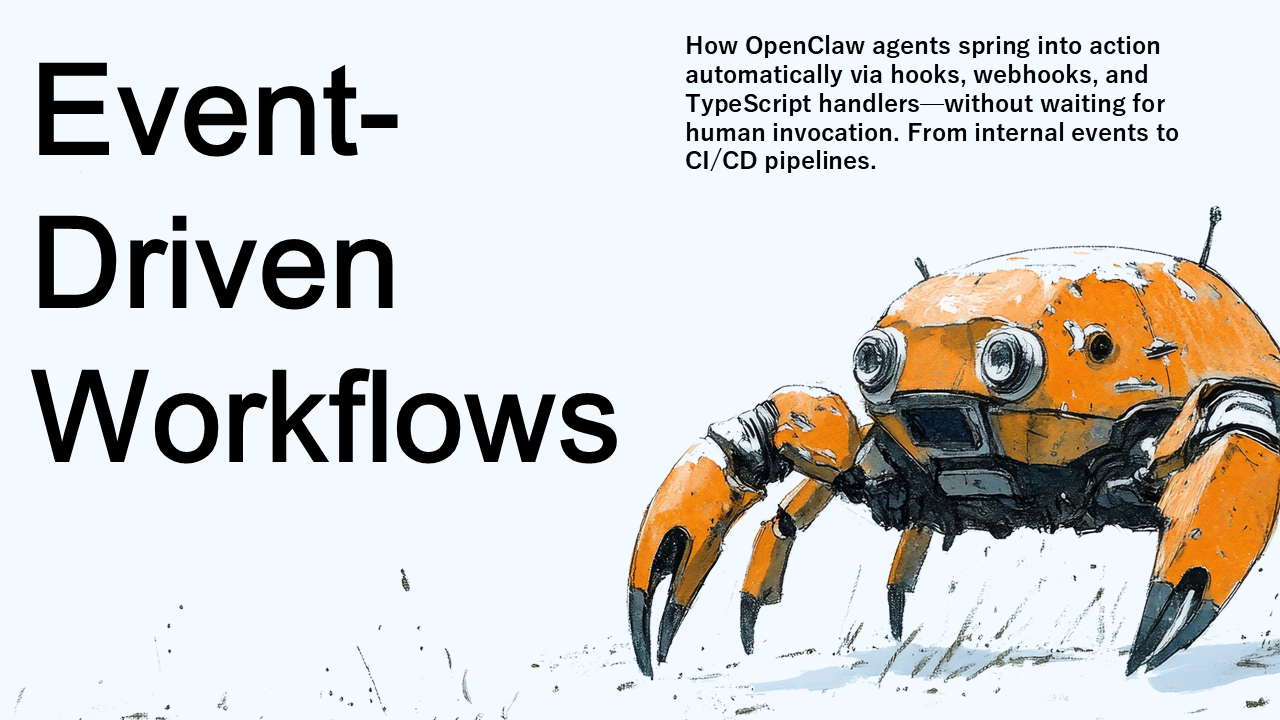
OpenClaw Engineering, Chapter 8: Event-Driven Workflows
How OpenClaw agents spring into action automatically via hooks, webhooks, and TypeScript handlers—without waiting for human invocation. From internal events to CI/CD pipelines.
2026-03-23
Frictionless SaaS, Part 0: How Users Actually Find, Judge, and Try Your Product
Kicking off a blog series based on the book "Frictionless SaaS." This first post introduces Chapters 0.1 through 0.3 — Discovery, the Landing Page, and Freemium & Entry Points — the three friction points every user hits before they ever sign up.
2026-03-21
Frictionless SaaS: The Complete Series Index — Your Guide to All 24 Chapters
The complete reader's guide to the Frictionless SaaS blog series. An introduction to the thesis — that in the AI era, features are commoditized and experience is the only lasting competitive advantage — plus direct links to all 25 posts across the 24 chapters of the book.
2026-03-20
Chapter 13: Threat Modeling OpenID Systems — Thinking Like the Adversary
Chapter 13 of the OpenID: Modern Identity series — threat modeling for OIDC systems: token theft vectors and defenses, replay attacks and nonce validation, CSRF and state parameter mismanagement, redirect abuse and mix-up attacks.
2026-03-19
Chapter 18 – Sub-Agents and Multi-Agent Collaboration
Chapter 18 of Master Claude Chat, Cowork and Code explores multi-agent architecture — how to decompose complex problems into specialized sub-agents, coordinate parallel execution, and synthesize results into coherent outputs.
2026-03-18
Chapter 17 – Guardrails and Governance
Chapter 17 of Master Claude Chat, Cowork and Code moves from understanding risks to implementing controls — permission isolation, tool allow-lists, human-in-the-loop approval workflows, validation hooks, and enterprise-grade audit logging.
2026-03-18
Chapter 12: User Lifecycle Management — Provisioning, SCIM, and the De-Provisioning Problem
Chapter 12 of the OpenID: Modern Identity series — user lifecycle management: JIT and bulk provisioning, SCIM for cross-system sync, de-provisioning done right, role mapping from IdP claims, and identity architecture for multi-tenant SaaS.
2026-03-18
Chapter 11: MFA and Conditional Access — Dispersing Authentication Risk
Chapter 11 of the OpenID: Modern Identity series — MFA fundamentals across the three factor categories, risk-based adaptive authentication, and step-up authentication using the OIDC acr and amr claims to match assurance to operation sensitivity.
2026-03-17
Chapter 10: Single Sign-On at Scale — Identity as Infrastructure
Chapter 10 of the OpenID: Modern Identity series — running identity at organizational scale: corporate IdPs (AD, Entra ID), the CIAM vendor ecosystem (Okta, Auth0, Entra ID), multi-tenant isolation, account linking, and external user access.
2026-03-16
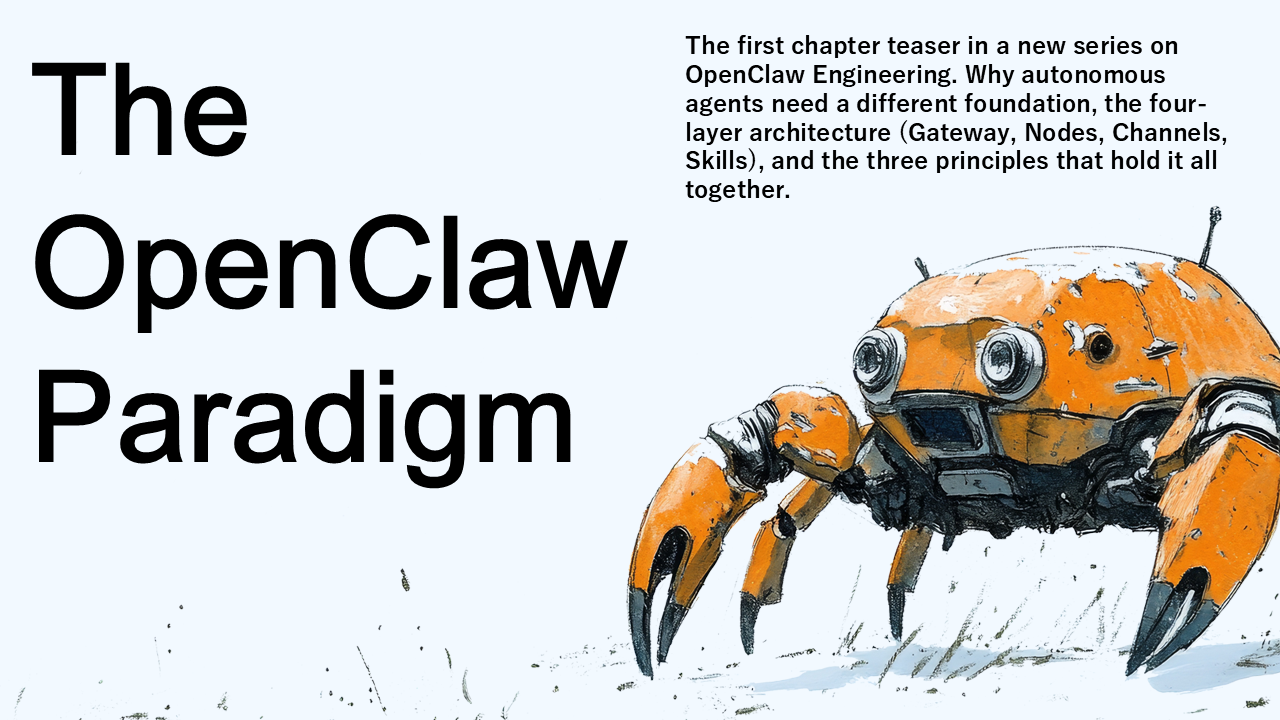
OpenClaw Engineering, Chapter 1: The OpenClaw Paradigm
The first chapter teaser in a new series on OpenClaw Engineering. Why autonomous agents need a different foundation, the four-layer architecture (Gateway, Nodes, Channels, Skills), and the three principles that hold it all together.
2026-03-16
Chapter 7: Plugins and Domain Specialization — Turning Claude Into Your Organization's Expert
Chapter 7 of Master Claude Chat, Cowork and Code explores how plugins transform Claude from a generalist into a domain expert — with pre-built plugins for Sales, Finance, Marketing, and Legal, slash commands, and organization-managed customization.
2026-03-08
Chapter 6: What Is Claude Cowork? — The Desktop Agent That Touches Your Files
Chapter 6 of Master Claude Chat, Cowork and Code introduces Claude Cowork — a sandboxed desktop agent that automates file management, data extraction, and cross-application workflows on your local machine.
2026-03-07
OpenID: Modern Identity for Developers and Architects — A 22-Part Blog Series
Introduction and index for the 22-part blog series based on OpenID: Modern Identity for Developers and Architects by Sho Shimoda — with links to every chapter from Why Identity Is Hard through Identity in AI Systems.
2026-03-06
カテゴリー
タグ
検索ログ
Hello World bot 938
IT assistant bot 877
Deploy Teams bot to Azure 874
Microsoft Bot Framework 848
Azure CLI webapp deploy 818
Adaptive Card Action.Submit 781
Teams bot development 775
Bot Framework example 751
Microsoft Graph 749
Adaptive Cards 748
Bot Framework Adaptive Card 747
Graph API token 742
Microsoft Teams Task Modules 740
Teams bot packaging 738
Teams app zip 737
Teams bot tutorial 731
Teams production bot 731
C 730
Task Modules 729
bot for sprint updates 727
Zendesk Teams integration 725
Azure Bot Services 724
Azure App Service bot 722
Teams chatbot 721
Bot Framework CLI 717
ServiceNow bot 715
Bot Framework proactive messaging 710
Bot Framework prompts 708
Azure bot registration 707
proactive messages 694
Development & Technical Consulting
Working on a new product or exploring a technical idea? We help teams with system design, architecture reviews, requirements definition, proof-of-concept development, and full implementation. Whether you need a quick technical assessment or end-to-end support, feel free to reach out.
Contact Us