
{R}R Dev Notes
Found total of 38 articles.
The Forward Deployed Engineer, Chapter 7: Customer Discovery and the Messy Reality
Chapter 7 of The Forward Deployed Engineer blog series. The most important fourteen days of any engagement are the first fourteen. A teaser on the three outputs of discovery, the async interview, the Weird Tuesday problem, the workflow inventory, and the Eval-Customer Split.
2026-06-02
The Forward Deployed Engineer, Chapter 1: What Is a Forward Deployed Engineer?
Chapter 1 of The Forward Deployed Engineer blog series. The opening chapter of a new book — the operator's contradiction, the Palantir origin, the anatomy of the role, why the AI moment needs it now, and how the FDE differs from every sister role it gets confused with.
2026-05-27
The Engineering of Intent, Chapter 40: The De-Vibing Protocol — Stabilization Sprints for Production
Chapter 40 of The Engineering of Intent blog series. The final chapter and the remedy for the autocomplete trap — a two-week, agent-heavy stabilization sprint that moves a fast vibes-only build from 90/10 to 50/50 without halting feature development. A teaser on recognizing when you need it, the four tracks, and the three post-sprint disciplines.
2026-05-26

The Engineering of Intent, Chapter 39: Impressionistic Scanning — A Visual Heuristic Guide
Chapter 39 of The Engineering of Intent blog series. Shape matters before content — especially for AI-generated code, where the agent is often blind to global shape. A teaser cheat sheet of six visual code shapes (wide-flat, deep-nesting, high-import-churn, long-thin, jagged, suspicious-uniformity) and what each one means.
2026-05-25
The Engineering of Intent, Chapter 26: Checklists for the Working Engineer
Chapter 26 of The Engineering of Intent blog series. Six one-page checklists I reach for mid-task — new feature, PR, deploy, post-incident, Context Pack health, and interview. A teaser on why checklists are most valuable when you're most confident you don't need them.
2026-05-12
Azure Front Door: a practical introduction
What Azure Front Door is, who it's for, what it costs, how it compares to Cloudflare and CloudFront, and a walkthrough of the settings that matter when putting it in front of an Azure App Service.
2026-05-11
The Engineering of Intent, Chapter 23: Context Pack Recipes
Chapter 23 of The Engineering of Intent blog series. Twelve Context Pack recipes for the situations you actually build packs for — greenfield, legacy monolith, migration, microservices, security, debugging, refactor, and more. A teaser on size budgets, disciplined exclusions, and the kitchen-sink reflex that drowns agents.
2026-05-09
The Engineering of Intent, Chapter 20: The Weekly Cadence
Chapter 20 of The Engineering of Intent blog series. Daily habits compound; weekly rituals keep the compounding honest. A teaser on the four weekly practices — the Friday Review, the Context Pack Audit, the Skill Refresh, and the Reading Hour — that separate sharp Vibe Coders from those who drift.
2026-05-06
The Engineering of Intent, Chapter 18: The Prompt Patterns Catalog
Chapter 18 of The Engineering of Intent blog series. Ten prompt patterns I use every day, with the design moves behind them. A teaser on Planning, Targeted Diff, Adversarial Review, Bug-Hypothesis, Scoping-Down, Consistency-Check, Teach-Back, Written-Down-Rule, Test-First, and One-Page-Design prompts.
2026-05-04
The Engineering of Intent, Chapter 14: The 30-Day Pilot Framework
Chapter 14 of The Engineering of Intent blog series. Every successful AI-native transformation starts as a thirty-day pilot on a single well-scoped project. A teaser on how to scope the first project, the week-by-week playbook, the five-question graduation rubric, and the three pilots that show what works and what doesn't.
2026-04-30
The Engineering of Intent, Chapter 12: The GenDD Pod
Chapter 12 of The Engineering of Intent blog series. Three people, continuous flow, almost no ceremony — the team structure that actually ships AI-native work sustainably. A teaser on the Agentic Product Lead, Engineer, and QA roles, the transition from Agile, and the case study where a SaaS company went from 72 engineers to 24.
2026-04-28
The Engineering of Intent, Chapter 9: Advanced Context Engineering
Chapter 9 of The Engineering of Intent blog series. Context engineering is the highest-leverage activity in AI-native development. A teaser on the Context Pack, the Layered Prompt, the A/B test that proved more context isn't better context, and the three anti-patterns that quietly kill agent quality.
2026-04-25
The Engineering of Intent, Chapter 8: The Four Pillars of AI Architecture
Chapter 8 of The Engineering of Intent blog series. Every durable AI-native project has the same four pillars — Vibes, Specs, Skills, and Agents — and most teams over-invest in one and neglect the rest. A teaser on the pillars, the healthy cycle, and the rebalancing that cut a company's regression rate by 80%.
2026-04-24
The Engineering of Intent, Chapter 4: The Model Context Protocol (MCP)
Chapter 4 of The Engineering of Intent blog series. MCP is to agents what HTTP was to the early Web — a common protocol that turns bespoke integrations into reusable infrastructure. A teaser on host/client/server roles, the anatomy of a good tool, the six anti-patterns, and the security pitfalls every team trips over.
2026-04-20
The Engineering of Intent, Chapter 3: Context Momentum and Path Dependence
Chapter 3 of The Engineering of Intent blog series. Agents amplify project momentum — good patterns propagate, bad ones propagate just as fast. A teaser on the First Prompt Trap, context rot, the physics of convention drift, and the ten-thousand-dollar rule for decision rigor.
2026-04-19
The Engineering of Intent, Chapter 1: The Triadic Relationship Model
Chapter 1 of The Engineering of Intent blog series. Software used to be a dyad between engineer and machine. Now a third actor — the AI agent — has joined permanently. A teaser covering the Triadic Relationship Model, the CMDP view of software, and the six failure modes every AI-native team needs to name.
2026-04-17
Frictionless SaaS, Chapter 18: Building Knowledge Into Your Product
The Zero-Support Design Model, Contextual Help Architecture, and four AI Assistant Design Patterns that turn your product into its own best documentation.
2026-04-08

Frictionless SaaS Chapter 14: Experience Observability and Friction Detection
Chapter 14 preview of Frictionless SaaS: experience observability, synthetic and real-user monitoring, and the friction detection engine that surfaces retention issues before they become churn.
2026-04-04
Frictionless SaaS Chapter 9: Eliminating Friction and Building Consistency
Chapter 9 preview of Frictionless SaaS: the Friction Audit Matrix, the Consistency Principle, perceived speed, and information ergonomics - the retention levers most teams ignore.
2026-03-30
Frictionless SaaS, Chapter 7: Behavioral Nudges - Guiding Users Without Nagging Them
Chapter 7 of the Frictionless SaaS blog series. How to build a behavioral nudge system that feels like a helpful friend instead of an annoying pop-up, and how the Re-engagement Cascade catches users before they fully churn - without spamming them.
2026-03-28
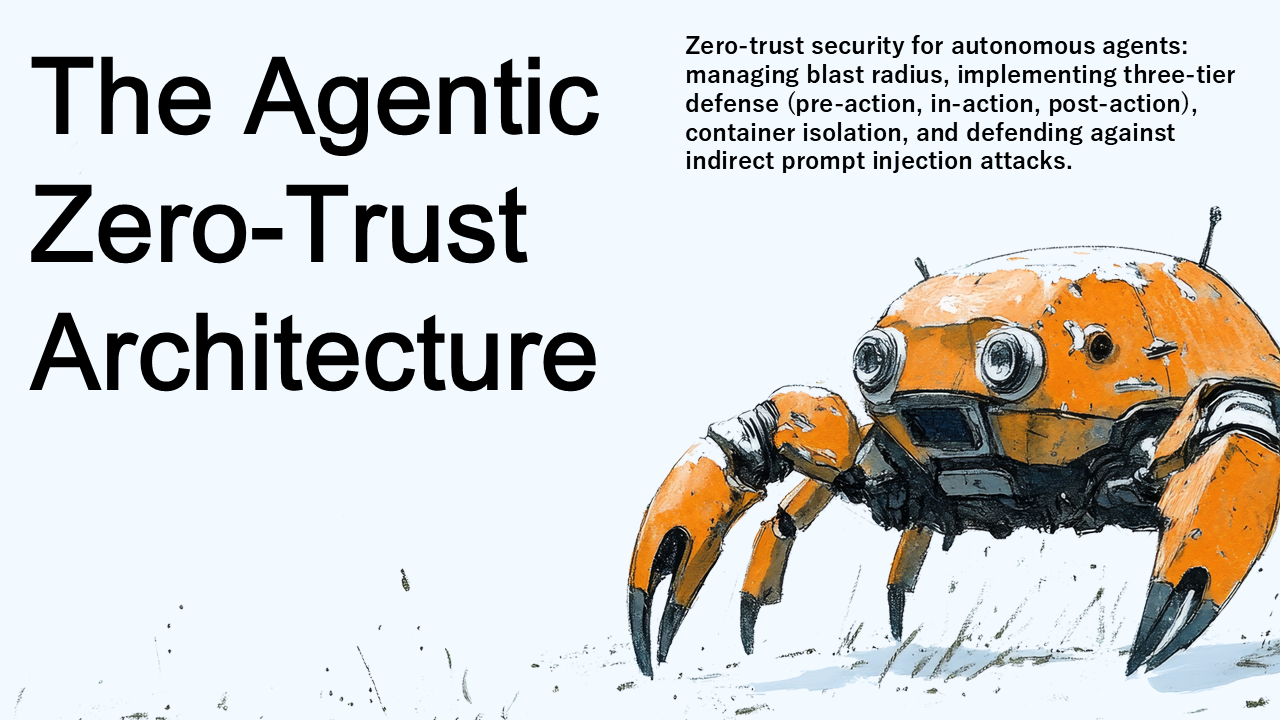
OpenClaw Engineering, Chapter 12: The Agentic Zero-Trust Architecture
Zero-trust security for autonomous agents: managing blast radius, implementing three-tier defense (pre-action, in-action, post-action), container isolation, and defending against indirect prompt injection attacks.
2026-03-27
Frictionless SaaS, Chapter 4: The First Ten Minutes - Designing the Session That Decides Everything
Chapter 4 of the Frictionless SaaS blog series. The first ten minutes of a user's first session decide whether they activate or silently churn. The First Session Blueprint and the Empty State Opportunity are the two design patterns that separate products users love from products users forget.
2026-03-25
Frictionless SaaS, Chapter 3: Signup Design - Stop Interrogating People Before They Can Use Your Product
Chapter 3 of the Frictionless SaaS blog series. Why most SaaS signup forms are conversion killers, what the Minimum Viable Signup really looks like, and how the Progressive Commitment Model lets you collect every piece of information you want - without scaring users off at the door.
2026-03-24
Frictionless SaaS, Chapter 2: The SAFE Journey — A Map of Where Your Users Actually Quit
Chapter 2 of the Frictionless SaaS blog series. The SAFE Journey Framework breaks the user lifecycle into Signup, Activation, Frequency, and Expansion — each with different friction, different metrics, and different fixes. Plus: why Time to Value is the most important retention metric in early-stage SaaS.
2026-03-23
Frictionless SaaS, Chapter 1: Silent Churn — The Users Who Leave Without Complaining
Chapter 1 of the Frictionless SaaS blog series. Silent churn is the most dangerous kind of churn — users who sign up, disappear, and never tell you why. A look at the Silent Churn Pattern and the Activation Gap.
2026-03-22
Frictionless SaaS, Part 0: How Users Actually Find, Judge, and Try Your Product
Kicking off a blog series based on the book "Frictionless SaaS." This first post introduces Chapters 0.1 through 0.3 — Discovery, the Landing Page, and Freemium & Entry Points — the three friction points every user hits before they ever sign up.
2026-03-21
Frictionless SaaS: The Complete Series Index — Your Guide to All 24 Chapters
The complete reader's guide to the Frictionless SaaS blog series. An introduction to the thesis — that in the AI era, features are commoditized and experience is the only lasting competitive advantage — plus direct links to all 25 posts across the 24 chapters of the book.
2026-03-20
Chapter 14: Hardening Your Identity Stack — Setting the Defaults That Keep You Safe
Chapter 14 of the OpenID: Modern Identity series — hardening defaults that neutralize common attacks: strict redirect URI matching, audience validation to solve the confused deputy problem, token lifetime tuning, and refresh token binding, rotation, and revocation.
2026-03-20
Chapter 13: Threat Modeling OpenID Systems — Thinking Like the Adversary
Chapter 13 of the OpenID: Modern Identity series — threat modeling for OIDC systems: token theft vectors and defenses, replay attacks and nonce validation, CSRF and state parameter mismanagement, redirect abuse and mix-up attacks.
2026-03-19

Chapter 9: SPA and Mobile Patterns — Auth in Hostile Environments
Chapter 9 of the OpenID: Modern Identity series — SPAs and mobile apps in hostile environments: XSS and CSRF defense, PKCE in the browser, the Backend-for-Frontend pattern, native app patterns, and refresh token rotation with reuse detection.
2026-03-15
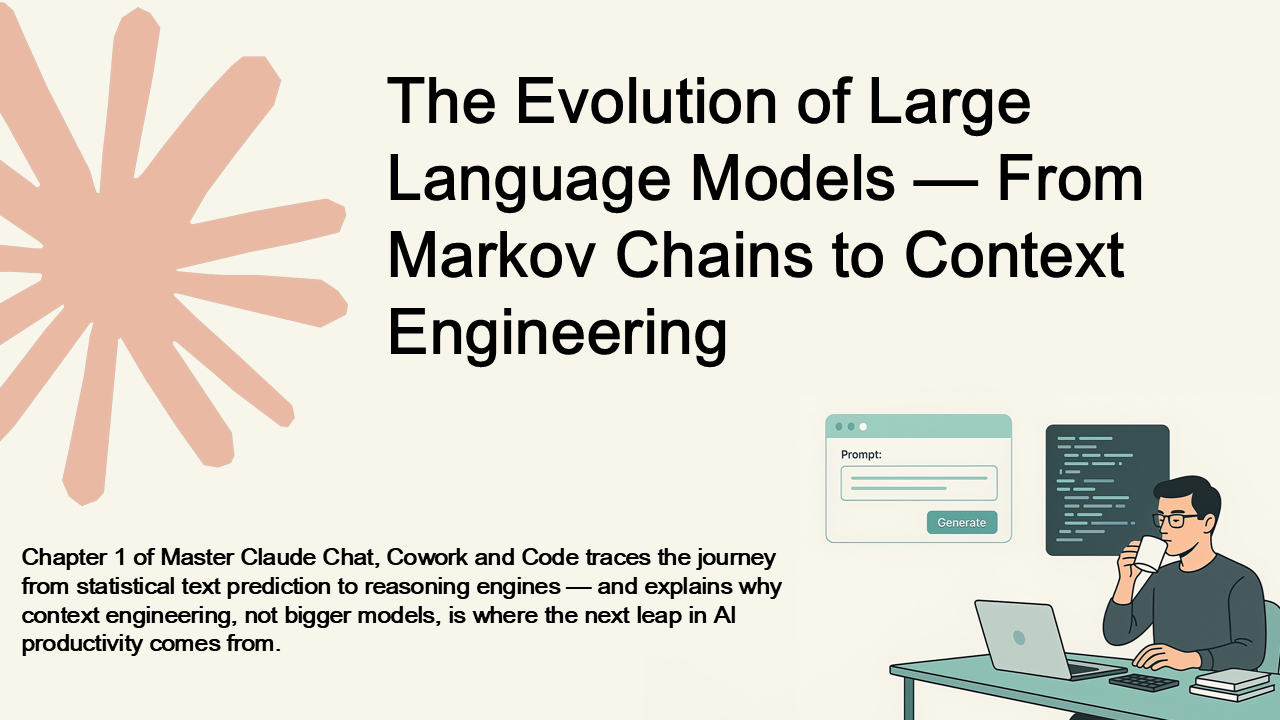
Master Claude, Chapter 1: The Evolution of Large Language Models — From Markov Chains to Context Engineering
Chapter 1 of Master Claude Chat, Cowork and Code traces the journey from statistical text prediction to reasoning engines — and explains why context engineering, not bigger models, is where the next leap in AI productivity comes from.
2026-03-02
Art of Coding, Chapter 13: Testing as a Design Discipline
Testing is a design discipline. How well-written tests reveal awkward APIs, improve code clarity, and become the most reliable documentation of system behavior.
2026-01-09
Art of Coding, Part III: Practices That Shape Good Code
From principles to practice. How daily habits, small decisions, and repeated choices shape code that actually endures.
2025-12-30
Chapter 6 — Cholesky Decomposition
A deep, narrative-driven introduction to Cholesky decomposition explaining why symmetric positive definite matrices dominate real computation. Covers structure, stability, performance, and the role of Cholesky in ML, statistics, and optimization.
2025-09-27

3.4 Exact Algorithms vs Implemented Algorithms
Learn why textbook algorithms differ from the versions that actually run on computers. This chapter explains rounding, floating-point errors, instability, algorithmic reformulation, and why mathematically equivalent methods behave differently in AI, ML, and scientific computing.
2025-09-16

2.1 Floating-Point Numbers (IEEE 754)
A detailed, intuitive guide to floating-point numbers and the IEEE 754 standard. Learn how computers represent real numbers, why precision is limited, and how rounding, overflow, subnormals, and special values affect numerical algorithms in AI, ML, and scientific computing.
2025-09-08

Use Case: Sales Assistant Bot|Mastering Microsoft Teams Bots 6.3
Learn how to build a Sales Assistant Bot for Microsoft Teams. From surfacing leads to logging calls and syncing with CRMs, this section shows how bots can empower sales teams to move faster, close deals, and automate follow-ups — all within Teams.
2025-04-20
Task Modules|Mastering Microsoft Teams Bots 4.1
Learn how to use Task Modules in Microsoft Teams to embed rich, interactive modal experiences inside your bot. This section explains how to launch, return data from, and design secure webviews that turn chat into structured user interaction.
2025-04-11
Categories
Tags
Search Logs
Hello World bot 1185
IT assistant bot 1140
Deploy Teams bot to Azure 1137
Microsoft Bot Framework 1052
Teams bot development 1025
Teams production bot 1004
bot for sprint updates 994
Microsoft Teams Task Modules 979
Zendesk Teams integration 979
Teams app zip 977
Bot Framework Adaptive Card 973
Bot Framework example 964
Task Modules 961
Teams chatbot 955
Azure CLI webapp deploy 952
C 952
Teams bot packaging 947
Teams bot tutorial 946
Bot Framework proactive messaging 941
Graph API token 937
Bot Framework CLI 932
Adaptive Card Action.Submit 930
Bot Framework prompts 913
Azure App Service bot 908
Microsoft Graph 907
Azure Bot Services 883
Adaptive Cards 881
Azure bot registration 880
ServiceNow bot 866
proactive messages 814
Development & Technical Consulting
Working on a new product or exploring a technical idea? We help teams with system design, architecture reviews, requirements definition, proof-of-concept development, and full implementation. Whether you need a quick technical assessment or end-to-end support, feel free to reach out.
Contact Us