
{R}R Dev Notes
Found total of 23 articles.
The Engineering of Intent, Chapter 38: Multi-Agent Conflict Resolution — Protocols for Agentic Tie-Breaking
Chapter 38 of The Engineering of Intent blog series. When multiple specialized agents block the same PR with incompatible demands, the answer is a protocol for Agentic Tie-Breaking. A teaser on triaging stacked concerns vs. real conflicts, three resolution protocols, Architect Agent design, and the four governance failure modes.
2026-05-24
Frictionless SaaS Chapter 9: Eliminating Friction and Building Consistency
Chapter 9 preview of Frictionless SaaS: the Friction Audit Matrix, the Consistency Principle, perceived speed, and information ergonomics - the retention levers most teams ignore.
2026-03-30
Frictionless SaaS, Chapter 5: Just-In-Time Learning - Teach Users at the Exact Moment They Need It
Chapter 5 of the Frictionless SaaS blog series. Users don't want to learn your product - they want to solve their problem. Just-In-Time Learning teaches at the moment of need, and the Skippable Onboarding Principle respects the users who already know what they're doing.
2026-03-26
Frictionless SaaS, Chapter 4: The First Ten Minutes - Designing the Session That Decides Everything
Chapter 4 of the Frictionless SaaS blog series. The first ten minutes of a user's first session decide whether they activate or silently churn. The First Session Blueprint and the Empty State Opportunity are the two design patterns that separate products users love from products users forget.
2026-03-25
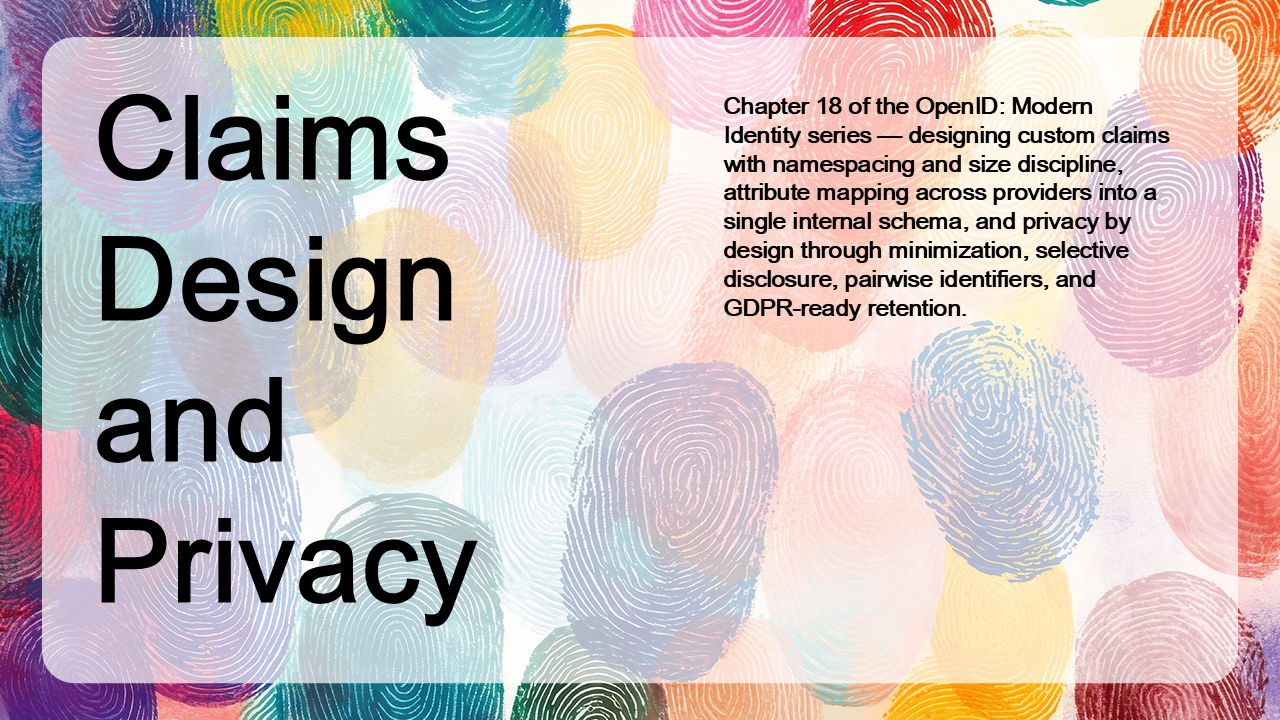
Chapter 18: Claims Design and Privacy — Identity Data Without Overshare
Chapter 18 of the OpenID: Modern Identity series — designing custom claims with namespacing and size discipline, attribute mapping across providers into a single internal schema, and privacy by design through minimization, selective disclosure, pairwise identifiers, and GDPR-ready retention.
2026-03-24
Frictionless SaaS, Chapter 2: The SAFE Journey — A Map of Where Your Users Actually Quit
Chapter 2 of the Frictionless SaaS blog series. The SAFE Journey Framework breaks the user lifecycle into Signup, Activation, Frequency, and Expansion — each with different friction, different metrics, and different fixes. Plus: why Time to Value is the most important retention metric in early-stage SaaS.
2026-03-23
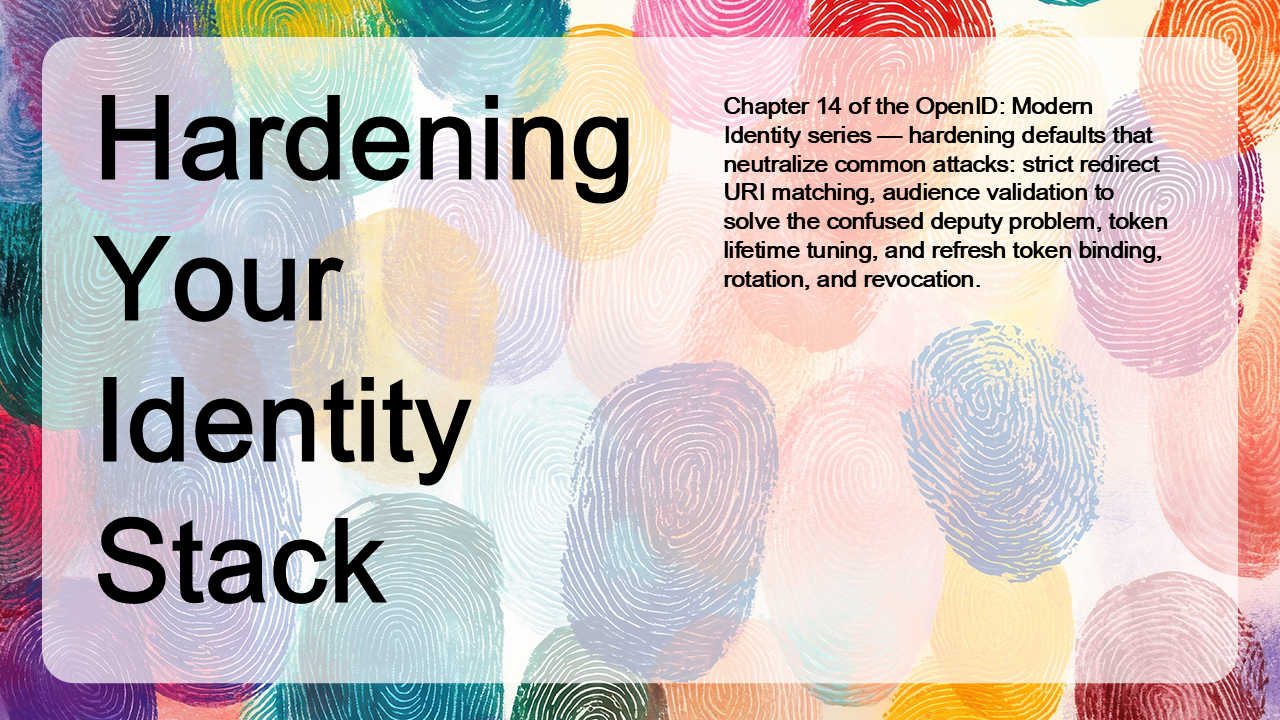
Chapter 14: Hardening Your Identity Stack — Setting the Defaults That Keep You Safe
Chapter 14 of the OpenID: Modern Identity series — hardening defaults that neutralize common attacks: strict redirect URI matching, audience validation to solve the confused deputy problem, token lifetime tuning, and refresh token binding, rotation, and revocation.
2026-03-20
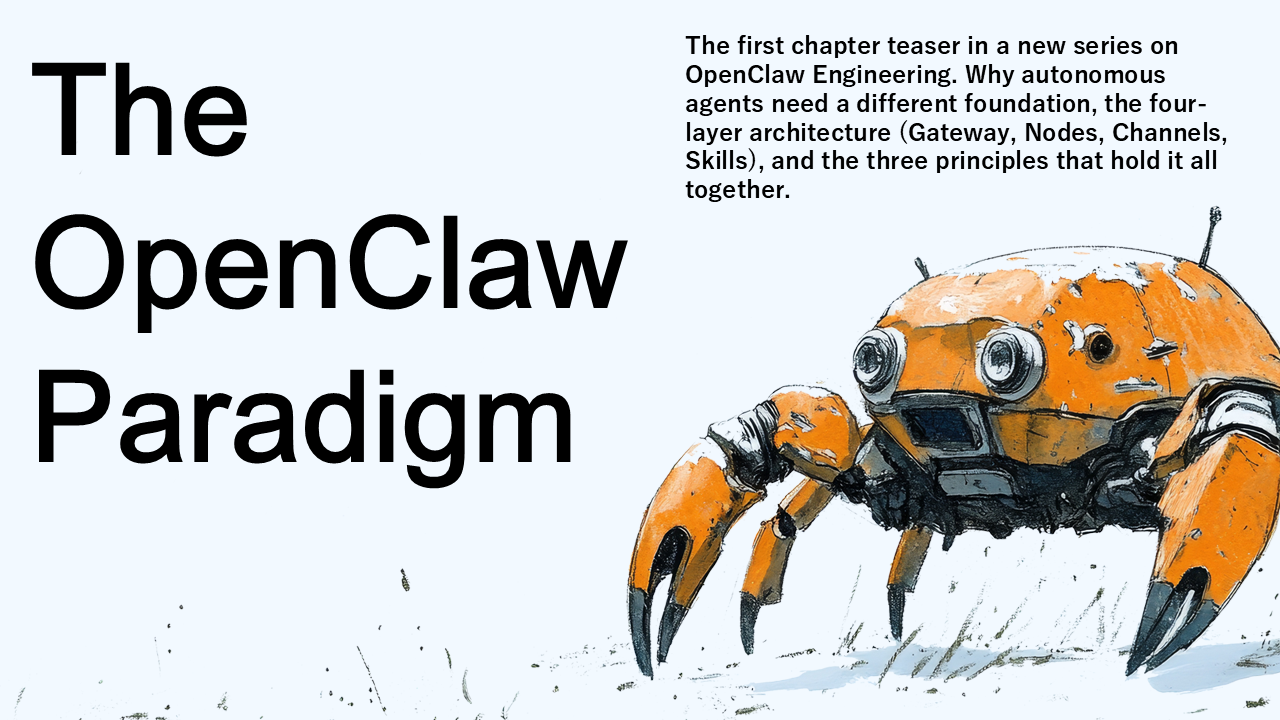
OpenClaw Engineering, Chapter 1: The OpenClaw Paradigm
The first chapter teaser in a new series on OpenClaw Engineering. Why autonomous agents need a different foundation, the four-layer architecture (Gateway, Nodes, Channels, Skills), and the three principles that hold it all together.
2026-03-16
Chapter 12: CLAUDE.md — Designing Guardrails That Shape How Claude Thinks
Chapter 12 of Master Claude Chat, Cowork and Code explores CLAUDE.md as a living constitution for AI behavior — positive constraints over prohibitions, complete financial and startup examples, instruction decay, hierarchical files, and anti-patterns to avoid.
2026-03-13
Chapter 11: CI/CD Integration and Automation — Claude Code in Your Pipeline
Chapter 11 of Master Claude Chat, Cowork and Code shows how to deploy Claude Code into CI/CD pipelines — GitHub Actions, GitLab CI, automated PR reviews, security audits, documentation sync, cost management, and production safety patterns.
2026-03-12
Chapter 8: Scheduled Tasks and Autonomous Execution — Making Claude Work While You Sleep
Chapter 8 of Master Claude Chat, Cowork and Code covers scheduled automation with Claude Cowork — cron-based recurring workflows, sleep/connectivity handling, error strategies, and applying GTD principles to AI task automation.
2026-03-09
Master Claude Chat, Cowork and Code – The Complete Blog Series
The complete index for the Master Claude Chat, Cowork and Code blog series — 20 chapter teasers covering everything from prompting fundamentals to multi-agent architectures, security governance, and the future of AI-powered work.
2026-03-01
Art of Coding, Chapter 16: Ethics and Longevity
How ethics and longevity intertwine in code. Why the systems you write today remain your responsibility for years, and how empathy shapes sustainable software.
2026-01-13
Art of Coding, Chapter 12: Version Control as a Storytelling Tool
Git is not just a backup system—it's a narrative tool. How clean commits and thoughtful branching strategies turn version control into a form of storytelling.
2026-01-08
Art of Coding, Chapter 11: Architectural Thinking
Architectural thinking is the discipline of designing systems that survive real-world growth. It means asking how your code will feel to live in years from now.
2026-01-06
Art of Coding, Chapter 6: Abstraction and Modularity
Drawing boundaries that make systems stronger. How to abstract without over-engineering, and design interfaces that last.
2025-12-31
Art of Coding, Part III: Practices That Shape Good Code
From principles to practice. How daily habits, small decisions, and repeated choices shape code that actually endures.
2025-12-30
Art of Coding, Chapter 4: Maintainability and Scalability
How to build code that bends instead of breaks, systems that grow without collapsing, and anticipate change without over-engineering.
2025-12-28
Art of Coding, Chapter 3: Readability First
Readability first: how naming, structure, and visual rhythm make code habitable for teams and time.
2025-12-27
Art of Coding, Part II: Principles of Clarity
Part II introduces clarity as the compass of software: readability, maintainability, and the consistency that makes teams move faster.
2025-12-26
Art of Coding, Chapter 2: The Philosophy of Clean Code
Clean code is a philosophy, not a rulebook. Explore simplicity vs. cleverness, expressiveness as communication, and code as a form of writing.
2025-12-25
Art of Coding, Part I: Why Code is an Art
Introducing the Art of Coding blog series: a 26-week exploration of what makes code beautiful, maintainable, and enduring in the age of AI.
2025-12-23
5.3 LU in NumPy and LAPACK
A practical, in-depth guide to how LU decomposition is implemented in NumPy and LAPACK. Learn about partial pivoting, blocked algorithms, BLAS optimization, error handling, and how modern numerical libraries achieve both speed and stability.
2025-09-25
Categories
Tags
Search Logs
Hello World bot 1185
IT assistant bot 1140
Deploy Teams bot to Azure 1137
Microsoft Bot Framework 1052
Teams bot development 1025
Teams production bot 1004
bot for sprint updates 994
Microsoft Teams Task Modules 979
Zendesk Teams integration 979
Teams app zip 977
Bot Framework Adaptive Card 973
Bot Framework example 964
Task Modules 961
Teams chatbot 955
Azure CLI webapp deploy 952
C 952
Teams bot packaging 947
Teams bot tutorial 946
Bot Framework proactive messaging 941
Graph API token 937
Bot Framework CLI 932
Adaptive Card Action.Submit 930
Bot Framework prompts 913
Azure App Service bot 908
Microsoft Graph 907
Azure Bot Services 883
Adaptive Cards 881
Azure bot registration 880
ServiceNow bot 866
proactive messages 814
Development & Technical Consulting
Working on a new product or exploring a technical idea? We help teams with system design, architecture reviews, requirements definition, proof-of-concept development, and full implementation. Whether you need a quick technical assessment or end-to-end support, feel free to reach out.
Contact Us