
{R}R Dev Notes
Found total of 44 articles.
The Forward Deployed Engineer, Chapter 7: Customer Discovery and the Messy Reality
Chapter 7 of The Forward Deployed Engineer blog series. The most important fourteen days of any engagement are the first fourteen. A teaser on the three outputs of discovery, the async interview, the Weird Tuesday problem, the workflow inventory, and the Eval-Customer Split.
2026-06-02
The Forward Deployed Engineer, Chapter 6: The Soft Stack — Diplomacy and Strategy
Chapter 6 of The Forward Deployed Engineer blog series. The "soft stack" is the part of the FDE skillset most often dismissed as soft. A teaser on MECE, the Pyramid Principle, stakeholder mapping, Managing the Skeptic, the Diplomatic Register, and stress inoculation.
2026-06-01
The Forward Deployed Engineer, Chapter 5: The AI and Agentic Frontier
Chapter 5 of The Forward Deployed Engineer blog series. The technical bar that the FDE shares with platform engineers — plus the AI-specific skills that separate the role in 2026. A teaser on agents beyond chatbots, RAG, multi-agent orchestration, evals as a discipline, and model-agnostic deployment.
2026-05-31
The Forward Deployed Engineer, Chapter 4: The Technical Bar
Chapter 4 of The Forward Deployed Engineer blog series. The FDE is, first and last, an engineer. A teaser on the four technical primitives, the non-obvious skills, what you don't need to be, and the four-round interview that actually tests for it.
2026-05-30
The Engineering of Intent, Chapter 36: The Long View
Chapter 36 of The Engineering of Intent blog series. The long view. What happens to our craft, our profession, and our lives over the next ten years? A teaser on cycles and waves, three things that will endure, three that will change, and a final word on identity.
2026-05-22
The Engineering of Intent, Chapter 30: Vibe Coding in the Frontend
Chapter 30 of The Engineering of Intent blog series. Frontend has a different shape — visual, fast-iterating — and specific failure modes around design systems, accessibility, state, and performance. A teaser on the four domains and the dashboard rebuild that shipped in eleven days.
2026-05-16
The Engineering of Intent, Chapter 26: Checklists for the Working Engineer
Chapter 26 of The Engineering of Intent blog series. Six one-page checklists I reach for mid-task — new feature, PR, deploy, post-incident, Context Pack health, and interview. A teaser on why checklists are most valuable when you're most confident you don't need them.
2026-05-12
The Engineering of Intent, Chapter 14: The 30-Day Pilot Framework
Chapter 14 of The Engineering of Intent blog series. Every successful AI-native transformation starts as a thirty-day pilot on a single well-scoped project. A teaser on how to scope the first project, the week-by-week playbook, the five-question graduation rubric, and the three pilots that show what works and what doesn't.
2026-04-30
The Engineering of Intent, Chapter 13: VibeOps and CI/CD Evolution
Chapter 13 of The Engineering of Intent blog series. Static CI/CD was built for human-paced commits. AI-native velocity needs dynamic, context-aware, agent-literate pipelines. A teaser on VibeOps, context preservation across deployments, merge queues at velocity, and the ten-minute pipeline contract.
2026-04-29
The Engineering of Intent, Chapter 12: The GenDD Pod
Chapter 12 of The Engineering of Intent blog series. Three people, continuous flow, almost no ceremony — the team structure that actually ships AI-native work sustainably. A teaser on the Agentic Product Lead, Engineer, and QA roles, the transition from Agile, and the case study where a SaaS company went from 72 engineers to 24.
2026-04-28
The Engineering of Intent, Chapter 11: The Art of Agentic Debugging
Chapter 11 of The Engineering of Intent blog series. Debugging in the AI-native regime is archaeology — the code may have been written by an agent you supervised loosely. A teaser on the self-correction loop, control-flow visualization, bisection under velocity, and the caching heisenbug that took hours manually but fifteen minutes with the agent.
2026-04-27
The Engineering of Intent, Chapter 10: The Five-Layer Quality Gate Stack
Chapter 10 of The Engineering of Intent blog series. Every AI-generated change must pass five layers of automated gates before a human sees it. A teaser on linting, strict types, SAST, test synthesis, and agentic E2E — plus the anti-patterns that quietly invalidate the stack.
2026-04-26
The Engineering of Intent, Chapter 9: Advanced Context Engineering
Chapter 9 of The Engineering of Intent blog series. Context engineering is the highest-leverage activity in AI-native development. A teaser on the Context Pack, the Layered Prompt, the A/B test that proved more context isn't better context, and the three anti-patterns that quietly kill agent quality.
2026-04-25
The Engineering of Intent, Chapter 8: The Four Pillars of AI Architecture
Chapter 8 of The Engineering of Intent blog series. Every durable AI-native project has the same four pillars — Vibes, Specs, Skills, and Agents — and most teams over-invest in one and neglect the rest. A teaser on the pillars, the healthy cycle, and the rebalancing that cut a company's regression rate by 80%.
2026-04-24
The Engineering of Intent, Chapter 7: The GenDD Execution Loop
Chapter 7 of The Engineering of Intent blog series. Generative-Driven Development replaces your ceremony set with a fractal five-step loop: Context, Plan, Confirm, Execute, Validate. A teaser on each step, what goes wrong when it's skipped, and the payments team that cut one-hour cycles down to ten minutes.
2026-04-23
The Engineering of Intent, Chapter 5: Agentic Editors and Flow States
Chapter 5 of The Engineering of Intent blog series. The editor is where the wiring meets your hands. A teaser on the three generations of editor, how semantic search amplifies your codebase's virtues and vices, the flow killers that destroy productivity, and the shortcut rebind that doubled a team lead's output.
2026-04-21
The Engineering of Intent, Chapter 3: Context Momentum and Path Dependence
Chapter 3 of The Engineering of Intent blog series. Agents amplify project momentum — good patterns propagate, bad ones propagate just as fast. A teaser on the First Prompt Trap, context rot, the physics of convention drift, and the ten-thousand-dollar rule for decision rigor.
2026-04-19
The Engineering of Intent, Chapter 2: Cognitive Load and Material Disengagement
Chapter 2 of The Engineering of Intent blog series. When the agent does most of the typing, the real failure mode is the engineer who has stopped engaging. A teaser on material disengagement, impressionistic scanning, the autocomplete trap, decision fatigue, and the seven habits of engaged engineers.
2026-04-18
The Engineering of Intent, Chapter 1: The Triadic Relationship Model
Chapter 1 of The Engineering of Intent blog series. Software used to be a dyad between engineer and machine. Now a third actor — the AI agent — has joined permanently. A teaser covering the Triadic Relationship Model, the CMDP view of software, and the six failure modes every AI-native team needs to name.
2026-04-17

Frictionless SaaS Chapter 14: Experience Observability and Friction Detection
Chapter 14 preview of Frictionless SaaS: experience observability, synthetic and real-user monitoring, and the friction detection engine that surfaces retention issues before they become churn.
2026-04-04
Frictionless SaaS Chapter 13: SaaS Metrics, Cohort Analysis, and the North Star
Chapter 13 preview of Frictionless SaaS: the SaaS Metrics Pyramid, Net Revenue Retention, cohort-based optimization, and how to choose a North Star that actually drives retention and revenue.
2026-04-03
Frictionless SaaS Chapter 10: Data Lock-In and Network Lock-In
Chapter 10 preview of Frictionless SaaS: the Data Gravity Effect, the Network Lock-In Model, and how to build structural moats that make churn expensive without being manipulative.
2026-03-31

Frictionless SaaS, Chapter 8: Designing for Habit - Why Retention Is Your Real Growth Engine
Chapter 8 of the Frictionless SaaS blog series. Retention is the multiplier on every dollar of acquisition you'll ever spend. The Habit Loop Engine, the Return Reason Architecture, and the DAU/WAU signals that tell you whether you're building a habit or a one-night stand.
2026-03-29
Chapter 20: Passwordless Authentication — Passkeys, WebAuthn, and the End of the Password
Chapter 20 of the OpenID: Modern Identity series — passwordless authentication: passkeys as friendly public-key credentials, WebAuthn as the underlying browser API, and the FIDO2 ecosystem including hardware security keys.
2026-03-26
Chapter 19: Observability and Operations — Identity You Can Actually Run
Chapter 19 of the OpenID: Modern Identity series — observability and operations for identity systems: structured authentication logging with correlation IDs, distributed tracing of login flows, and immutable audit trails aligned to regulatory requirements.
2026-03-25
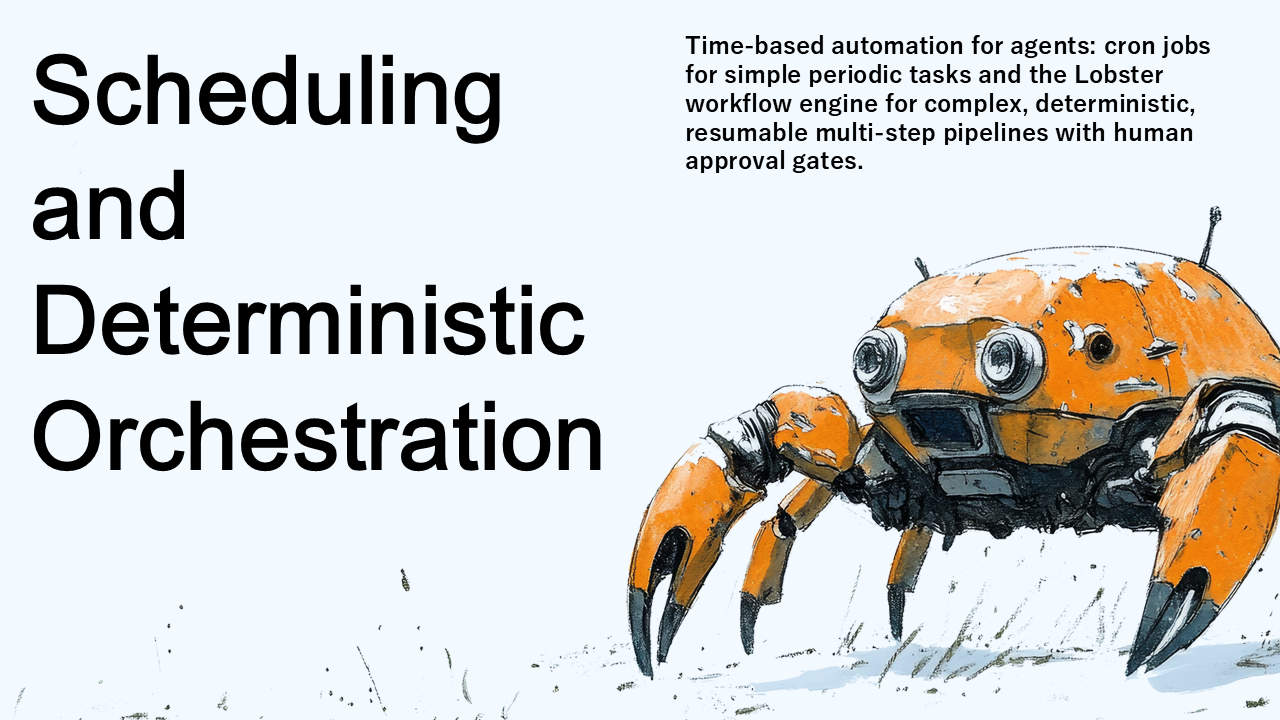
OpenClaw Engineering, Chapter 9: Scheduling and Deterministic Orchestration
Time-based automation for agents: cron jobs for simple periodic tasks and the Lobster workflow engine for complex, deterministic, resumable multi-step pipelines with human approval gates.
2026-03-24
Chapter 15: FAPI and High-Stakes Security — When the Defaults Aren't Enough
Chapter 15 of the OpenID: Modern Identity series — FAPI for high-stakes scenarios: what FAPI 1.0 Advanced and 2.0 require, Pushed Authorization Requests (PAR), JWT-Secured Authorization Requests (JAR), and migrating from FAPI 1.0 Advanced to FAPI 2.0.
2026-03-21
Chapter 20 – The Next Decade of AI Coworkers
Chapter 20 of Master Claude Chat, Cowork and Code looks ahead — from conversational AI to embedded infrastructure, from chat interfaces to computer use, and the trust and responsibility questions that will define how AI reshapes work over the next decade.
2026-03-20
Chapter 14: Hardening Your Identity Stack — Setting the Defaults That Keep You Safe
Chapter 14 of the OpenID: Modern Identity series — hardening defaults that neutralize common attacks: strict redirect URI matching, audience validation to solve the confused deputy problem, token lifetime tuning, and refresh token binding, rotation, and revocation.
2026-03-20
Chapter 13: Threat Modeling OpenID Systems — Thinking Like the Adversary
Chapter 13 of the OpenID: Modern Identity series — threat modeling for OIDC systems: token theft vectors and defenses, replay attacks and nonce validation, CSRF and state parameter mismanagement, redirect abuse and mix-up attacks.
2026-03-19
Chapter 16 – Execution Risks and Isolation
Chapter 16 of Master Claude Chat, Cowork and Code confronts the real security risks of AI systems that execute commands and manipulate files — from command injection to data exposure — and explains the isolation models that keep things safe.
2026-03-17
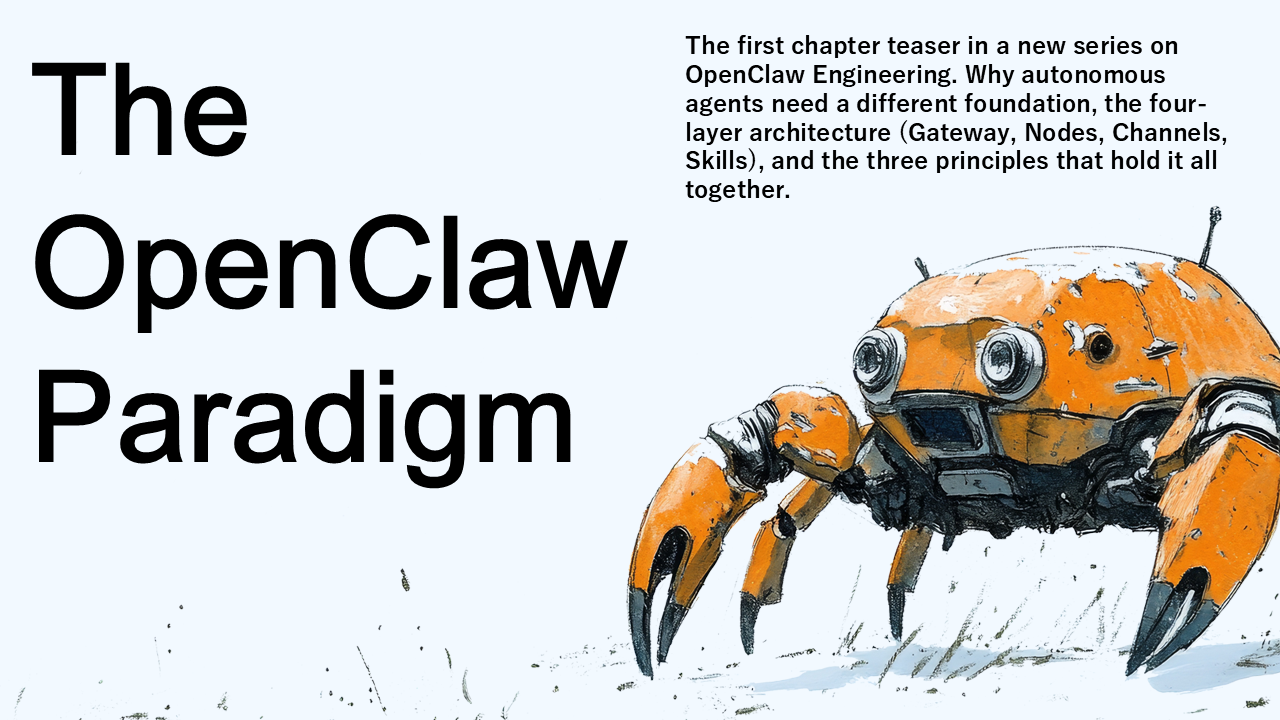
OpenClaw Engineering, Chapter 1: The OpenClaw Paradigm
The first chapter teaser in a new series on OpenClaw Engineering. Why autonomous agents need a different foundation, the four-layer architecture (Gateway, Nodes, Channels, Skills), and the three principles that hold it all together.
2026-03-16

Chapter 9: SPA and Mobile Patterns — Auth in Hostile Environments
Chapter 9 of the OpenID: Modern Identity series — SPAs and mobile apps in hostile environments: XSS and CSRF defense, PKCE in the browser, the Backend-for-Frontend pattern, native app patterns, and refresh token rotation with reuse detection.
2026-03-15
Chapter 1: Why Identity Is Hard — The Trust Problem Behind Every Login
Chapter 1 of the OpenID: Modern Identity book series — why identity is a trust problem first and a technology problem second, and why authentication and authorization must never be conflated.
2026-03-07

OpenID: Modern Identity for Developers and Architects — A 22-Part Blog Series
Introduction and index for the 22-part blog series based on OpenID: Modern Identity for Developers and Architects by Sho Shimoda — with links to every chapter from Why Identity Is Hard through Identity in AI Systems.
2026-03-06
Chapter 8 — Eigenvalues and Eigenvectors
A deep, intuitive introduction to eigenvalues and eigenvectors for engineers and practitioners. Explains why spectral methods matter, where they appear in real systems, and how modern numerical algorithms compute eigenvalues efficiently. Leads naturally into the power method and inverse iteration.
2025-10-06
5.3 LU in NumPy and LAPACK
A practical, in-depth guide to how LU decomposition is implemented in NumPy and LAPACK. Learn about partial pivoting, blocked algorithms, BLAS optimization, error handling, and how modern numerical libraries achieve both speed and stability.
2025-09-25
2.1 Floating-Point Numbers (IEEE 754)
A detailed, intuitive guide to floating-point numbers and the IEEE 754 standard. Learn how computers represent real numbers, why precision is limited, and how rounding, overflow, subnormals, and special values affect numerical algorithms in AI, ML, and scientific computing.
2025-09-08

Use Case: Sales Assistant Bot|Mastering Microsoft Teams Bots 6.3
Learn how to build a Sales Assistant Bot for Microsoft Teams. From surfacing leads to logging calls and syncing with CRMs, this section shows how bots can empower sales teams to move faster, close deals, and automate follow-ups — all within Teams.
2025-04-20
Use Case: Helpdesk Assistant Bot|Mastering Microsoft Teams Bots 6.1
Explore how to build a Helpdesk Assistant Bot in Microsoft Teams. Learn how bots can reduce IT load by handling FAQs, logging support tickets, and notifying users — all within Teams. This section explains features, user experience, and implementation strategies.
2025-04-18
Deploying to Azure|Mastering Microsoft Teams Bots 5.1
Learn how to deploy your Microsoft Teams bot to Azure for production use. This section walks through setting up an Azure App Service, configuring environment variables, connecting to Bot Channels Registration, and testing your bot in the cloud.
2025-04-15
Hello World Bot|Mastering Microsoft Teams Bots 2.2
Build your first Microsoft Teams bot with a simple Hello World response. This hands-on section walks you through using the Bot Framework SDK, setting up a local project with Node.js or .NET, using Ngrok to expose your endpoint, and testing your bot directly in Teams.
2025-04-06
Setting Up Your Environment|Mastering Microsoft Teams Bots 2.1
Start your Microsoft Teams bot development journey with a solid foundation. This section walks you through the essential tools—Node.js, .NET SDK, Ngrok, Azure CLI—and explains why setting up your dev environment the right way is critical to building bots successfully.
2025-04-05
Why Build Bots for Microsoft Teams?|Mastering Microsoft Teams Bots 1.1
Discover why Microsoft Teams bots are transforming the workplace. This section explores the real-world impact of building bots in Teams, from automating tasks and integrating external services to enabling context-aware digital assistants. Learn how bots can save time, boost productivity, and bring automation into the flow of daily work.
2025-04-02
Categories
Tags
Search Logs
Hello World bot 1179
IT assistant bot 1131
Deploy Teams bot to Azure 1129
Microsoft Bot Framework 1047
Teams bot development 1014
Teams production bot 998
bot for sprint updates 982
Teams app zip 973
Zendesk Teams integration 971
Microsoft Teams Task Modules 968
Bot Framework Adaptive Card 963
Bot Framework example 956
Teams chatbot 950
Azure CLI webapp deploy 948
Task Modules 947
Teams bot tutorial 944
C 943
Teams bot packaging 938
Bot Framework proactive messaging 934
Graph API token 931
Bot Framework CLI 929
Adaptive Card Action.Submit 924
Bot Framework prompts 907
Azure App Service bot 903
Microsoft Graph 903
Azure Bot Services 878
Adaptive Cards 877
Azure bot registration 871
ServiceNow bot 861
proactive messages 813
Development & Technical Consulting
Working on a new product or exploring a technical idea? We help teams with system design, architecture reviews, requirements definition, proof-of-concept development, and full implementation. Whether you need a quick technical assessment or end-to-end support, feel free to reach out.
Contact Us