
{R}R Dev Notes
Found total of 72 articles.
Chapter 10: Single Sign-On at Scale — Identity as Infrastructure
Chapter 10 of the OpenID: Modern Identity series — running identity at organizational scale: corporate IdPs (AD, Entra ID), the CIAM vendor ecosystem (Okta, Auth0, Entra ID), multi-tenant isolation, account linking, and external user access.
2026-03-16
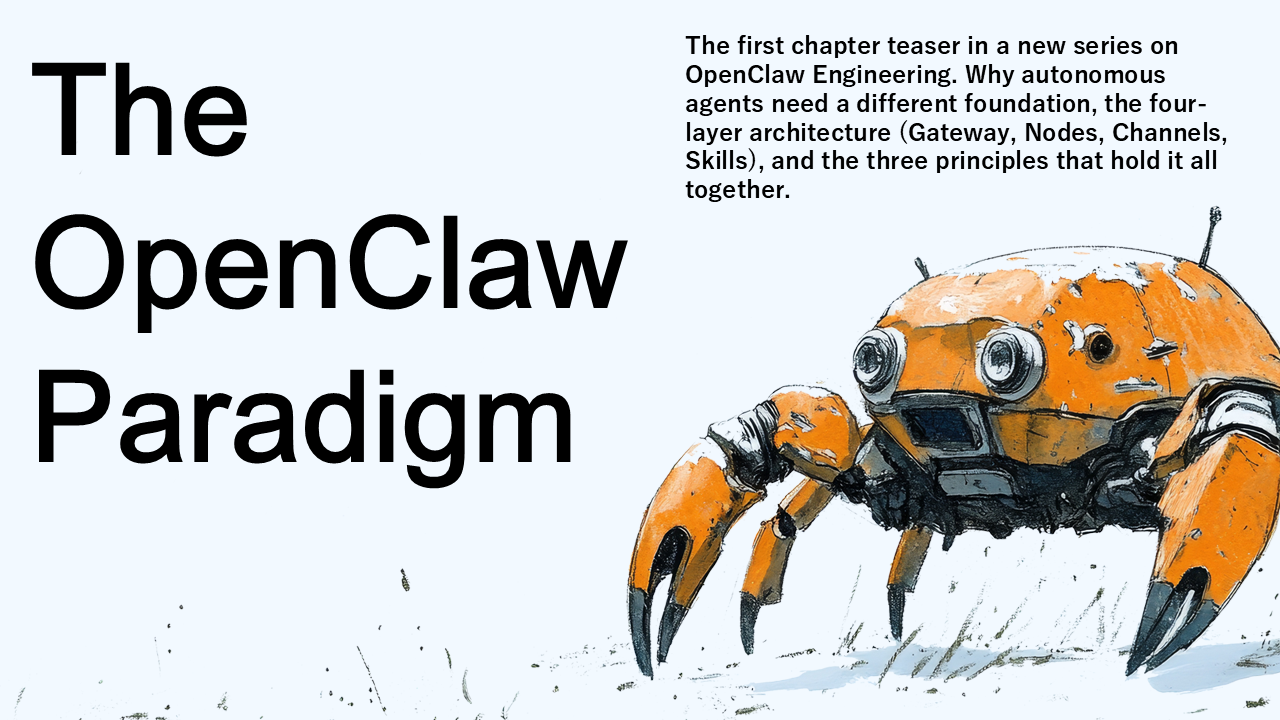
OpenClaw Engineering, Chapter 1: The OpenClaw Paradigm
The first chapter teaser in a new series on OpenClaw Engineering. Why autonomous agents need a different foundation, the four-layer architecture (Gateway, Nodes, Channels, Skills), and the three principles that hold it all together.
2026-03-16
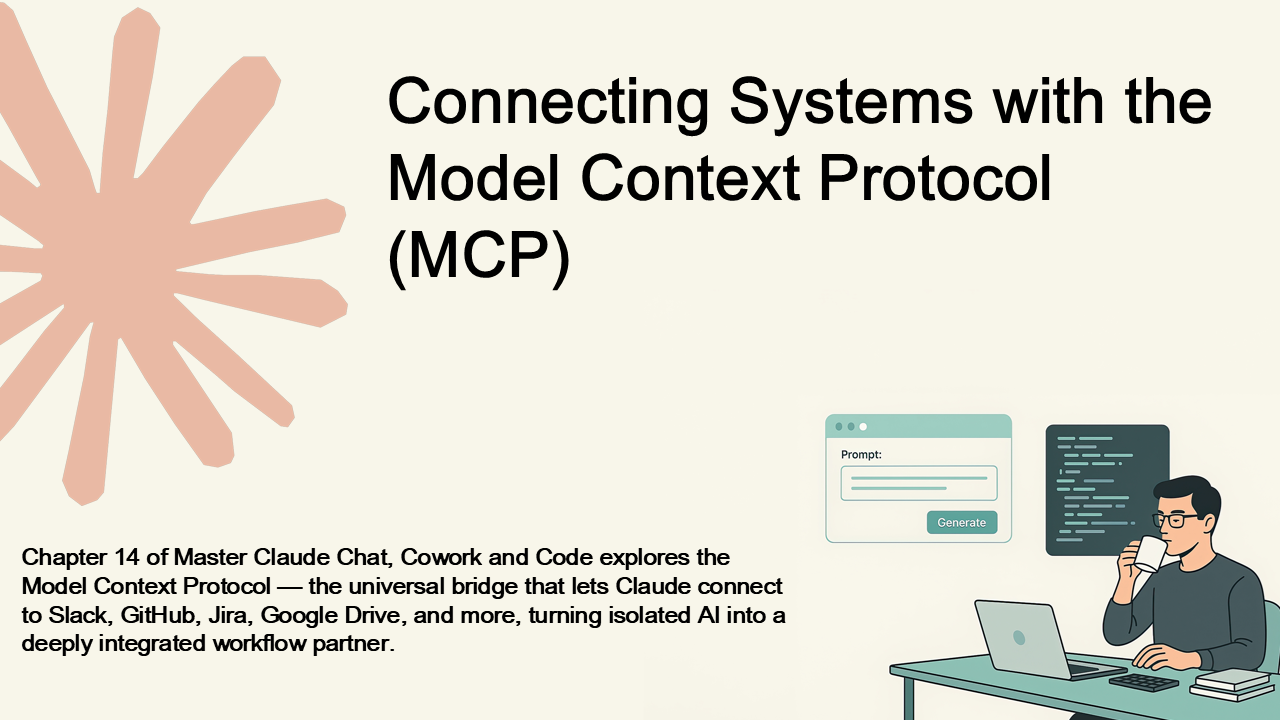
Chapter 14 – Connecting Systems with the Model Context Protocol (MCP)
Chapter 14 of Master Claude Chat, Cowork and Code explores the Model Context Protocol — the universal bridge that lets Claude connect to Slack, GitHub, Jira, Google Drive, and more, turning isolated AI into a deeply integrated workflow partner.
2026-03-15
Chapter 9: SPA and Mobile Patterns — Auth in Hostile Environments
Chapter 9 of the OpenID: Modern Identity series — SPAs and mobile apps in hostile environments: XSS and CSRF defense, PKCE in the browser, the Backend-for-Frontend pattern, native app patterns, and refresh token rotation with reuse detection.
2026-03-15
Chapter 13: Encapsulating Knowledge with Agent Skills — From Conversations to Autonomous Procedures
Chapter 13 of Master Claude Chat, Cowork and Code introduces Skills — reusable, encapsulated procedures that Claude executes autonomously. Covers SKILL.md structure, YAML frontmatter, trigger descriptions, and the Skills Library pattern for team distribution.
2026-03-14
Chapter 8: Securing Backend APIs — Bearer Tokens, Scopes, and Service-to-Service
Chapter 8 of the OpenID: Modern Identity series — securing backend APIs with bearer tokens, scope design for least privilege, token introspection versus local JWT validation, and the three mechanisms for service-to-service authentication.
2026-03-14
Chapter 12: CLAUDE.md — Designing Guardrails That Shape How Claude Thinks
Chapter 12 of Master Claude Chat, Cowork and Code explores CLAUDE.md as a living constitution for AI behavior — positive constraints over prohibitions, complete financial and startup examples, instruction decay, hierarchical files, and anti-patterns to avoid.
2026-03-13
Chapter 7: Your First OpenID Application — The Handshake, End to End
Chapter 7 of the OpenID: Modern Identity series — building a real OIDC login end to end: the minimal flow, state and nonce, strict redirect URI matching, sessions from tokens, and the three flavors of logout.
2026-03-13
Chapter 11: CI/CD Integration and Automation — Claude Code in Your Pipeline
Chapter 11 of Master Claude Chat, Cowork and Code shows how to deploy Claude Code into CI/CD pipelines — GitHub Actions, GitLab CI, automated PR reviews, security audits, documentation sync, cost management, and production safety patterns.
2026-03-12
Chapter 10: Safe Legacy Code Refactoring — Horror Stories and the Discipline That Prevents Them
Chapter 10 of Master Claude Chat, Cowork and Code tackles the hardest problem in AI-assisted development — refactoring legacy code without introducing subtle bugs. Covers characterization tests, incremental verification, PR review, and catching hallucinations.
2026-03-11
Chapter 3: Core Concepts — The Vocabulary of OpenID Connect
Chapter 3 of the OpenID: Modern Identity series — the IdP/RP/user triangle, claims and JWTs, the three OIDC token types, consent and scopes, sessions vs tokens, and the boundary between authentication and authorization.
2026-03-09
Chapter 2: From OpenID to OpenID Connect — How the Industry Got This One Right
Chapter 2 of the OpenID: Modern Identity series — tracing how the industry moved from the original OpenID and SAML through OAuth 2.0 to OpenID Connect, and when to reach for each standard.
2026-03-08
Chapter 6: What Is Claude Cowork? — The Desktop Agent That Touches Your Files
Chapter 6 of Master Claude Chat, Cowork and Code introduces Claude Cowork — a sandboxed desktop agent that automates file management, data extraction, and cross-application workflows on your local machine.
2026-03-07
OpenID: Modern Identity for Developers and Architects — A 22-Part Blog Series
Introduction and index for the 22-part blog series based on OpenID: Modern Identity for Developers and Architects by Sho Shimoda — with links to every chapter from Why Identity Is Hard through Identity in AI Systems.
2026-03-06
Master Claude, Chapter 4: Context Persistence with Claude Projects — Solving the AI Amnesia Problem
Chapter 4 of Master Claude Chat, Cowork and Code explains how Claude Projects solve the AI amnesia problem with persistent context — custom instructions, knowledge bases, and shared team workspaces that remember your architecture, conventions, and patterns across every conversation.
2026-03-05
Master Claude, Chapter 3: Understanding Entropy and Prompting Fundamentals — Why Your Prompts Fail and How to Fix Them
Chapter 3 of Master Claude Chat, Cowork and Code explains why some prompts work and others fail — through the lens of entropy and probability. Covers XML-structured prompting, chain-of-thought reasoning, multishot examples, and a standard prompt template you can use immediately.
2026-03-04
Master Claude, Chapter 2: The Three Pillars of Claude — Chat, Cowork, and Code
Claude is not one product — it is three. Chat for reasoning, Cowork for desktop automation, Code for terminal-based development. Chapter 2 of Master Claude Chat, Cowork and Code explains the architecture of each and the decision framework for choosing the right one.
2026-03-03
Master Claude, Chapter 1: The Evolution of Large Language Models — From Markov Chains to Context Engineering
Chapter 1 of Master Claude Chat, Cowork and Code traces the journey from statistical text prediction to reasoning engines — and explains why context engineering, not bigger models, is where the next leap in AI productivity comes from.
2026-03-02
Master Claude Chat, Cowork and Code – The Complete Blog Series
The complete index for the Master Claude Chat, Cowork and Code blog series — 20 chapter teasers covering everything from prompting fundamentals to multi-agent architectures, security governance, and the future of AI-powered work.
2026-03-01

Localization and Multi-Tenant Support|Mastering Microsoft Teams Bots 4.4
Prepare your Microsoft Teams bot for real-world deployment. This section covers how to support multiple languages using localization, and how to safely handle multiple organizations with multi-tenant support — including tenant isolation, data security, and consent flows.
2025-04-14
Task Modules|Mastering Microsoft Teams Bots 4.1
Learn how to use Task Modules in Microsoft Teams to embed rich, interactive modal experiences inside your bot. This section explains how to launch, return data from, and design secure webviews that turn chat into structured user interaction.
2025-04-11
Bot Authentication and Identity|Mastering Microsoft Teams Bots 2.3
Learn how Microsoft Teams bots authenticate users and access secure data. This section covers SSO, OAuth 2.0, and the Microsoft Graph API, giving your bot the ability to understand identity and act on behalf of users—safely and seamlessly.
2025-04-07
Categories
Tags
Search Logs
Hello World bot 1186
IT assistant bot 1140
Deploy Teams bot to Azure 1138
Microsoft Bot Framework 1052
Teams bot development 1025
Teams production bot 1004
bot for sprint updates 995
Microsoft Teams Task Modules 979
Zendesk Teams integration 979
Teams app zip 977
Bot Framework Adaptive Card 973
Bot Framework example 964
Task Modules 961
Teams chatbot 955
Azure CLI webapp deploy 952
C 952
Teams bot packaging 947
Teams bot tutorial 946
Bot Framework proactive messaging 941
Graph API token 937
Bot Framework CLI 932
Adaptive Card Action.Submit 930
Bot Framework prompts 913
Azure App Service bot 908
Microsoft Graph 907
Azure Bot Services 883
Adaptive Cards 881
Azure bot registration 880
ServiceNow bot 866
proactive messages 814
Development & Technical Consulting
Working on a new product or exploring a technical idea? We help teams with system design, architecture reviews, requirements definition, proof-of-concept development, and full implementation. Whether you need a quick technical assessment or end-to-end support, feel free to reach out.
Contact Us