
{R}R Dev Notes
Found total of 44 articles.
The Engineering of Intent, Chapter 23: Context Pack Recipes
Chapter 23 of The Engineering of Intent blog series. Twelve Context Pack recipes for the situations you actually build packs for — greenfield, legacy monolith, migration, microservices, security, debugging, refactor, and more. A teaser on size budgets, disciplined exclusions, and the kitchen-sink reflex that drowns agents.
2026-05-09
The Engineering of Intent, Chapter 22: A Day in the Life — A Narrated Session
Chapter 22 of The Engineering of Intent blog series. A narrated recreation of a real, medium-complex working day — hour by hour — because average days are where practice gets tested. A teaser of the hourly shape, and the single rule behind all of it: agents are leverage on thinking you've done.
2026-05-08
The Engineering of Intent, Chapter 21: Working With Teammates (Human and Agentic)
Chapter 21 of The Engineering of Intent blog series. Vibe Coding is only solo in the narrowest sense — every piece of code has reviewers and maintainers, some human, some agent. A teaser on the review contract, pair Vibe Coding, handing off to agents without walking off a cliff, and the explicit mentorship that still works in the AI-native era.
2026-05-07
The Engineering of Intent, Chapter 19: The End-of-Day Routine
Chapter 19 of The Engineering of Intent blog series. The last twenty minutes of your workday set up tomorrow. A teaser on the five-step end-of-day routine — handoff note, convention update, lesson capture, open-loop closure, and tomorrow's first task — plus the "one more thing" anti-pattern that undoes all of it.
2026-05-05
The Engineering of Intent, Chapter 18: The Prompt Patterns Catalog
Chapter 18 of The Engineering of Intent blog series. Ten prompt patterns I use every day, with the design moves behind them. A teaser on Planning, Targeted Diff, Adversarial Review, Bug-Hypothesis, Scoping-Down, Consistency-Check, Teach-Back, Written-Down-Rule, Test-First, and One-Page-Design prompts.
2026-05-04
The Engineering of Intent, Chapter 17: The Flow Loop
Chapter 17 of The Engineering of Intent blog series. Flow with an agent in the loop is different from classical flow, but just as performance-defining. A teaser on the two-minute rule, the three-strike rule, the flow killers, and the checkout refactor that shipped in one afternoon instead of two days.
2026-05-03
The Engineering of Intent, Chapter 10: The Five-Layer Quality Gate Stack
Chapter 10 of The Engineering of Intent blog series. Every AI-generated change must pass five layers of automated gates before a human sees it. A teaser on linting, strict types, SAST, test synthesis, and agentic E2E — plus the anti-patterns that quietly invalidate the stack.
2026-04-26
The Engineering of Intent, Chapter 9: Advanced Context Engineering
Chapter 9 of The Engineering of Intent blog series. Context engineering is the highest-leverage activity in AI-native development. A teaser on the Context Pack, the Layered Prompt, the A/B test that proved more context isn't better context, and the three anti-patterns that quietly kill agent quality.
2026-04-25
The Engineering of Intent, Chapter 6: Autonomous Orchestration Frameworks
Chapter 6 of The Engineering of Intent blog series. Editors run one agent at a time; orchestration runs many. A teaser on task-specific personalities, memory banks, when to orchestrate (and when not), the 14,000-test case study, and the economics of multi-agent pipelines.
2026-04-22
The Engineering of Intent, Chapter 5: Agentic Editors and Flow States
Chapter 5 of The Engineering of Intent blog series. The editor is where the wiring meets your hands. A teaser on the three generations of editor, how semantic search amplifies your codebase's virtues and vices, the flow killers that destroy productivity, and the shortcut rebind that doubled a team lead's output.
2026-04-21
The Engineering of Intent, Chapter 3: Context Momentum and Path Dependence
Chapter 3 of The Engineering of Intent blog series. Agents amplify project momentum — good patterns propagate, bad ones propagate just as fast. A teaser on the First Prompt Trap, context rot, the physics of convention drift, and the ten-thousand-dollar rule for decision rigor.
2026-04-19
The Engineering of Intent, Chapter 2: Cognitive Load and Material Disengagement
Chapter 2 of The Engineering of Intent blog series. When the agent does most of the typing, the real failure mode is the engineer who has stopped engaging. A teaser on material disengagement, impressionistic scanning, the autocomplete trap, decision fatigue, and the seven habits of engaged engineers.
2026-04-18

Frictionless SaaS Chapter 14: Experience Observability and Friction Detection
Chapter 14 preview of Frictionless SaaS: experience observability, synthetic and real-user monitoring, and the friction detection engine that surfaces retention issues before they become churn.
2026-04-04
Frictionless SaaS Chapter 13: SaaS Metrics, Cohort Analysis, and the North Star
Chapter 13 preview of Frictionless SaaS: the SaaS Metrics Pyramid, Net Revenue Retention, cohort-based optimization, and how to choose a North Star that actually drives retention and revenue.
2026-04-03
Frictionless SaaS Chapter 12: Detecting Disengagement and Structured Win-Back
Chapter 12 preview of Frictionless SaaS: the Disengagement Detection System, the four-touch Win-Back Sequence, and why value rediscovery beats discount offers every time.
2026-04-02
Frictionless SaaS Chapter 10: Data Lock-In and Network Lock-In
Chapter 10 preview of Frictionless SaaS: the Data Gravity Effect, the Network Lock-In Model, and how to build structural moats that make churn expensive without being manipulative.
2026-03-31
Frictionless SaaS Chapter 9: Eliminating Friction and Building Consistency
Chapter 9 preview of Frictionless SaaS: the Friction Audit Matrix, the Consistency Principle, perceived speed, and information ergonomics - the retention levers most teams ignore.
2026-03-30
Frictionless SaaS, Chapter 7: Behavioral Nudges - Guiding Users Without Nagging Them
Chapter 7 of the Frictionless SaaS blog series. How to build a behavioral nudge system that feels like a helpful friend instead of an annoying pop-up, and how the Re-engagement Cascade catches users before they fully churn - without spamming them.
2026-03-28
Chapter 22: Identity in AI Systems — When the "User" Is an Agent
Chapter 22 of the OpenID: Modern Identity series — identity for AI systems: LLM authentication, the Model Context Protocol (MCP), Dynamic Client Registration for ephemeral agents, and the emerging patterns for trusting autonomous non-human actors.
2026-03-28

Frictionless SaaS, Chapter 6: The Activation Event - The One Metric That Predicts Everything Else
Chapter 6 of the Frictionless SaaS blog series. Activation isn't a moment - it's a specific, measurable event. How to define it, why precision matters, and how the Micro-Success Ladder turns a single activation action into a path most users will actually walk.
2026-03-27
Frictionless SaaS, Chapter 5: Just-In-Time Learning - Teach Users at the Exact Moment They Need It
Chapter 5 of the Frictionless SaaS blog series. Users don't want to learn your product - they want to solve their problem. Just-In-Time Learning teaches at the moment of need, and the Skippable Onboarding Principle respects the users who already know what they're doing.
2026-03-26
Frictionless SaaS, Chapter 4: The First Ten Minutes - Designing the Session That Decides Everything
Chapter 4 of the Frictionless SaaS blog series. The first ten minutes of a user's first session decide whether they activate or silently churn. The First Session Blueprint and the Empty State Opportunity are the two design patterns that separate products users love from products users forget.
2026-03-25
Chapter 19: Observability and Operations — Identity You Can Actually Run
Chapter 19 of the OpenID: Modern Identity series — observability and operations for identity systems: structured authentication logging with correlation IDs, distributed tracing of login flows, and immutable audit trails aligned to regulatory requirements.
2026-03-25
Frictionless SaaS, Chapter 3: Signup Design - Stop Interrogating People Before They Can Use Your Product
Chapter 3 of the Frictionless SaaS blog series. Why most SaaS signup forms are conversion killers, what the Minimum Viable Signup really looks like, and how the Progressive Commitment Model lets you collect every piece of information you want - without scaring users off at the door.
2026-03-24
OpenClaw Engineering, Chapter 9: Scheduling and Deterministic Orchestration
Time-based automation for agents: cron jobs for simple periodic tasks and the Lobster workflow engine for complex, deterministic, resumable multi-step pipelines with human approval gates.
2026-03-24
OpenClaw Engineering, Chapter 8: Event-Driven Workflows
How OpenClaw agents spring into action automatically via hooks, webhooks, and TypeScript handlers—without waiting for human invocation. From internal events to CI/CD pipelines.
2026-03-23
OpenClaw Engineering, Chapter 7: The Skill Ecosystem
Bundled skills vs workspace skills, skill discovery and context, publishing to ClawHub, managing 13,000+ community skills without collision, semantic search, and the meta-skills that let agents improve themselves.
2026-03-22

Frictionless SaaS: The Complete Series Index — Your Guide to All 24 Chapters
The complete reader's guide to the Frictionless SaaS blog series. An introduction to the thesis — that in the AI era, features are commoditized and experience is the only lasting competitive advantage — plus direct links to all 25 posts across the 24 chapters of the book.
2026-03-20
Chapter 14: Hardening Your Identity Stack — Setting the Defaults That Keep You Safe
Chapter 14 of the OpenID: Modern Identity series — hardening defaults that neutralize common attacks: strict redirect URI matching, audience validation to solve the confused deputy problem, token lifetime tuning, and refresh token binding, rotation, and revocation.
2026-03-20
Chapter 13: Threat Modeling OpenID Systems — Thinking Like the Adversary
Chapter 13 of the OpenID: Modern Identity series — threat modeling for OIDC systems: token theft vectors and defenses, replay attacks and nonce validation, CSRF and state parameter mismanagement, redirect abuse and mix-up attacks.
2026-03-19
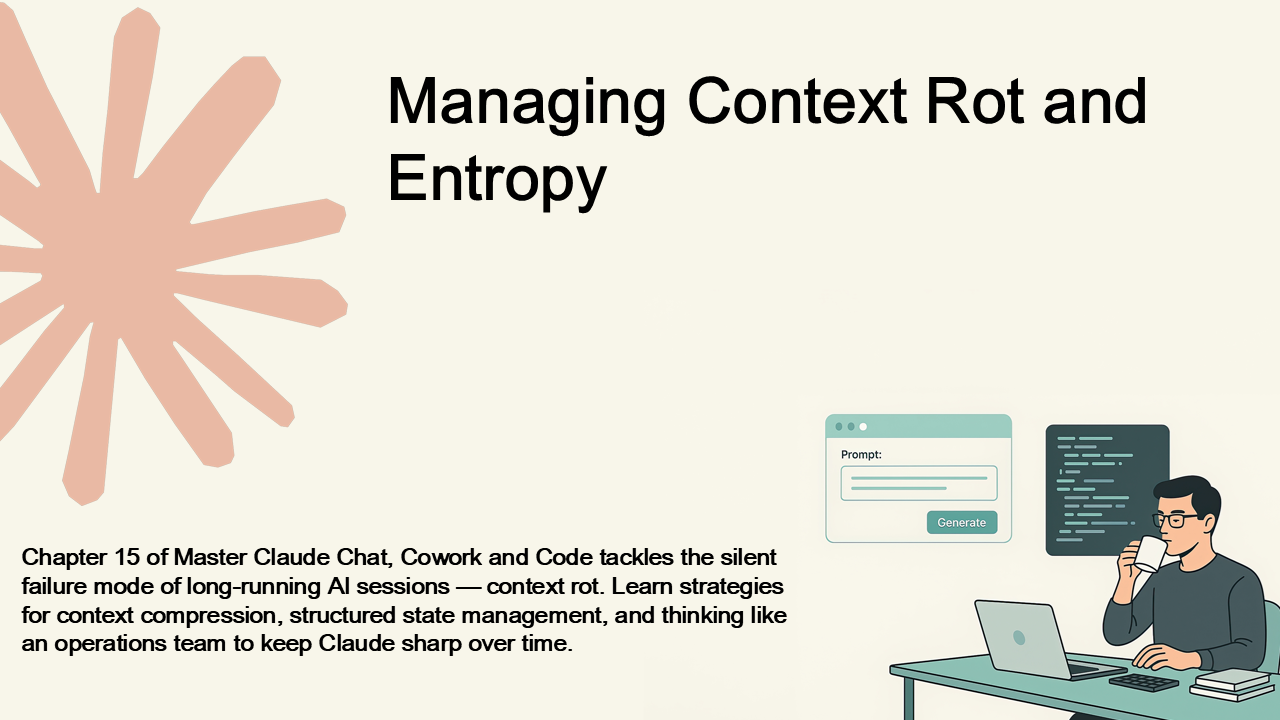
Chapter 15 – Managing Context Rot and Entropy
Chapter 15 of Master Claude Chat, Cowork and Code tackles the silent failure mode of long-running AI sessions — context rot. Learn strategies for context compression, structured state management, and thinking like an operations team to keep Claude sharp over time.
2026-03-16
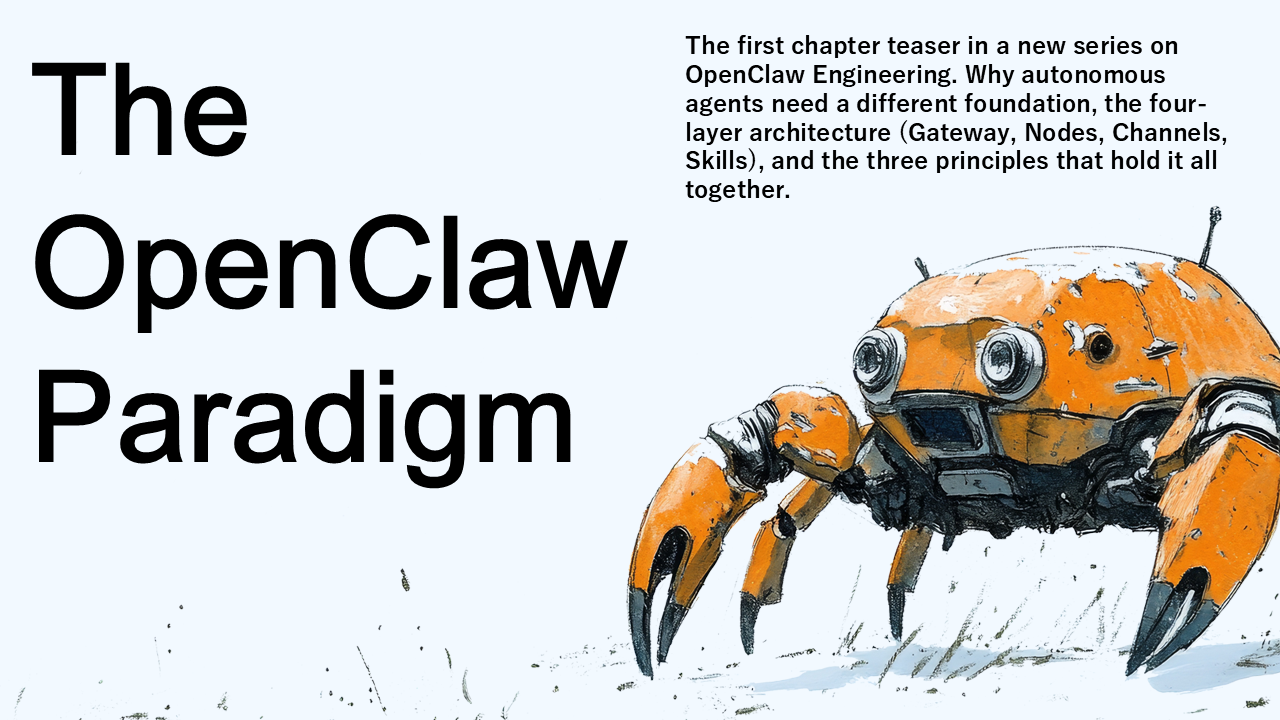
OpenClaw Engineering, Chapter 1: The OpenClaw Paradigm
The first chapter teaser in a new series on OpenClaw Engineering. Why autonomous agents need a different foundation, the four-layer architecture (Gateway, Nodes, Channels, Skills), and the three principles that hold it all together.
2026-03-16

Chapter 9: SPA and Mobile Patterns — Auth in Hostile Environments
Chapter 9 of the OpenID: Modern Identity series — SPAs and mobile apps in hostile environments: XSS and CSRF defense, PKCE in the browser, the Backend-for-Frontend pattern, native app patterns, and refresh token rotation with reuse detection.
2026-03-15
Chapter 13: Encapsulating Knowledge with Agent Skills — From Conversations to Autonomous Procedures
Chapter 13 of Master Claude Chat, Cowork and Code introduces Skills — reusable, encapsulated procedures that Claude executes autonomously. Covers SKILL.md structure, YAML frontmatter, trigger descriptions, and the Skills Library pattern for team distribution.
2026-03-14
Chapter 7: Your First OpenID Application — The Handshake, End to End
Chapter 7 of the OpenID: Modern Identity series — building a real OIDC login end to end: the minimal flow, state and nonce, strict redirect URI matching, sessions from tokens, and the three flavors of logout.
2026-03-13
Chapter 6: Discovery and Metadata — How Clients and Providers Find Each Other
Chapter 6 of the OpenID: Modern Identity series — how OIDC discovery, .well-known/openid-configuration, JWKS, and Dynamic Client Registration allow clients and providers to find each other without hand-crafted configuration.
2026-03-12
Chapter 11: CI/CD Integration and Automation — Claude Code in Your Pipeline
Chapter 11 of Master Claude Chat, Cowork and Code shows how to deploy Claude Code into CI/CD pipelines — GitHub Actions, GitLab CI, automated PR reviews, security audits, documentation sync, cost management, and production safety patterns.
2026-03-12
Chapter 3: Core Concepts — The Vocabulary of OpenID Connect
Chapter 3 of the OpenID: Modern Identity series — the IdP/RP/user triangle, claims and JWTs, the three OIDC token types, consent and scopes, sessions vs tokens, and the boundary between authentication and authorization.
2026-03-09
Chapter 2: From OpenID to OpenID Connect — How the Industry Got This One Right
Chapter 2 of the OpenID: Modern Identity series — tracing how the industry moved from the original OpenID and SAML through OAuth 2.0 to OpenID Connect, and when to reach for each standard.
2026-03-08
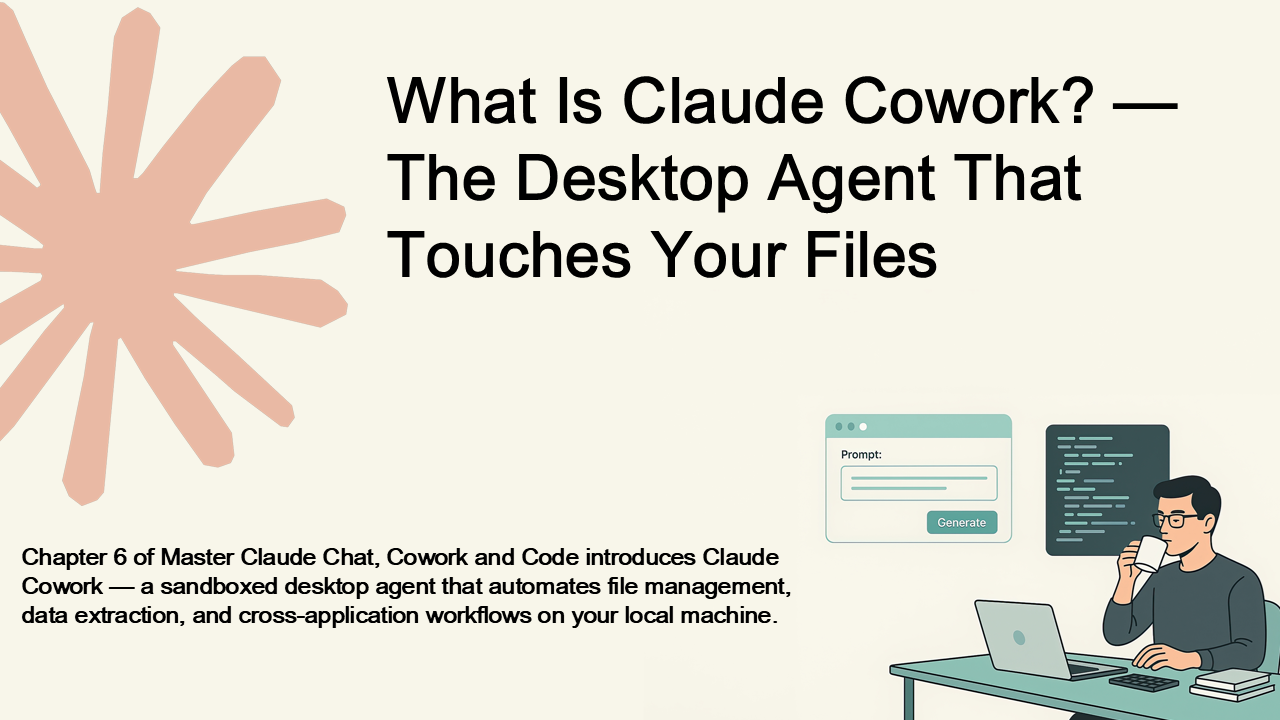
Chapter 6: What Is Claude Cowork? — The Desktop Agent That Touches Your Files
Chapter 6 of Master Claude Chat, Cowork and Code introduces Claude Cowork — a sandboxed desktop agent that automates file management, data extraction, and cross-application workflows on your local machine.
2026-03-07
Chapter 1: Why Identity Is Hard — The Trust Problem Behind Every Login
Chapter 1 of the OpenID: Modern Identity book series — why identity is a trust problem first and a technology problem second, and why authentication and authorization must never be conflated.
2026-03-07
Master Claude, Chapter 4: Context Persistence with Claude Projects — Solving the AI Amnesia Problem
Chapter 4 of Master Claude Chat, Cowork and Code explains how Claude Projects solve the AI amnesia problem with persistent context — custom instructions, knowledge bases, and shared team workspaces that remember your architecture, conventions, and patterns across every conversation.
2026-03-05
Master Claude Chat, Cowork and Code – The Complete Blog Series
The complete index for the Master Claude Chat, Cowork and Code blog series — 20 chapter teasers covering everything from prompting fundamentals to multi-agent architectures, security governance, and the future of AI-powered work.
2026-03-01
Art of Coding, Part II: Principles of Clarity
Part II introduces clarity as the compass of software: readability, maintainability, and the consistency that makes teams move faster.
2025-12-26
Categories
Tags
Search Logs
Hello World bot 1055
Deploy Teams bot to Azure 1005
IT assistant bot 987
Microsoft Bot Framework 956
Teams bot development 890
Azure CLI webapp deploy 888
Teams production bot 873
Bot Framework Adaptive Card 866
bot for sprint updates 860
Microsoft Teams Task Modules 858
Adaptive Card Action.Submit 854
Teams app zip 849
Zendesk Teams integration 845
Bot Framework example 844
C 843
Microsoft Graph 840
Task Modules 839
Graph API token 835
Bot Framework proactive messaging 832
Teams chatbot 832
Teams bot tutorial 831
Teams bot packaging 829
Bot Framework CLI 822
Adaptive Cards 819
Azure Bot Services 812
Azure App Service bot 811
Bot Framework prompts 809
Azure bot registration 803
ServiceNow bot 793
proactive messages 758
Development & Technical Consulting
Working on a new product or exploring a technical idea? We help teams with system design, architecture reviews, requirements definition, proof-of-concept development, and full implementation. Whether you need a quick technical assessment or end-to-end support, feel free to reach out.
Contact Us