
{R}R Dev Notes
Found total of 30 articles.
The Forward Deployed Engineer, Chapter 6: The Soft Stack — Diplomacy and Strategy
Chapter 6 of The Forward Deployed Engineer blog series. The "soft stack" is the part of the FDE skillset most often dismissed as soft. A teaser on MECE, the Pyramid Principle, stakeholder mapping, Managing the Skeptic, the Diplomatic Register, and stress inoculation.
2026-06-01
The Forward Deployed Engineer, Chapter 5: The AI and Agentic Frontier
Chapter 5 of The Forward Deployed Engineer blog series. The technical bar that the FDE shares with platform engineers — plus the AI-specific skills that separate the role in 2026. A teaser on agents beyond chatbots, RAG, multi-agent orchestration, evals as a discipline, and model-agnostic deployment.
2026-05-31
The Forward Deployed Engineer, Chapter 4: The Technical Bar
Chapter 4 of The Forward Deployed Engineer blog series. The FDE is, first and last, an engineer. A teaser on the four technical primitives, the non-obvious skills, what you don't need to be, and the four-round interview that actually tests for it.
2026-05-30
The Forward Deployed Engineer, Chapter 3: Where the FDE Sits in the Org
Chapter 3 of The Forward Deployed Engineer blog series. The first organizational decision is also the most consequential — and the most often wrong. A teaser on the classification mistake, the pod structure, the seniority distribution, and the career-path problem that quietly kills FDE functions.
2026-05-29
The Forward Deployed Engineer, Chapter 1: What Is a Forward Deployed Engineer?
Chapter 1 of The Forward Deployed Engineer blog series. The opening chapter of a new book — the operator's contradiction, the Palantir origin, the anatomy of the role, why the AI moment needs it now, and how the FDE differs from every sister role it gets confused with.
2026-05-27
The Engineering of Intent, Chapter 33: Building Your Personal Vibe Coding Operating System
Chapter 33 of The Engineering of Intent blog series. Every sustainable Vibe Coder has a personal operating system — tools, files, conventions, and habits that turn the practices in this book into your own durable system. A teaser on the five files, the three models, the two editors, the one discipline, and the wonder to keep.
2026-05-19
The Engineering of Intent, Chapter 32: Vibe Coding in Platform and Infrastructure
Chapter 32 of The Engineering of Intent blog series. Platform work is slow-moving by nature, but every improvement compounds across the whole engineering org. A teaser on infrastructure-as-code, CI evolution, internal-tool velocity, and the deployment-tool rebuild that dropped deploys from 40 minutes to 12.
2026-05-18
The Engineering of Intent, Chapter 31: Vibe Coding in Data and ML
Chapter 31 of The Engineering of Intent blog series. Data and ML work is where AI-native velocity meets statistical thinking and slow feedback loops. A teaser on ETL graduated rollout, feature-leakage guards, model evaluation boundaries, and the churn-pipeline case study that split build-time (8 days) from validation-time (weeks).
2026-05-17
The Engineering of Intent, Chapter 28: The Tips Archive — 100 Notes from Daily Practice
Chapter 28 of The Engineering of Intent blog series. One hundred numbered tips from daily practice, collected over years. A teaser with twelve of the most-quoted — from "if you're repeating it three times, put it in agents.md" through "do not estimate in hours for agent-assisted work; estimate in cycles."
2026-05-14
The Engineering of Intent, Chapter 13: VibeOps and CI/CD Evolution
Chapter 13 of The Engineering of Intent blog series. Static CI/CD was built for human-paced commits. AI-native velocity needs dynamic, context-aware, agent-literate pipelines. A teaser on VibeOps, context preservation across deployments, merge queues at velocity, and the ten-minute pipeline contract.
2026-04-29
The Engineering of Intent, Chapter 12: The GenDD Pod
Chapter 12 of The Engineering of Intent blog series. Three people, continuous flow, almost no ceremony — the team structure that actually ships AI-native work sustainably. A teaser on the Agentic Product Lead, Engineer, and QA roles, the transition from Agile, and the case study where a SaaS company went from 72 engineers to 24.
2026-04-28
The Engineering of Intent, Chapter 3: Context Momentum and Path Dependence
Chapter 3 of The Engineering of Intent blog series. Agents amplify project momentum — good patterns propagate, bad ones propagate just as fast. A teaser on the First Prompt Trap, context rot, the physics of convention drift, and the ten-thousand-dollar rule for decision rigor.
2026-04-19
The Engineering of Intent, Chapter 2: Cognitive Load and Material Disengagement
Chapter 2 of The Engineering of Intent blog series. When the agent does most of the typing, the real failure mode is the engineer who has stopped engaging. A teaser on material disengagement, impressionistic scanning, the autocomplete trap, decision fatigue, and the seven habits of engaged engineers.
2026-04-18
The Engineering of Intent, Chapter 1: The Triadic Relationship Model
Chapter 1 of The Engineering of Intent blog series. Software used to be a dyad between engineer and machine. Now a third actor — the AI agent — has joined permanently. A teaser covering the Triadic Relationship Model, the CMDP view of software, and the six failure modes every AI-native team needs to name.
2026-04-17
Frictionless SaaS, Chapter 22: AI, Automation, and the Future of Frictionless Design
In the AI era, features are commoditized overnight. So what actually becomes defensible? A teaser for Chapter 22 of Frictionless SaaS, covering the AI-Era SaaS Framework and the Experience Moat — the only lasting competitive advantage left.
2026-04-12
Frictionless SaaS, Chapter 19: Self-Serve Monetization and Growth
The Self-Serve Growth Engine, the Expansion Revenue Framework, and the Seamless Handoff Principle — how to turn upgrades into a natural moment instead of a sales call.
2026-04-09
Frictionless SaaS Chapter 12: Detecting Disengagement and Structured Win-Back
Chapter 12 preview of Frictionless SaaS: the Disengagement Detection System, the four-touch Win-Back Sequence, and why value rediscovery beats discount offers every time.
2026-04-02
Chapter 22: Identity in AI Systems — When the "User" Is an Agent
Chapter 22 of the OpenID: Modern Identity series — identity for AI systems: LLM authentication, the Model Context Protocol (MCP), Dynamic Client Registration for ephemeral agents, and the emerging patterns for trusting autonomous non-human actors.
2026-03-28
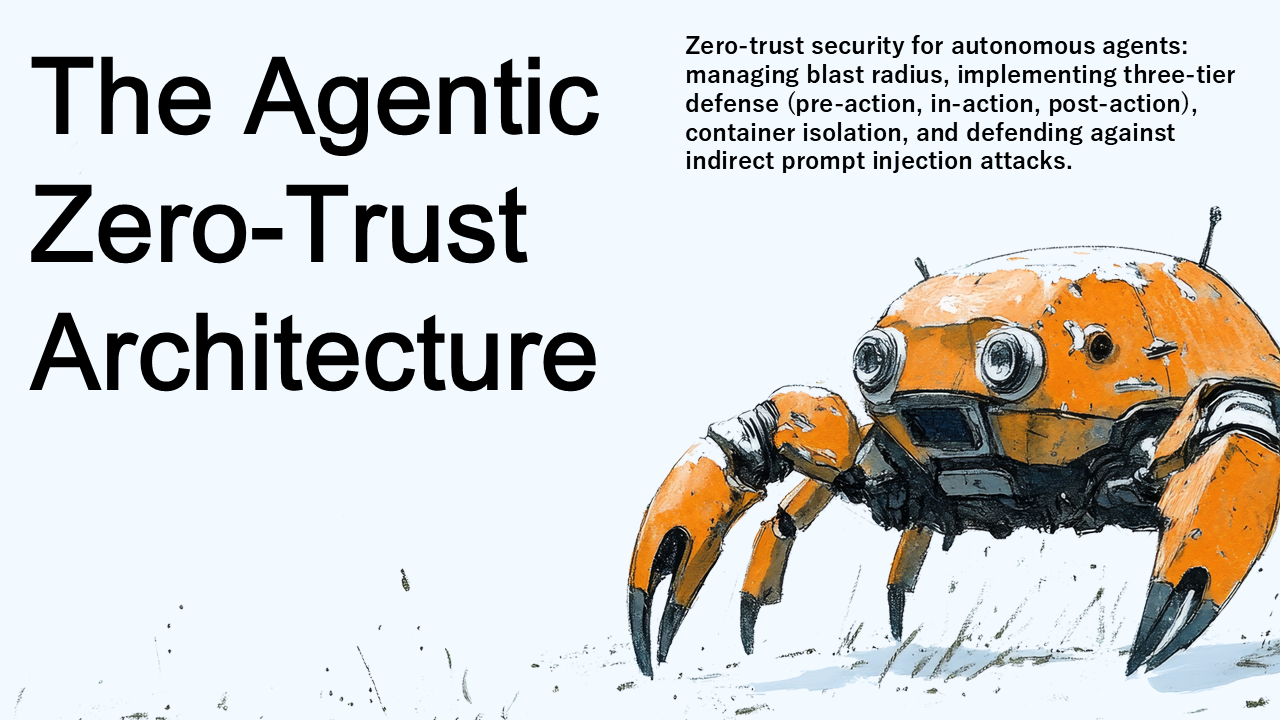
OpenClaw Engineering, Chapter 12: The Agentic Zero-Trust Architecture
Zero-trust security for autonomous agents: managing blast radius, implementing three-tier defense (pre-action, in-action, post-action), container isolation, and defending against indirect prompt injection attacks.
2026-03-27
Chapter 20: Passwordless Authentication — Passkeys, WebAuthn, and the End of the Password
Chapter 20 of the OpenID: Modern Identity series — passwordless authentication: passkeys as friendly public-key credentials, WebAuthn as the underlying browser API, and the FIDO2 ecosystem including hardware security keys.
2026-03-26
OpenClaw Engineering, Chapter 11: Continuous Learning with OpenClaw-RL
How OpenClaw-RL extracts training signals from conversations and uses them to improve agent behavior continuously. From binary feedback to token-level distillation, agents learn from every interaction without retraining the base model.
2026-03-26
OpenClaw Engineering, Chapter 8: Event-Driven Workflows
How OpenClaw agents spring into action automatically via hooks, webhooks, and TypeScript handlers—without waiting for human invocation. From internal events to CI/CD pipelines.
2026-03-23
OpenClaw Engineering, Chapter 6: Extending Capabilities with SKILL.md
The anatomy of SKILL.md files in OpenClaw: how to author reusable, versioned instruction sets with YAML frontmatter, dependencies, and explicit procedural guidance for agents.
2026-03-21
OpenClaw Engineering, Chapter 5: Connecting Multiple Channels
How to connect your OpenClaw agent to multiple messaging platforms (Telegram, WhatsApp, Discord, Slack) and manage multi-channel routing. Setup, configuration quirks, and troubleshooting for each platform.
2026-03-20
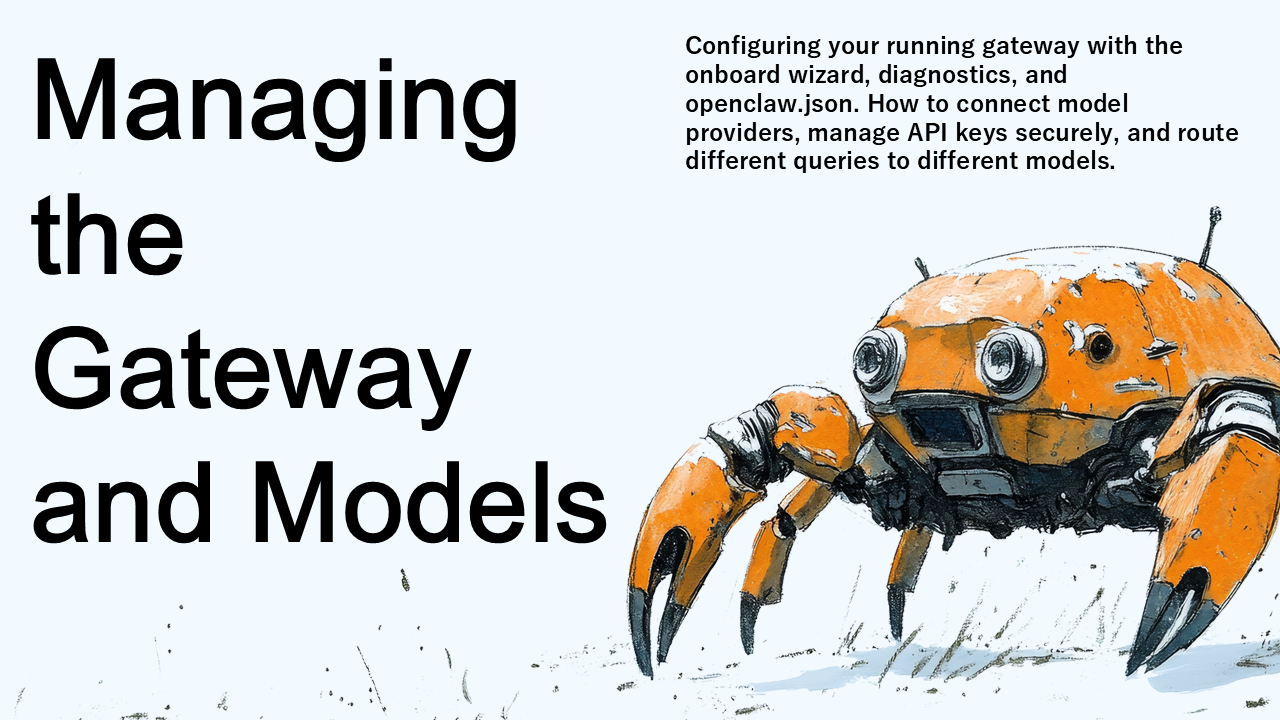
OpenClaw Engineering, Chapter 4: Managing the Gateway and Models
Configuring your running gateway with the onboard wizard, diagnostics, and openclaw.json. How to connect model providers, manage API keys securely, and route different queries to different models.
2026-03-19
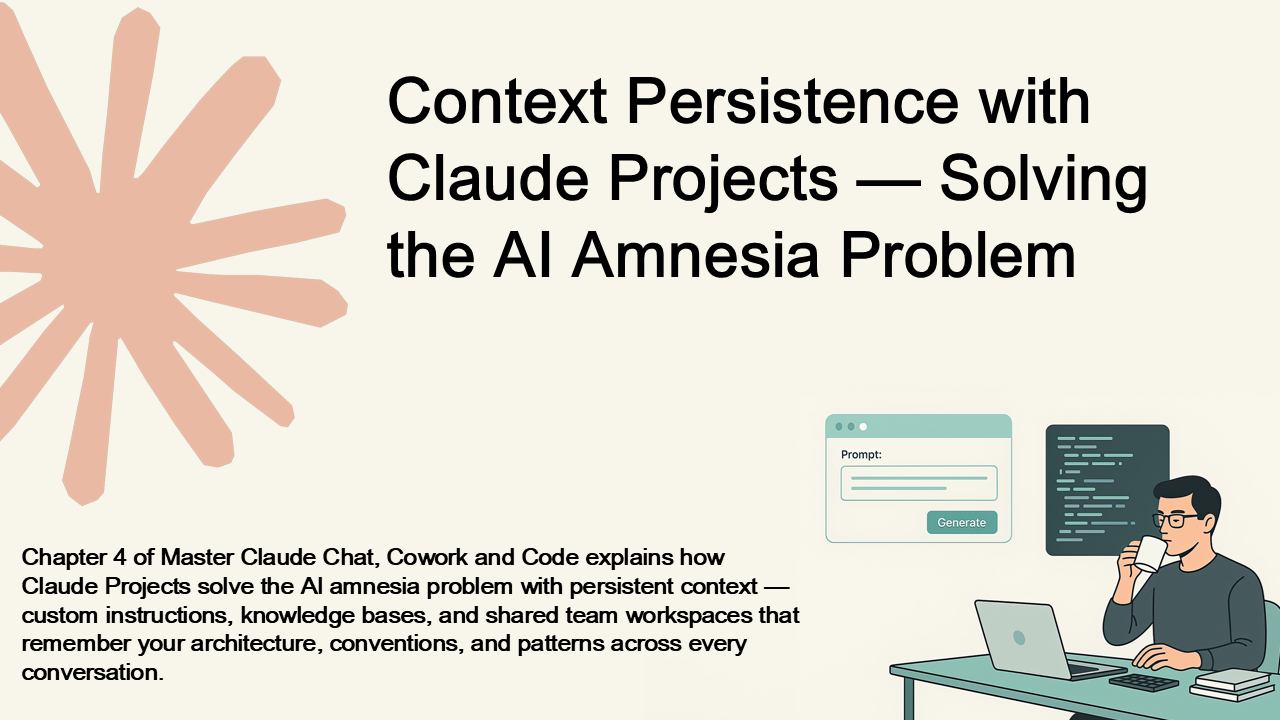
Master Claude, Chapter 4: Context Persistence with Claude Projects — Solving the AI Amnesia Problem
Chapter 4 of Master Claude Chat, Cowork and Code explains how Claude Projects solve the AI amnesia problem with persistent context — custom instructions, knowledge bases, and shared team workspaces that remember your architecture, conventions, and patterns across every conversation.
2026-03-05
Use Case: Helpdesk Assistant Bot|Mastering Microsoft Teams Bots 6.1
Explore how to build a Helpdesk Assistant Bot in Microsoft Teams. Learn how bots can reduce IT load by handling FAQs, logging support tickets, and notifying users — all within Teams. This section explains features, user experience, and implementation strategies.
2025-04-18
Overview of Microsoft Teams Bot Capabilities|Mastering Microsoft Teams Bots 1.3
Explore the full range of capabilities bots can offer in Microsoft Teams. This section breaks down interactive contexts, features like Adaptive Cards, proactive messaging, user authentication, Graph API integration, and what limitations still exist. Get a developer’s guide to what’s possible.
2025-04-04
Overview of Microsoft Teams Architecture|Mastering Microsoft Teams Bots 1.2
Get a developer-friendly introduction to how Microsoft Teams is built. This section explains Teams architecture—channels, tabs, bots, messaging extensions, and Graph API—and shows how each component fits into the broader platform. A must-read before building your first bot.
2025-04-03
Why Build Bots for Microsoft Teams?|Mastering Microsoft Teams Bots 1.1
Discover why Microsoft Teams bots are transforming the workplace. This section explores the real-world impact of building bots in Teams, from automating tasks and integrating external services to enabling context-aware digital assistants. Learn how bots can save time, boost productivity, and bring automation into the flow of daily work.
2025-04-02
Categories
Tags
Search Logs
Hello World bot 1179
IT assistant bot 1131
Deploy Teams bot to Azure 1129
Microsoft Bot Framework 1047
Teams bot development 1014
Teams production bot 998
bot for sprint updates 982
Teams app zip 973
Zendesk Teams integration 971
Microsoft Teams Task Modules 968
Bot Framework Adaptive Card 963
Bot Framework example 956
Teams chatbot 950
Azure CLI webapp deploy 948
Task Modules 947
Teams bot tutorial 944
C 943
Teams bot packaging 938
Bot Framework proactive messaging 934
Graph API token 931
Bot Framework CLI 929
Adaptive Card Action.Submit 924
Bot Framework prompts 907
Azure App Service bot 903
Microsoft Graph 903
Azure Bot Services 878
Adaptive Cards 877
Azure bot registration 871
ServiceNow bot 861
proactive messages 813
Development & Technical Consulting
Working on a new product or exploring a technical idea? We help teams with system design, architecture reviews, requirements definition, proof-of-concept development, and full implementation. Whether you need a quick technical assessment or end-to-end support, feel free to reach out.
Contact Us