
{R}R Dev Notes
Found total of 17 articles.
Loop Engineering, Chapter 1: The Anatomy of an Agentic Loop
Chapter 1 of the Loop Engineering blog series. Every agentic system begins with a single loop. A teaser on the ReAct pattern, why a loop beats a fixed prompt chain, the arithmetic of per-step reliability, and the discipline of a verifiable stopping condition.
2026-06-15
The Forward Deployed Engineer, Chapter 16: When Not to Build an FDE Function
Chapter 16 of The Forward Deployed Engineer blog series. The inverse case — when an FDE function is the wrong answer. A teaser on the five disqualifying conditions, the alternative models, the hybrid patterns, the premature-optimization trap, and what to build instead.
2026-06-11
The Forward Deployed Engineer, Chapter 11: Palantir — The Original Playbook
Chapter 11 of The Forward Deployed Engineer blog series. The Palantir teardown — founding conditions, the Delta and Echo split, the long years of operational refinement, the AIP pivot, the AI FDE, and the three lessons for founders.
2026-06-06
The Engineering of Intent, Chapter 40: The De-Vibing Protocol — Stabilization Sprints for Production
Chapter 40 of The Engineering of Intent blog series. The final chapter and the remedy for the autocomplete trap — a two-week, agent-heavy stabilization sprint that moves a fast vibes-only build from 90/10 to 50/50 without halting feature development. A teaser on recognizing when you need it, the four tracks, and the three post-sprint disciplines.
2026-05-26
The Engineering of Intent, Chapter 22: A Day in the Life — A Narrated Session
Chapter 22 of The Engineering of Intent blog series. A narrated recreation of a real, medium-complex working day — hour by hour — because average days are where practice gets tested. A teaser of the hourly shape, and the single rule behind all of it: agents are leverage on thinking you've done.
2026-05-08
The Engineering of Intent, Chapter 18: The Prompt Patterns Catalog
Chapter 18 of The Engineering of Intent blog series. Ten prompt patterns I use every day, with the design moves behind them. A teaser on Planning, Targeted Diff, Adversarial Review, Bug-Hypothesis, Scoping-Down, Consistency-Check, Teach-Back, Written-Down-Rule, Test-First, and One-Page-Design prompts.
2026-05-04
The Engineering of Intent, Chapter 13: VibeOps and CI/CD Evolution
Chapter 13 of The Engineering of Intent blog series. Static CI/CD was built for human-paced commits. AI-native velocity needs dynamic, context-aware, agent-literate pipelines. A teaser on VibeOps, context preservation across deployments, merge queues at velocity, and the ten-minute pipeline contract.
2026-04-29
Frictionless SaaS, Chapter 18: Building Knowledge Into Your Product
The Zero-Support Design Model, Contextual Help Architecture, and four AI Assistant Design Patterns that turn your product into its own best documentation.
2026-04-08
Frictionless SaaS Chapter 12: Detecting Disengagement and Structured Win-Back
Chapter 12 preview of Frictionless SaaS: the Disengagement Detection System, the four-touch Win-Back Sequence, and why value rediscovery beats discount offers every time.
2026-04-02

Frictionless SaaS, Chapter 8: Designing for Habit - Why Retention Is Your Real Growth Engine
Chapter 8 of the Frictionless SaaS blog series. Retention is the multiplier on every dollar of acquisition you'll ever spend. The Habit Loop Engine, the Return Reason Architecture, and the DAU/WAU signals that tell you whether you're building a habit or a one-night stand.
2026-03-29
Frictionless SaaS, Chapter 5: Just-In-Time Learning - Teach Users at the Exact Moment They Need It
Chapter 5 of the Frictionless SaaS blog series. Users don't want to learn your product - they want to solve their problem. Just-In-Time Learning teaches at the moment of need, and the Skippable Onboarding Principle respects the users who already know what they're doing.
2026-03-26
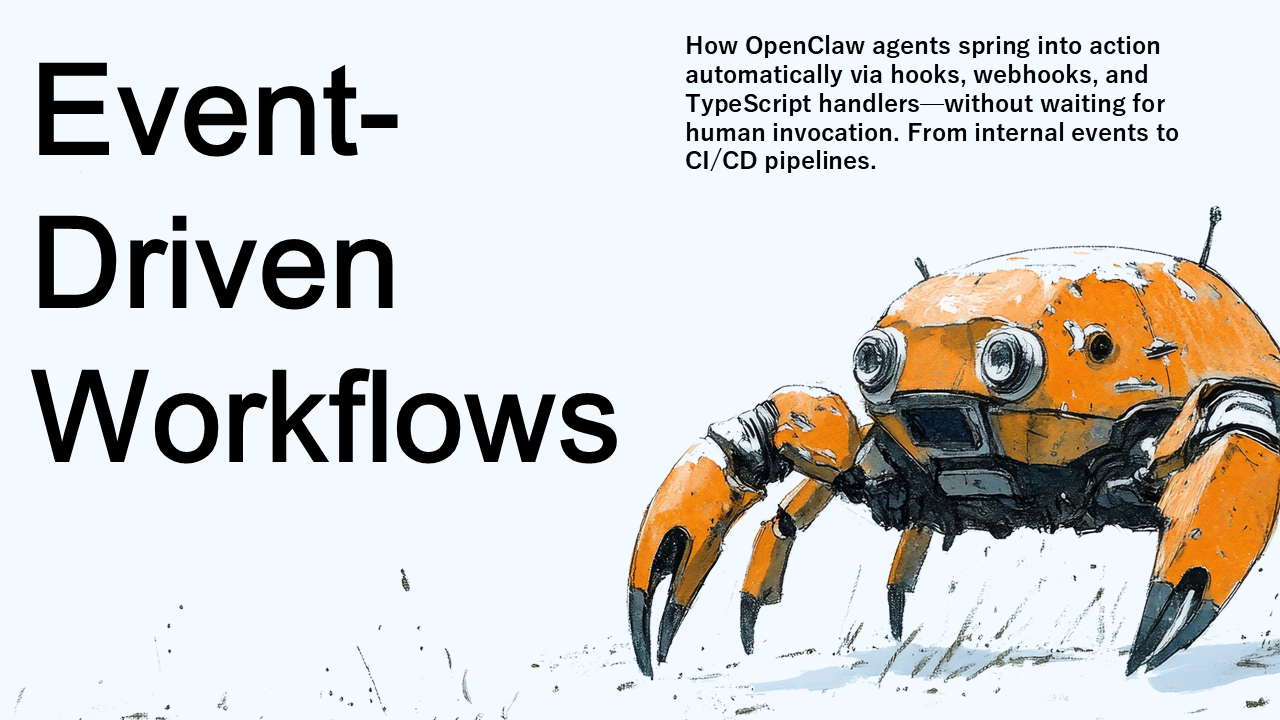
OpenClaw Engineering, Chapter 8: Event-Driven Workflows
How OpenClaw agents spring into action automatically via hooks, webhooks, and TypeScript handlers—without waiting for human invocation. From internal events to CI/CD pipelines.
2026-03-23
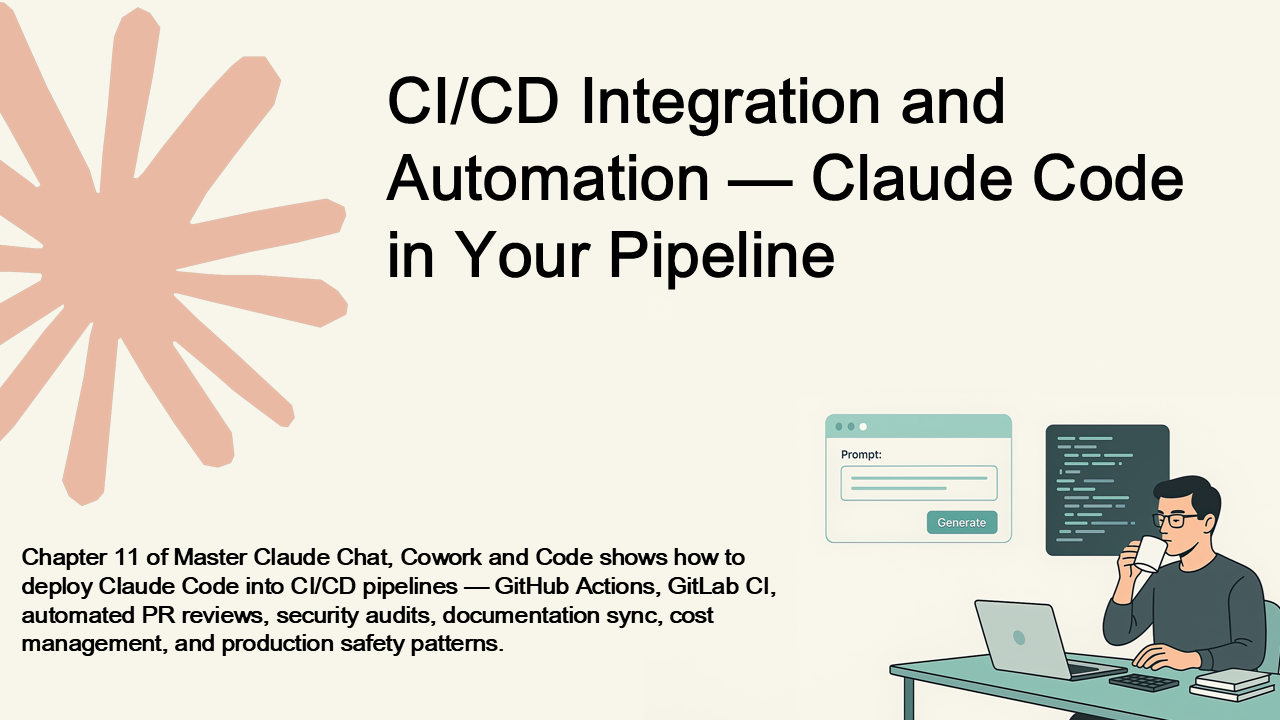
Chapter 11: CI/CD Integration and Automation — Claude Code in Your Pipeline
Chapter 11 of Master Claude Chat, Cowork and Code shows how to deploy Claude Code into CI/CD pipelines — GitHub Actions, GitLab CI, automated PR reviews, security audits, documentation sync, cost management, and production safety patterns.
2026-03-12
Chapter 10: Safe Legacy Code Refactoring — Horror Stories and the Discipline That Prevents Them
Chapter 10 of Master Claude Chat, Cowork and Code tackles the hardest problem in AI-assisted development — refactoring legacy code without introducing subtle bugs. Covers characterization tests, incremental verification, PR review, and catching hallucinations.
2026-03-11
Art of Coding, Chapter 13: Testing as a Design Discipline
Testing is a design discipline. How well-written tests reveal awkward APIs, improve code clarity, and become the most reliable documentation of system behavior.
2026-01-09
4.0 Solving Ax = b
A deep, accessible introduction to solving linear systems in numerical computing. Learn why Ax = b sits at the center of AI, ML, optimization, and simulation, and explore Gaussian elimination, pivoting, row operations, and failure modes through intuitive explanations.
2025-09-17
Monitoring, Logging, and Telemetry|Mastering Microsoft Teams Bots 5.3
Learn how to monitor and support your Microsoft Teams bot in production using logging, Azure Application Insights, and alerts. This section shows how to track user events, diagnose failures, and create telemetry that makes your bot reliable and supportable.
2025-04-17
Categories
Tags
Search Logs
Hello World bot 1239
IT assistant bot 1210
Deploy Teams bot to Azure 1207
Microsoft Bot Framework 1105
Teams bot development 1085
Teams production bot 1075
bot for sprint updates 1061
Zendesk Teams integration 1048
Teams app zip 1044
Microsoft Teams Task Modules 1026
Teams chatbot 1024
Bot Framework Adaptive Card 1022
Teams bot tutorial 1013
Bot Framework example 1008
Task Modules 1007
Teams bot packaging 1005
Bot Framework proactive messaging 995
C 993
Graph API token 991
Bot Framework CLI 978
Azure CLI webapp deploy 976
Bot Framework prompts 971
Adaptive Card Action.Submit 965
Azure App Service bot 952
Microsoft Graph 935
Azure Bot Services 933
Adaptive Cards 906
ServiceNow bot 906
Azure bot registration 904
identity in Teams 873
Development & Technical Consulting
Working on a new product or exploring a technical idea? We help teams with system design, architecture reviews, requirements definition, proof-of-concept development, and full implementation. Whether you need a quick technical assessment or end-to-end support, feel free to reach out.
Contact Us