
{R}R Dev Notes
Found total of 48 articles.
The Forward Deployed Engineer, Chapter 2: The Last-Mile Problem in Enterprise AI
Chapter 2 of The Forward Deployed Engineer blog series. Where SaaS stopped at the enterprise threshold, AI has to walk the last mile. A teaser on the four frictions at the last mile, the integration tax no demo shows, and why workflow redesign — not the model — is the product.
2026-05-28
The Engineering of Intent, Chapter 36: The Long View
Chapter 36 of The Engineering of Intent blog series. The long view. What happens to our craft, our profession, and our lives over the next ten years? A teaser on cycles and waves, three things that will endure, three that will change, and a final word on identity.
2026-05-22
The Engineering of Intent, Chapter 33: Building Your Personal Vibe Coding Operating System
Chapter 33 of The Engineering of Intent blog series. Every sustainable Vibe Coder has a personal operating system — tools, files, conventions, and habits that turn the practices in this book into your own durable system. A teaser on the five files, the three models, the two editors, the one discipline, and the wonder to keep.
2026-05-19
The Engineering of Intent, Chapter 31: Vibe Coding in Data and ML
Chapter 31 of The Engineering of Intent blog series. Data and ML work is where AI-native velocity meets statistical thinking and slow feedback loops. A teaser on ETL graduated rollout, feature-leakage guards, model evaluation boundaries, and the churn-pipeline case study that split build-time (8 days) from validation-time (weeks).
2026-05-17
The Engineering of Intent, Chapter 17: The Flow Loop
Chapter 17 of The Engineering of Intent blog series. Flow with an agent in the loop is different from classical flow, but just as performance-defining. A teaser on the two-minute rule, the three-strike rule, the flow killers, and the checkout refactor that shipped in one afternoon instead of two days.
2026-05-03
The Engineering of Intent, Chapter 15: The Future of the Human Engineer
Chapter 15 of The Engineering of Intent blog series. Am I going to be replaced? The honest answer, after five years of watching the discipline evolve. A teaser on intent architecture, staying relevant, the economic reshaping of the senior-to-junior ratio, and craft in a craftless era.
2026-05-01
The Engineering of Intent, Chapter 6: Autonomous Orchestration Frameworks
Chapter 6 of The Engineering of Intent blog series. Editors run one agent at a time; orchestration runs many. A teaser on task-specific personalities, memory banks, when to orchestrate (and when not), the 14,000-test case study, and the economics of multi-agent pipelines.
2026-04-22
Frictionless SaaS, Chapter 19: Self-Serve Monetization and Growth
The Self-Serve Growth Engine, the Expansion Revenue Framework, and the Seamless Handoff Principle — how to turn upgrades into a natural moment instead of a sales call.
2026-04-09
Frictionless SaaS, Chapter 17: Self-Serve Onboarding and Setup
Why self-serve setup converts 2-3x better than assisted onboarding, and the Progressive Setup Pattern and Smart Defaults Strategy that make complex products feel simple.
2026-04-07
Frictionless SaaS Chapter 9: Eliminating Friction and Building Consistency
Chapter 9 preview of Frictionless SaaS: the Friction Audit Matrix, the Consistency Principle, perceived speed, and information ergonomics - the retention levers most teams ignore.
2026-03-30
OpenClaw Engineering, Chapter 13: Hardening the Ecosystem
The final chapter: ecosystem security, the ClawHavoc incident, defending against malware in dependencies, confirming high-risk operations, and building auditing and disaster recovery systems.
2026-03-28
OpenClaw Engineering, Chapter 12: The Agentic Zero-Trust Architecture
Zero-trust security for autonomous agents: managing blast radius, implementing three-tier defense (pre-action, in-action, post-action), container isolation, and defending against indirect prompt injection attacks.
2026-03-27
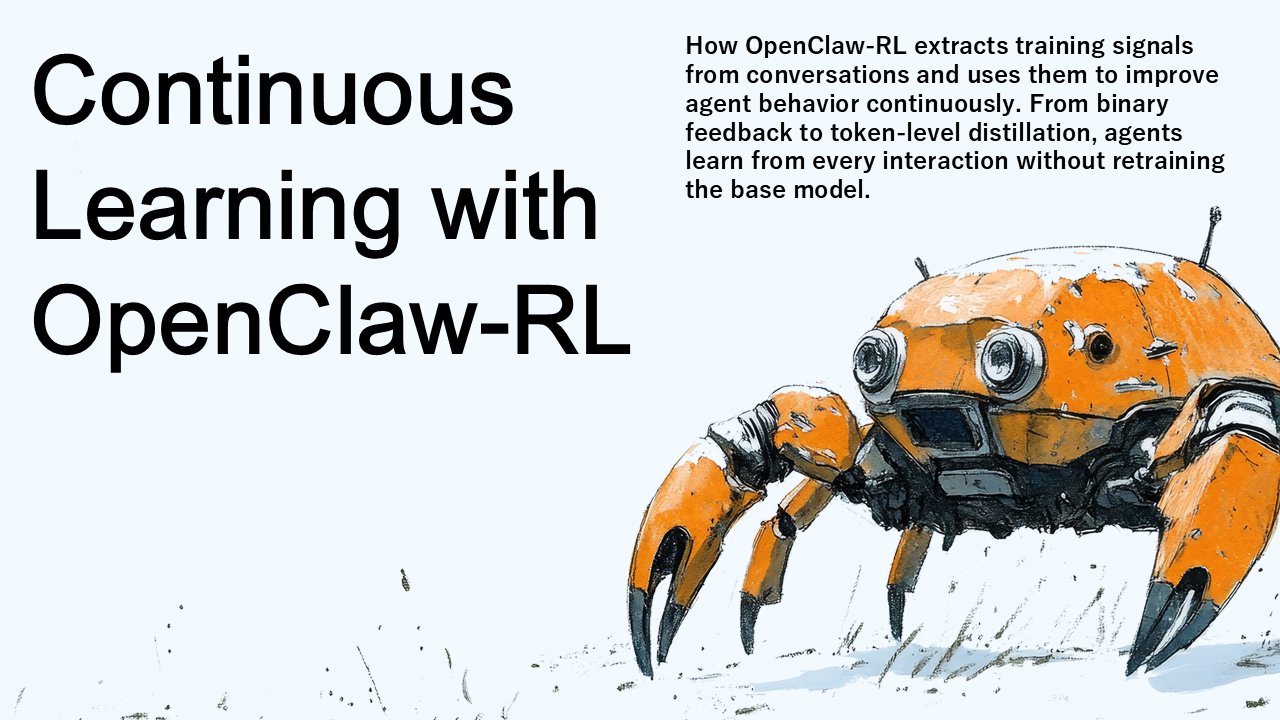
OpenClaw Engineering, Chapter 11: Continuous Learning with OpenClaw-RL
How OpenClaw-RL extracts training signals from conversations and uses them to improve agent behavior continuously. From binary feedback to token-level distillation, agents learn from every interaction without retraining the base model.
2026-03-26
Chapter 20: Passwordless Authentication — Passkeys, WebAuthn, and the End of the Password
Chapter 20 of the OpenID: Modern Identity series — passwordless authentication: passkeys as friendly public-key credentials, WebAuthn as the underlying browser API, and the FIDO2 ecosystem including hardware security keys.
2026-03-26
Chapter 20 – The Next Decade of AI Coworkers
Chapter 20 of Master Claude Chat, Cowork and Code looks ahead — from conversational AI to embedded infrastructure, from chat interfaces to computer use, and the trust and responsibility questions that will define how AI reshapes work over the next decade.
2026-03-20

OpenClaw Engineering, Chapter 5: Connecting Multiple Channels
How to connect your OpenClaw agent to multiple messaging platforms (Telegram, WhatsApp, Discord, Slack) and manage multi-channel routing. Setup, configuration quirks, and troubleshooting for each platform.
2026-03-20
Chapter 19 – Measuring AI Effectiveness
Chapter 19 of Master Claude Chat, Cowork and Code tackles the question every team eventually asks: is our AI actually working? Learn to build metrics frameworks, structured evaluations, and workflow acceleration measurements that prove (or disprove) AI's value.
2026-03-19
OpenClaw Engineering, Chapter 4: Managing the Gateway and Models
Configuring your running gateway with the onboard wizard, diagnostics, and openclaw.json. How to connect model providers, manage API keys securely, and route different queries to different models.
2026-03-19
Chapter 16 – Execution Risks and Isolation
Chapter 16 of Master Claude Chat, Cowork and Code confronts the real security risks of AI systems that execute commands and manipulate files — from command injection to data exposure — and explains the isolation models that keep things safe.
2026-03-17
OpenClaw Engineering, Chapter 2: Anatomy of the Agent Brain
How OpenClaw agents think through their identity files, two-layer memory system, and proactive task scheduling. A deep dive into SOUL.md, AGENTS.md, USER.md, MEMORY.md, HEARTBEAT.md, and semantic memory via Supermemory.
2026-03-17
Chapter 10: Single Sign-On at Scale — Identity as Infrastructure
Chapter 10 of the OpenID: Modern Identity series — running identity at organizational scale: corporate IdPs (AD, Entra ID), the CIAM vendor ecosystem (Okta, Auth0, Entra ID), multi-tenant isolation, account linking, and external user access.
2026-03-16
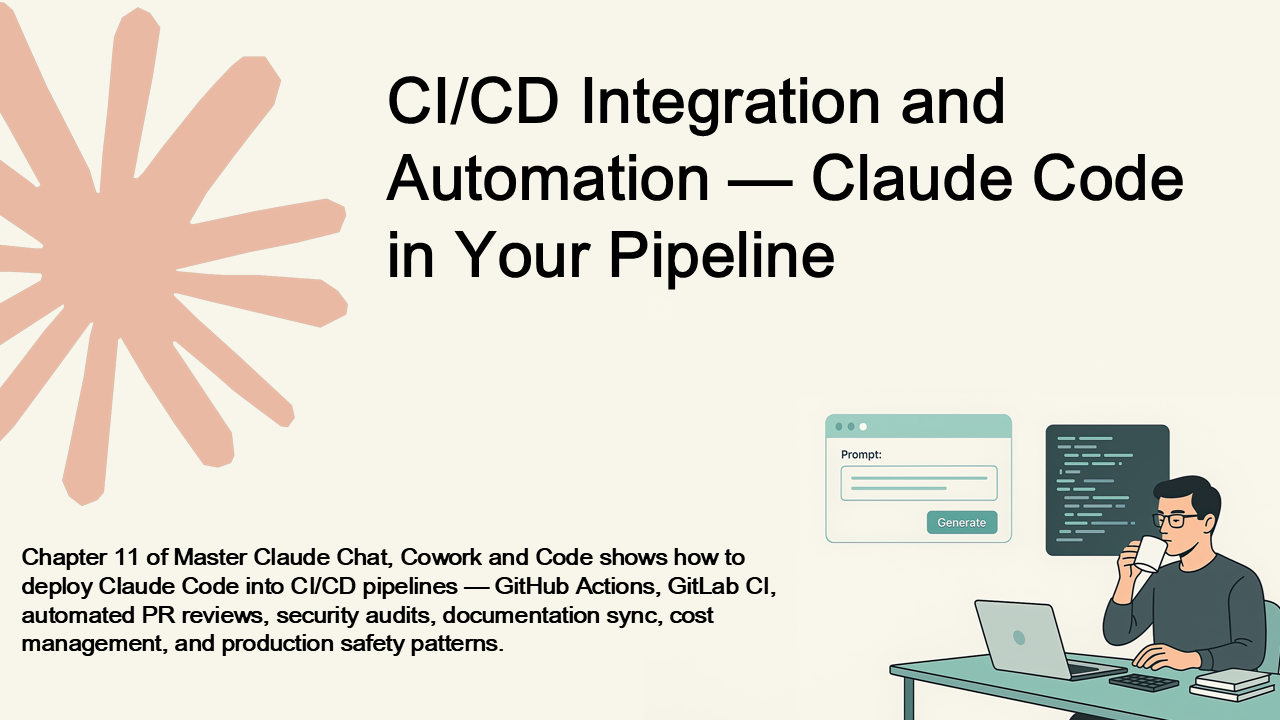
Chapter 11: CI/CD Integration and Automation — Claude Code in Your Pipeline
Chapter 11 of Master Claude Chat, Cowork and Code shows how to deploy Claude Code into CI/CD pipelines — GitHub Actions, GitLab CI, automated PR reviews, security audits, documentation sync, cost management, and production safety patterns.
2026-03-12
Chapter 3: Core Concepts — The Vocabulary of OpenID Connect
Chapter 3 of the OpenID: Modern Identity series — the IdP/RP/user triangle, claims and JWTs, the three OIDC token types, consent and scopes, sessions vs tokens, and the boundary between authentication and authorization.
2026-03-09
Chapter 1: Why Identity Is Hard — The Trust Problem Behind Every Login
Chapter 1 of the OpenID: Modern Identity book series — why identity is a trust problem first and a technology problem second, and why authentication and authorization must never be conflated.
2026-03-07
OpenID: Modern Identity for Developers and Architects — A 22-Part Blog Series
Introduction and index for the 22-part blog series based on OpenID: Modern Identity for Developers and Architects by Sho Shimoda — with links to every chapter from Why Identity Is Hard through Identity in AI Systems.
2026-03-06
Master Claude, Chapter 3: Understanding Entropy and Prompting Fundamentals — Why Your Prompts Fail and How to Fix Them
Chapter 3 of Master Claude Chat, Cowork and Code explains why some prompts work and others fail — through the lens of entropy and probability. Covers XML-structured prompting, chain-of-thought reasoning, multishot examples, and a standard prompt template you can use immediately.
2026-03-04
Master Claude, Chapter 2: The Three Pillars of Claude — Chat, Cowork, and Code
Claude is not one product — it is three. Chat for reasoning, Cowork for desktop automation, Code for terminal-based development. Chapter 2 of Master Claude Chat, Cowork and Code explains the architecture of each and the decision framework for choosing the right one.
2026-03-03
Master Claude, Chapter 1: The Evolution of Large Language Models — From Markov Chains to Context Engineering
Chapter 1 of Master Claude Chat, Cowork and Code traces the journey from statistical text prediction to reasoning engines — and explains why context engineering, not bigger models, is where the next leap in AI productivity comes from.
2026-03-02
Master Claude Chat, Cowork and Code – The Complete Blog Series
The complete index for the Master Claude Chat, Cowork and Code blog series — 20 chapter teasers covering everything from prompting fundamentals to multi-agent architectures, security governance, and the future of AI-powered work.
2026-03-01
Art of Coding, Chapter 14: Code Reviews and Pair Programming
Code reviews as mentorship and collaboration. How to write for reviewers, offer critique with respect, and build a team culture grounded in feedback.
2026-01-10
Art of Coding, Chapter 5: Consistency and Style
Consistency is kindness. How coding standards, formatters, and idiomatic style shape code that teams can actually live with.
2025-12-29
8.4 PCA and Spectral Methods
An intuitive, in-depth explanation of PCA, spectral clustering, and eigenvector-based data analysis. Covers covariance matrices, graph Laplacians, and why eigenvalues reveal hidden structure in data. Concludes Chapter 8 and leads naturally into SVD in Chapter 9.
2025-10-10
7.3 Least Squares Problems
A clear, intuitive, book-length explanation of least squares problems, including the geometry, normal equations, QR decomposition, and SVD. Learn why least-squares solutions are central to ML and data science, and why QR provides a stable foundation for practical algorithms.
2025-10-04
7.2 Householder Reflections
A clear, intuitive, book-length explanation of Householder reflections and why they form the foundation of modern QR decomposition. Learn how reflections overcome the numerical instability of Gram–Schmidt and enable stable least-squares solutions across ML, statistics, and scientific computing.
2025-10-03
Chapter 7 — QR Decomposition
A deep, intuitive introduction to QR decomposition, explaining why orthogonality and numerical stability make QR essential for least squares, regression, kernel methods, and large-scale computation. Covers Gram–Schmidt, Modified GS, Householder reflections, and why QR is often preferred over LU and normal equations.
2025-10-01
6.3 Applications in ML, Statistics, and Kernel Methods
A deep, intuitive explanation of how Cholesky decomposition powers real machine learning and statistical systems—from Gaussian processes and Bayesian inference to kernel methods, Kalman filters, covariance modeling, and quadratic optimization. Understand why Cholesky is essential for stability, speed, and large-scale computation.
2025-09-30
6.2 Memory Advantages
A detailed, intuitive explanation of why Cholesky decomposition uses half the memory of LU decomposition, how memory locality accelerates computation, and why this efficiency makes Cholesky essential for large-scale machine learning, kernel methods, and statistical modeling.
2025-09-29
6.1 SPD Matrices and Why They Matter
A deep, intuitive explanation of symmetric positive definite (SPD) matrices and why they are essential in machine learning, statistics, optimization, and numerical computation. Covers geometry, stability, covariance, kernels, Hessians, and how SPD structure enables efficient Cholesky decomposition.
2025-09-28
Chapter 6 — Cholesky Decomposition
A deep, narrative-driven introduction to Cholesky decomposition explaining why symmetric positive definite matrices dominate real computation. Covers structure, stability, performance, and the role of Cholesky in ML, statistics, and optimization.
2025-09-27

3.4 Exact Algorithms vs Implemented Algorithms
Learn why textbook algorithms differ from the versions that actually run on computers. This chapter explains rounding, floating-point errors, instability, algorithmic reformulation, and why mathematically equivalent methods behave differently in AI, ML, and scientific computing.
2025-09-16

3.1 Norms and Why They Matter
A deep yet accessible exploration of vector and matrix norms, why they matter in numerical computation, and how they influence stability, conditioning, error growth, and algorithm design. Essential reading for AI, ML, and scientific computing engineers.
2025-09-13

2.3 Overflow, Underflow, Loss of Significance
A clear and practical guide to overflow, underflow, and loss of significance in floating-point arithmetic. Learn how numerical computations break, why these failures occur, and how they impact AI, optimization, and scientific computing.
2025-09-10
Chapter 2 — The Computational Model
An introduction to the computational model behind numerical linear algebra. Explains why mathematical algorithms fail inside real computers, how floating-point arithmetic shapes computation, and why understanding precision, rounding, overflow, and memory layout is essential for AI, ML, and scientific computing.
2025-09-07
1.4 A Brief Tour of Real-World Failures
A clear, accessible tour of real-world numerical failures in AI, ML, optimization, and simulation—showing how mathematically correct algorithms break inside real computers, and preparing the reader for Chapter 2 on floating-point reality.
2025-09-06
1.3 Computation & Mathematical Systems
A clear explanation of how mathematical systems behave differently inside real computers. Learn why stability, conditioning, precision limits, and computational constraints matter for AI, ML, and numerical software.
2025-09-05
1.1 What Breaks Real AI Systems
Many AI failures come from numerical instability, not algorithms. This guide explains what actually breaks AI systems and why numerical linear algebra matters.
2025-09-03

1.0 Why Numerical Linear Algebra Matters
A deep, practical introduction to why numerical linear algebra matters in real AI, ML, and optimization systems. Learn how stability, conditioning, and floating-point behavior impact models.
2025-09-02
Numerical Linear Algebra: Understanding Matrices and Vectors Through Computation
Learn how linear algebra actually works inside real computers. A practical guide to LU, QR, SVD, stability, conditioning, and the numerical foundations behind modern AI and machine learning.
2025-09-01
Categories
Tags
Search Logs
Hello World bot 1185
IT assistant bot 1140
Deploy Teams bot to Azure 1137
Microsoft Bot Framework 1052
Teams bot development 1025
Teams production bot 1004
bot for sprint updates 994
Microsoft Teams Task Modules 979
Zendesk Teams integration 979
Teams app zip 977
Bot Framework Adaptive Card 973
Bot Framework example 964
Task Modules 961
Teams chatbot 955
Azure CLI webapp deploy 952
C 952
Teams bot packaging 947
Teams bot tutorial 946
Bot Framework proactive messaging 941
Graph API token 937
Bot Framework CLI 932
Adaptive Card Action.Submit 930
Bot Framework prompts 913
Azure App Service bot 908
Microsoft Graph 907
Azure Bot Services 883
Adaptive Cards 881
Azure bot registration 880
ServiceNow bot 866
proactive messages 814
Development & Technical Consulting
Working on a new product or exploring a technical idea? We help teams with system design, architecture reviews, requirements definition, proof-of-concept development, and full implementation. Whether you need a quick technical assessment or end-to-end support, feel free to reach out.
Contact Us