
{R}R Dev Notes
Found total of 30 articles.
The Forward Deployed Engineer, Chapter 9: The Outer Loop — Scaling Field Intelligence
Chapter 9 of The Forward Deployed Engineer blog series. The outer loop begins the moment a deployment goes into production. A teaser on gravel roads and paved superhighways, the productization decision, the platform commit, measuring leverage, and the two-team handshake.
2026-06-04
The Forward Deployed Engineer, Chapter 8: The Inner Loop — Prototype to Production
Chapter 8 of The Forward Deployed Engineer blog series. From the end of discovery to the first production milestone, the engagement runs on the inner loop. A teaser on the DARE framework, Minimum Viable Architectures, demo-driven development, the hardening phase, and when the customer wants to help.
2026-06-03
The Forward Deployed Engineer, Chapter 3: Where the FDE Sits in the Org
Chapter 3 of The Forward Deployed Engineer blog series. The first organizational decision is also the most consequential — and the most often wrong. A teaser on the classification mistake, the pod structure, the seniority distribution, and the career-path problem that quietly kills FDE functions.
2026-05-29
The Engineering of Intent, Chapter 37: Context Scaling — Just-In-Time Retrieval for Million-Line Codebases
Chapter 37 of The Engineering of Intent blog series. Hand-authored Context Packs don't scale past a million lines. A teaser on Just-In-Time Context, retrieval via MCP, the three governors that prevent runaway retrieval, and a concrete pipeline from a 3.8M-line codebase.
2026-05-23
The Engineering of Intent, Chapter 33: Building Your Personal Vibe Coding Operating System
Chapter 33 of The Engineering of Intent blog series. Every sustainable Vibe Coder has a personal operating system — tools, files, conventions, and habits that turn the practices in this book into your own durable system. A teaser on the five files, the three models, the two editors, the one discipline, and the wonder to keep.
2026-05-19
The Engineering of Intent, Chapter 26: Checklists for the Working Engineer
Chapter 26 of The Engineering of Intent blog series. Six one-page checklists I reach for mid-task — new feature, PR, deploy, post-incident, Context Pack health, and interview. A teaser on why checklists are most valuable when you're most confident you don't need them.
2026-05-12
The Engineering of Intent, Chapter 21: Working With Teammates (Human and Agentic)
Chapter 21 of The Engineering of Intent blog series. Vibe Coding is only solo in the narrowest sense — every piece of code has reviewers and maintainers, some human, some agent. A teaser on the review contract, pair Vibe Coding, handing off to agents without walking off a cliff, and the explicit mentorship that still works in the AI-native era.
2026-05-07
The Engineering of Intent, Chapter 20: The Weekly Cadence
Chapter 20 of The Engineering of Intent blog series. Daily habits compound; weekly rituals keep the compounding honest. A teaser on the four weekly practices — the Friday Review, the Context Pack Audit, the Skill Refresh, and the Reading Hour — that separate sharp Vibe Coders from those who drift.
2026-05-06
The Engineering of Intent, Chapter 19: The End-of-Day Routine
Chapter 19 of The Engineering of Intent blog series. The last twenty minutes of your workday set up tomorrow. A teaser on the five-step end-of-day routine — handoff note, convention update, lesson capture, open-loop closure, and tomorrow's first task — plus the "one more thing" anti-pattern that undoes all of it.
2026-05-05
The Engineering of Intent, Chapter 10: The Five-Layer Quality Gate Stack
Chapter 10 of The Engineering of Intent blog series. Every AI-generated change must pass five layers of automated gates before a human sees it. A teaser on linting, strict types, SAST, test synthesis, and agentic E2E — plus the anti-patterns that quietly invalidate the stack.
2026-04-26
The Engineering of Intent, Chapter 6: Autonomous Orchestration Frameworks
Chapter 6 of The Engineering of Intent blog series. Editors run one agent at a time; orchestration runs many. A teaser on task-specific personalities, memory banks, when to orchestrate (and when not), the 14,000-test case study, and the economics of multi-agent pipelines.
2026-04-22
Frictionless SaaS Chapter 12: Detecting Disengagement and Structured Win-Back
Chapter 12 preview of Frictionless SaaS: the Disengagement Detection System, the four-touch Win-Back Sequence, and why value rediscovery beats discount offers every time.
2026-04-02
Frictionless SaaS Chapter 9: Eliminating Friction and Building Consistency
Chapter 9 preview of Frictionless SaaS: the Friction Audit Matrix, the Consistency Principle, perceived speed, and information ergonomics - the retention levers most teams ignore.
2026-03-30

Frictionless SaaS, Chapter 8: Designing for Habit - Why Retention Is Your Real Growth Engine
Chapter 8 of the Frictionless SaaS blog series. Retention is the multiplier on every dollar of acquisition you'll ever spend. The Habit Loop Engine, the Return Reason Architecture, and the DAU/WAU signals that tell you whether you're building a habit or a one-night stand.
2026-03-29
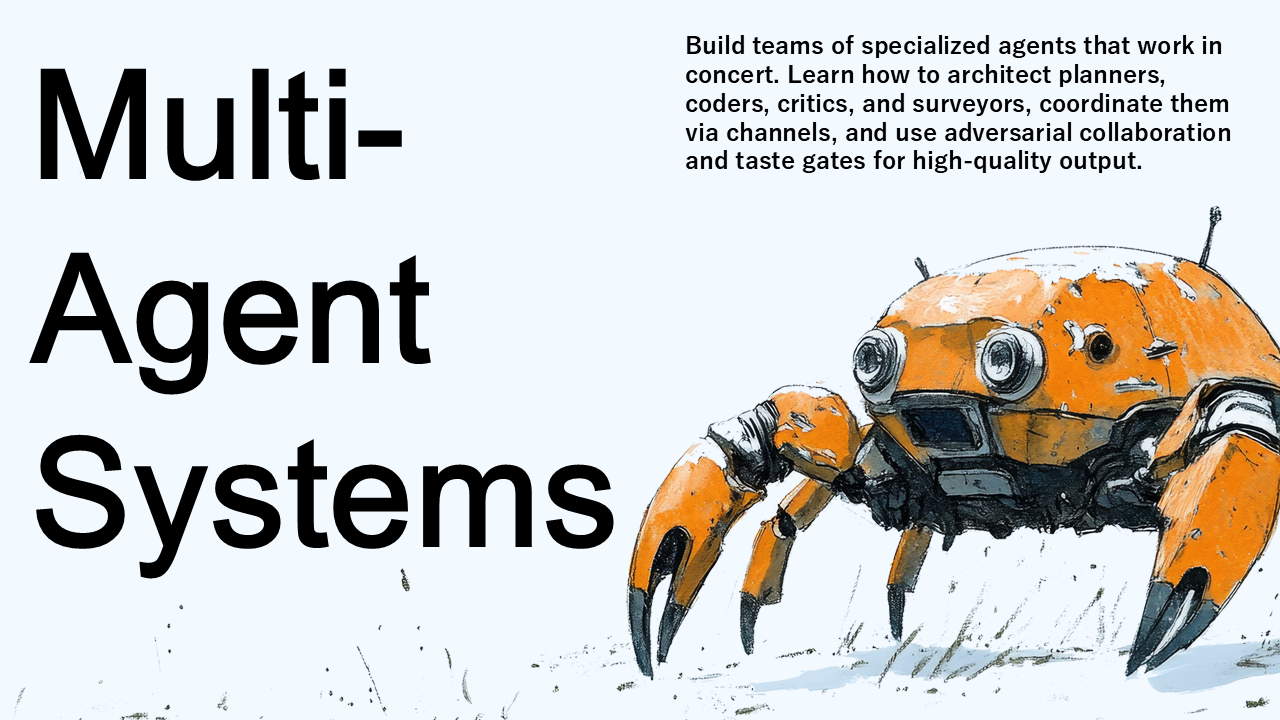
OpenClaw Engineering, Chapter 10: Multi-Agent Systems
Build teams of specialized agents that work in concert. Learn how to architect planners, coders, critics, and surveyors, coordinate them via channels, and use adversarial collaboration and taste gates for high-quality output.
2026-03-25
Frictionless SaaS, Chapter 3: Signup Design - Stop Interrogating People Before They Can Use Your Product
Chapter 3 of the Frictionless SaaS blog series. Why most SaaS signup forms are conversion killers, what the Minimum Viable Signup really looks like, and how the Progressive Commitment Model lets you collect every piece of information you want - without scaring users off at the door.
2026-03-24
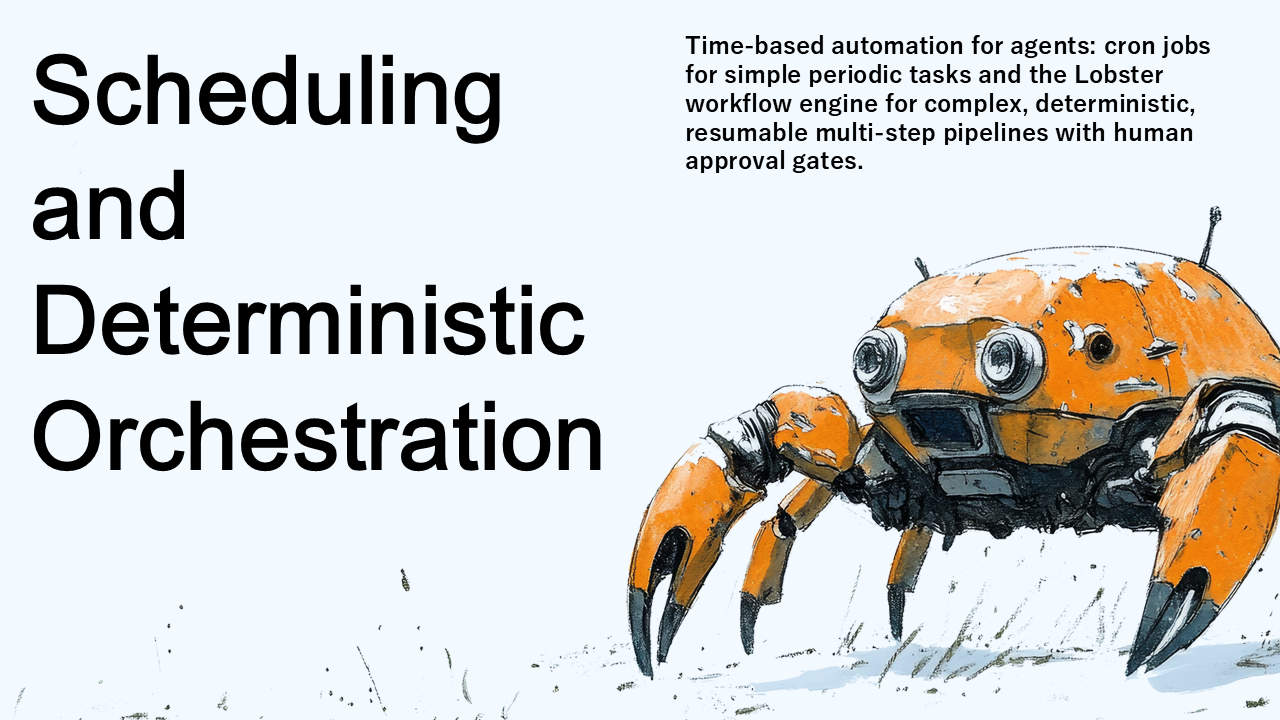
OpenClaw Engineering, Chapter 9: Scheduling and Deterministic Orchestration
Time-based automation for agents: cron jobs for simple periodic tasks and the Lobster workflow engine for complex, deterministic, resumable multi-step pipelines with human approval gates.
2026-03-24
Chapter 19 – Measuring AI Effectiveness
Chapter 19 of Master Claude Chat, Cowork and Code tackles the question every team eventually asks: is our AI actually working? Learn to build metrics frameworks, structured evaluations, and workflow acceleration measurements that prove (or disprove) AI's value.
2026-03-19
Chapter 17 – Guardrails and Governance
Chapter 17 of Master Claude Chat, Cowork and Code moves from understanding risks to implementing controls — permission isolation, tool allow-lists, human-in-the-loop approval workflows, validation hooks, and enterprise-grade audit logging.
2026-03-18
Chapter 13: Encapsulating Knowledge with Agent Skills — From Conversations to Autonomous Procedures
Chapter 13 of Master Claude Chat, Cowork and Code introduces Skills — reusable, encapsulated procedures that Claude executes autonomously. Covers SKILL.md structure, YAML frontmatter, trigger descriptions, and the Skills Library pattern for team distribution.
2026-03-14
Chapter 11: CI/CD Integration and Automation — Claude Code in Your Pipeline
Chapter 11 of Master Claude Chat, Cowork and Code shows how to deploy Claude Code into CI/CD pipelines — GitHub Actions, GitLab CI, automated PR reviews, security audits, documentation sync, cost management, and production safety patterns.
2026-03-12
Chapter 8: Scheduled Tasks and Autonomous Execution — Making Claude Work While You Sleep
Chapter 8 of Master Claude Chat, Cowork and Code covers scheduled automation with Claude Cowork — cron-based recurring workflows, sleep/connectivity handling, error strategies, and applying GTD principles to AI task automation.
2026-03-09
Chapter 7: Plugins and Domain Specialization — Turning Claude Into Your Organization's Expert
Chapter 7 of Master Claude Chat, Cowork and Code explores how plugins transform Claude from a generalist into a domain expert — with pre-built plugins for Sales, Finance, Marketing, and Legal, slash commands, and organization-managed customization.
2026-03-08
Chapter 6: What Is Claude Cowork? — The Desktop Agent That Touches Your Files
Chapter 6 of Master Claude Chat, Cowork and Code introduces Claude Cowork — a sandboxed desktop agent that automates file management, data extraction, and cross-application workflows on your local machine.
2026-03-07
Master Claude, Chapter 2: The Three Pillars of Claude — Chat, Cowork, and Code
Claude is not one product — it is three. Chat for reasoning, Cowork for desktop automation, Code for terminal-based development. Chapter 2 of Master Claude Chat, Cowork and Code explains the architecture of each and the decision framework for choosing the right one.
2026-03-03
4.4 When Elimination Fails
An in-depth, practical explanation of why Gaussian elimination fails in real numerical systems—covering zero pivots, instability, ill-conditioning, catastrophic cancellation, and singular matrices—and how these failures motivate the move to LU decomposition.
2025-09-21

Use Case: Sales Assistant Bot|Mastering Microsoft Teams Bots 6.3
Learn how to build a Sales Assistant Bot for Microsoft Teams. From surfacing leads to logging calls and syncing with CRMs, this section shows how bots can empower sales teams to move faster, close deals, and automate follow-ups — all within Teams.
2025-04-20
Use Case: Project Management Assistant Bot|Mastering Microsoft Teams Bots 6.2
Explore how to build a Project Management Assistant Bot for Microsoft Teams that delivers task summaries, reminders, and updates directly in the chat. Learn how this bot improves team productivity by integrating with tools like Jira or Trello and surfacing key information within the Teams workflow.
2025-04-19
Proactive Messaging|Mastering Microsoft Teams Bots 4.2
Learn how to build bots that initiate conversations in Microsoft Teams. This section explains proactive messaging — including when and how to use it, how to store conversation references, and best practices to ensure your bot helps without interrupting.
2025-04-12
Why Build Bots for Microsoft Teams?|Mastering Microsoft Teams Bots 1.1
Discover why Microsoft Teams bots are transforming the workplace. This section explores the real-world impact of building bots in Teams, from automating tasks and integrating external services to enabling context-aware digital assistants. Learn how bots can save time, boost productivity, and bring automation into the flow of daily work.
2025-04-02
Categories
Tags
Search Logs
Hello World bot 1185
IT assistant bot 1140
Deploy Teams bot to Azure 1137
Microsoft Bot Framework 1052
Teams bot development 1025
Teams production bot 1004
bot for sprint updates 994
Microsoft Teams Task Modules 979
Zendesk Teams integration 979
Teams app zip 977
Bot Framework Adaptive Card 973
Bot Framework example 964
Task Modules 961
Teams chatbot 955
Azure CLI webapp deploy 952
C 952
Teams bot packaging 947
Teams bot tutorial 946
Bot Framework proactive messaging 941
Graph API token 937
Bot Framework CLI 932
Adaptive Card Action.Submit 930
Bot Framework prompts 913
Azure App Service bot 908
Microsoft Graph 907
Azure Bot Services 883
Adaptive Cards 881
Azure bot registration 880
ServiceNow bot 866
proactive messages 814
Development & Technical Consulting
Working on a new product or exploring a technical idea? We help teams with system design, architecture reviews, requirements definition, proof-of-concept development, and full implementation. Whether you need a quick technical assessment or end-to-end support, feel free to reach out.
Contact Us