
{R}R Dev Notes
Found total of 61 articles.
The Engineering of Intent, Chapter 31: Vibe Coding in Data and ML
Chapter 31 of The Engineering of Intent blog series. Data and ML work is where AI-native velocity meets statistical thinking and slow feedback loops. A teaser on ETL graduated rollout, feature-leakage guards, model evaluation boundaries, and the churn-pipeline case study that split build-time (8 days) from validation-time (weeks).
2026-05-17
The Engineering of Intent, Chapter 30: Vibe Coding in the Frontend
Chapter 30 of The Engineering of Intent blog series. Frontend has a different shape — visual, fast-iterating — and specific failure modes around design systems, accessibility, state, and performance. A teaser on the four domains and the dashboard rebuild that shipped in eleven days.
2026-05-16
The Engineering of Intent, Chapter 29: Vibe Coding in the Backend
Chapter 29 of The Engineering of Intent blog series. Backends are unusually well suited to agentic development — but each subdomain has characteristic failure modes. A teaser on API design, migrations, job idempotency, caching, auth, and the billing-service rewrite that shipped in four months via extraction rather than vibes.
2026-05-15
Azure Front Door: a practical introduction
What Azure Front Door is, who it's for, what it costs, how it compares to Cloudflare and CloudFront, and a walkthrough of the settings that matter when putting it in front of an Azure App Service.
2026-05-11
The Engineering of Intent, Chapter 24: The Failure Mode Catalog
Chapter 24 of The Engineering of Intent blog series. Fifteen named failure modes I keep seeing in Vibe Coding practice, with remedies. A teaser on phantom confidence, silent scope creep, context amnesia, loop obsession, the yes-person agent, and the deprecation blind spot.
2026-05-10
The Engineering of Intent, Chapter 20: The Weekly Cadence
Chapter 20 of The Engineering of Intent blog series. Daily habits compound; weekly rituals keep the compounding honest. A teaser on the four weekly practices — the Friday Review, the Context Pack Audit, the Skill Refresh, and the Reading Hour — that separate sharp Vibe Coders from those who drift.
2026-05-06
The Engineering of Intent, Chapter 19: The End-of-Day Routine
Chapter 19 of The Engineering of Intent blog series. The last twenty minutes of your workday set up tomorrow. A teaser on the five-step end-of-day routine — handoff note, convention update, lesson capture, open-loop closure, and tomorrow's first task — plus the "one more thing" anti-pattern that undoes all of it.
2026-05-05
The Engineering of Intent, Chapter 13: VibeOps and CI/CD Evolution
Chapter 13 of The Engineering of Intent blog series. Static CI/CD was built for human-paced commits. AI-native velocity needs dynamic, context-aware, agent-literate pipelines. A teaser on VibeOps, context preservation across deployments, merge queues at velocity, and the ten-minute pipeline contract.
2026-04-29
The Engineering of Intent, Chapter 11: The Art of Agentic Debugging
Chapter 11 of The Engineering of Intent blog series. Debugging in the AI-native regime is archaeology — the code may have been written by an agent you supervised loosely. A teaser on the self-correction loop, control-flow visualization, bisection under velocity, and the caching heisenbug that took hours manually but fifteen minutes with the agent.
2026-04-27
The Engineering of Intent, Chapter 10: The Five-Layer Quality Gate Stack
Chapter 10 of The Engineering of Intent blog series. Every AI-generated change must pass five layers of automated gates before a human sees it. A teaser on linting, strict types, SAST, test synthesis, and agentic E2E — plus the anti-patterns that quietly invalidate the stack.
2026-04-26
The Engineering of Intent, Chapter 8: The Four Pillars of AI Architecture
Chapter 8 of The Engineering of Intent blog series. Every durable AI-native project has the same four pillars — Vibes, Specs, Skills, and Agents — and most teams over-invest in one and neglect the rest. A teaser on the pillars, the healthy cycle, and the rebalancing that cut a company's regression rate by 80%.
2026-04-24
The Engineering of Intent, Chapter 4: The Model Context Protocol (MCP)
Chapter 4 of The Engineering of Intent blog series. MCP is to agents what HTTP was to the early Web — a common protocol that turns bespoke integrations into reusable infrastructure. A teaser on host/client/server roles, the anatomy of a good tool, the six anti-patterns, and the security pitfalls every team trips over.
2026-04-20
The Engineering of Intent, Chapter 3: Context Momentum and Path Dependence
Chapter 3 of The Engineering of Intent blog series. Agents amplify project momentum — good patterns propagate, bad ones propagate just as fast. A teaser on the First Prompt Trap, context rot, the physics of convention drift, and the ten-thousand-dollar rule for decision rigor.
2026-04-19
The Engineering of Intent, Chapter 1: The Triadic Relationship Model
Chapter 1 of The Engineering of Intent blog series. Software used to be a dyad between engineer and machine. Now a third actor — the AI agent — has joined permanently. A teaser covering the Triadic Relationship Model, the CMDP view of software, and the six failure modes every AI-native team needs to name.
2026-04-17
Frictionless SaaS, Chapter 24: Anti-Patterns and Failure Modes
The last chapter of Frictionless SaaS is about the mistakes teams keep making, even when they know better. A teaser covering the Anti-Pattern Registry, the Feature Trap, and the additional failure modes that quietly erode good products.
2026-04-14
Frictionless SaaS, Chapter 21: Operations and Scalability Without Friction
Why growing SaaS companies hit a wall that is not a product problem or a sales problem — it is an operations problem. A teaser for Chapter 21 of Frictionless SaaS covering the Event-Driven Operations Architecture and the Scalability Without Headcount Principle.
2026-04-11
Frictionless SaaS Chapter 10: Data Lock-In and Network Lock-In
Chapter 10 preview of Frictionless SaaS: the Data Gravity Effect, the Network Lock-In Model, and how to build structural moats that make churn expensive without being manipulative.
2026-03-31
Frictionless SaaS Chapter 9: Eliminating Friction and Building Consistency
Chapter 9 preview of Frictionless SaaS: the Friction Audit Matrix, the Consistency Principle, perceived speed, and information ergonomics - the retention levers most teams ignore.
2026-03-30
Frictionless SaaS, Chapter 7: Behavioral Nudges - Guiding Users Without Nagging Them
Chapter 7 of the Frictionless SaaS blog series. How to build a behavioral nudge system that feels like a helpful friend instead of an annoying pop-up, and how the Re-engagement Cascade catches users before they fully churn - without spamming them.
2026-03-28
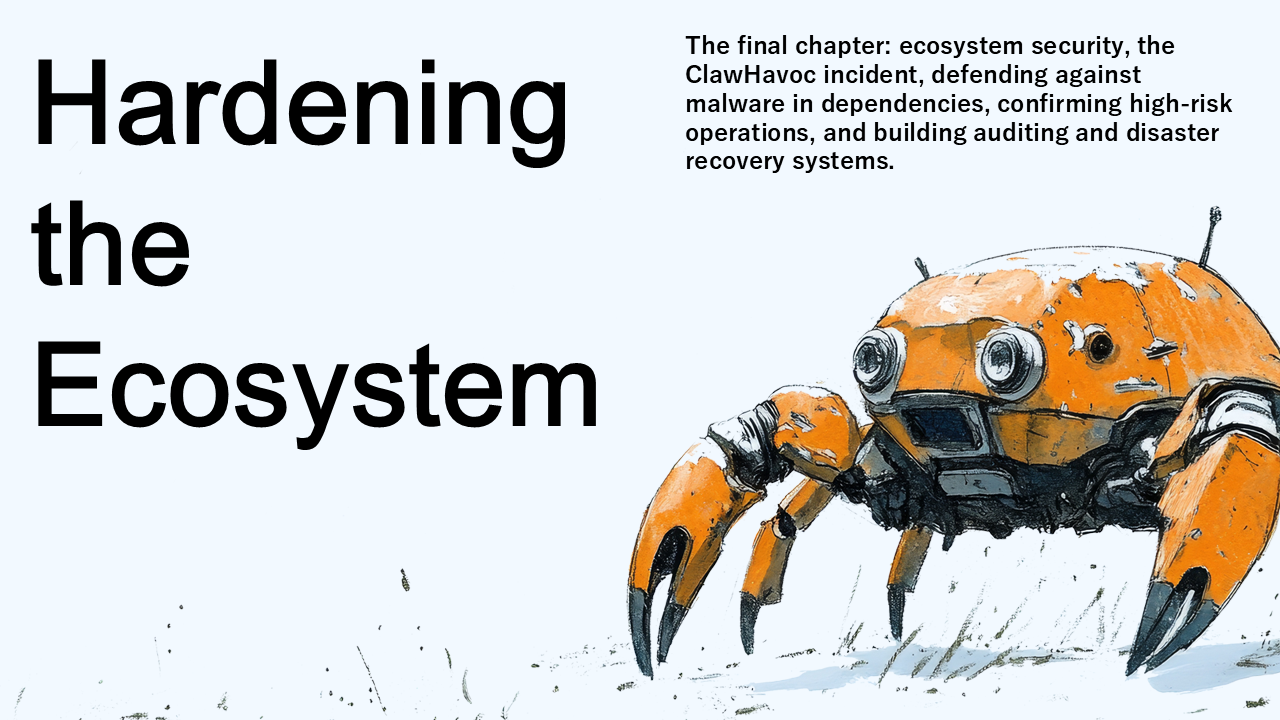
OpenClaw Engineering, Chapter 13: Hardening the Ecosystem
The final chapter: ecosystem security, the ClawHavoc incident, defending against malware in dependencies, confirming high-risk operations, and building auditing and disaster recovery systems.
2026-03-28
Chapter 22: Identity in AI Systems — When the "User" Is an Agent
Chapter 22 of the OpenID: Modern Identity series — identity for AI systems: LLM authentication, the Model Context Protocol (MCP), Dynamic Client Registration for ephemeral agents, and the emerging patterns for trusting autonomous non-human actors.
2026-03-28
OpenClaw Engineering, Chapter 12: The Agentic Zero-Trust Architecture
Zero-trust security for autonomous agents: managing blast radius, implementing three-tier defense (pre-action, in-action, post-action), container isolation, and defending against indirect prompt injection attacks.
2026-03-27
Frictionless SaaS, Chapter 5: Just-In-Time Learning - Teach Users at the Exact Moment They Need It
Chapter 5 of the Frictionless SaaS blog series. Users don't want to learn your product - they want to solve their problem. Just-In-Time Learning teaches at the moment of need, and the Skippable Onboarding Principle respects the users who already know what they're doing.
2026-03-26
OpenClaw Engineering, Chapter 11: Continuous Learning with OpenClaw-RL
How OpenClaw-RL extracts training signals from conversations and uses them to improve agent behavior continuously. From binary feedback to token-level distillation, agents learn from every interaction without retraining the base model.
2026-03-26
Frictionless SaaS, Chapter 4: The First Ten Minutes - Designing the Session That Decides Everything
Chapter 4 of the Frictionless SaaS blog series. The first ten minutes of a user's first session decide whether they activate or silently churn. The First Session Blueprint and the Empty State Opportunity are the two design patterns that separate products users love from products users forget.
2026-03-25
Chapter 19: Observability and Operations — Identity You Can Actually Run
Chapter 19 of the OpenID: Modern Identity series — observability and operations for identity systems: structured authentication logging with correlation IDs, distributed tracing of login flows, and immutable audit trails aligned to regulatory requirements.
2026-03-25
Frictionless SaaS, Chapter 3: Signup Design - Stop Interrogating People Before They Can Use Your Product
Chapter 3 of the Frictionless SaaS blog series. Why most SaaS signup forms are conversion killers, what the Minimum Viable Signup really looks like, and how the Progressive Commitment Model lets you collect every piece of information you want - without scaring users off at the door.
2026-03-24

Chapter 18: Claims Design and Privacy — Identity Data Without Overshare
Chapter 18 of the OpenID: Modern Identity series — designing custom claims with namespacing and size discipline, attribute mapping across providers into a single internal schema, and privacy by design through minimization, selective disclosure, pairwise identifiers, and GDPR-ready retention.
2026-03-24
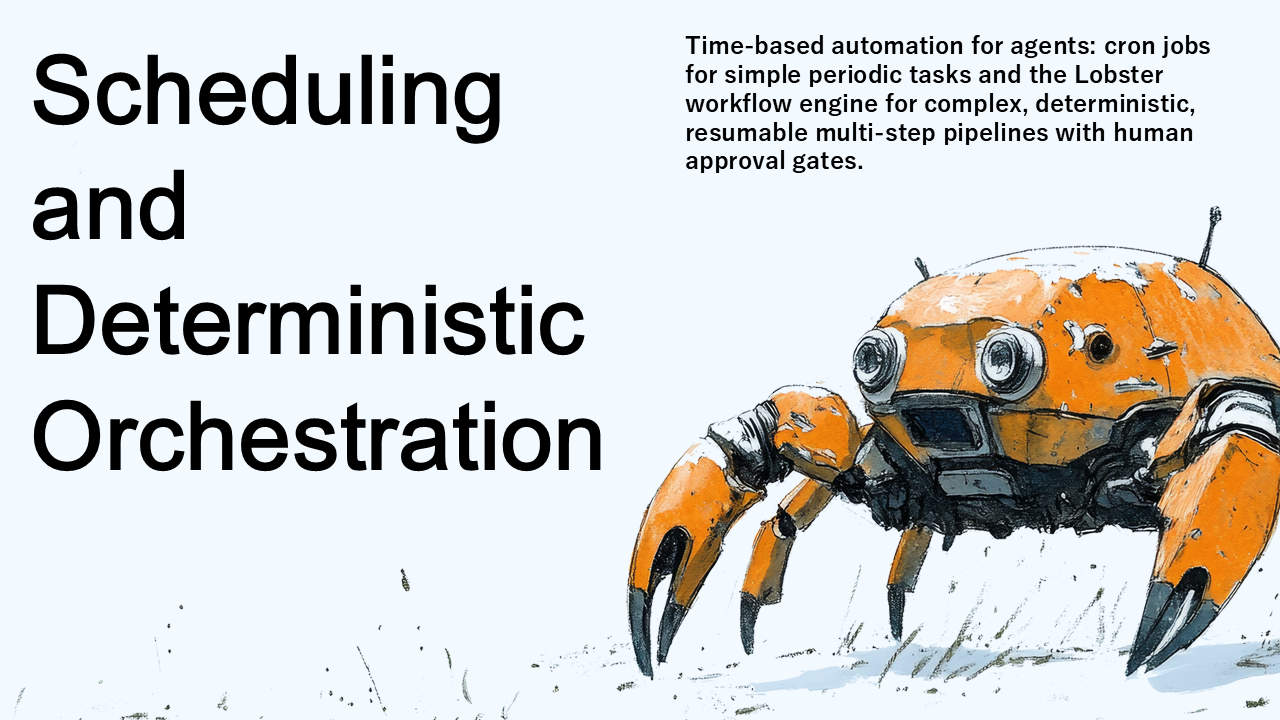
OpenClaw Engineering, Chapter 9: Scheduling and Deterministic Orchestration
Time-based automation for agents: cron jobs for simple periodic tasks and the Lobster workflow engine for complex, deterministic, resumable multi-step pipelines with human approval gates.
2026-03-24
OpenClaw Engineering, Chapter 8: Event-Driven Workflows
How OpenClaw agents spring into action automatically via hooks, webhooks, and TypeScript handlers—without waiting for human invocation. From internal events to CI/CD pipelines.
2026-03-23
OpenClaw Engineering, Chapter 6: Extending Capabilities with SKILL.md
The anatomy of SKILL.md files in OpenClaw: how to author reusable, versioned instruction sets with YAML frontmatter, dependencies, and explicit procedural guidance for agents.
2026-03-21
Chapter 15: FAPI and High-Stakes Security — When the Defaults Aren't Enough
Chapter 15 of the OpenID: Modern Identity series — FAPI for high-stakes scenarios: what FAPI 1.0 Advanced and 2.0 require, Pushed Authorization Requests (PAR), JWT-Secured Authorization Requests (JAR), and migrating from FAPI 1.0 Advanced to FAPI 2.0.
2026-03-21
Chapter 20 – The Next Decade of AI Coworkers
Chapter 20 of Master Claude Chat, Cowork and Code looks ahead — from conversational AI to embedded infrastructure, from chat interfaces to computer use, and the trust and responsibility questions that will define how AI reshapes work over the next decade.
2026-03-20
Frictionless SaaS: The Complete Series Index — Your Guide to All 24 Chapters
The complete reader's guide to the Frictionless SaaS blog series. An introduction to the thesis — that in the AI era, features are commoditized and experience is the only lasting competitive advantage — plus direct links to all 25 posts across the 24 chapters of the book.
2026-03-20
Chapter 13: Threat Modeling OpenID Systems — Thinking Like the Adversary
Chapter 13 of the OpenID: Modern Identity series — threat modeling for OIDC systems: token theft vectors and defenses, replay attacks and nonce validation, CSRF and state parameter mismanagement, redirect abuse and mix-up attacks.
2026-03-19
OpenClaw Engineering, Chapter 4: Managing the Gateway and Models
Configuring your running gateway with the onboard wizard, diagnostics, and openclaw.json. How to connect model providers, manage API keys securely, and route different queries to different models.
2026-03-19
Chapter 18 – Sub-Agents and Multi-Agent Collaboration
Chapter 18 of Master Claude Chat, Cowork and Code explores multi-agent architecture — how to decompose complex problems into specialized sub-agents, coordinate parallel execution, and synthesize results into coherent outputs.
2026-03-18
Chapter 17 – Guardrails and Governance
Chapter 17 of Master Claude Chat, Cowork and Code moves from understanding risks to implementing controls — permission isolation, tool allow-lists, human-in-the-loop approval workflows, validation hooks, and enterprise-grade audit logging.
2026-03-18
OpenClaw Engineering, Chapter 3: Deployment and Environment Setup
From local development to production: installing Node.js 22+, setting up Docker containers, and deploying OpenClaw to the cloud via AWS Lightsail or VPS providers.
2026-03-18
Chapter 12: User Lifecycle Management — Provisioning, SCIM, and the De-Provisioning Problem
Chapter 12 of the OpenID: Modern Identity series — user lifecycle management: JIT and bulk provisioning, SCIM for cross-system sync, de-provisioning done right, role mapping from IdP claims, and identity architecture for multi-tenant SaaS.
2026-03-18
Chapter 16 – Execution Risks and Isolation
Chapter 16 of Master Claude Chat, Cowork and Code confronts the real security risks of AI systems that execute commands and manipulate files — from command injection to data exposure — and explains the isolation models that keep things safe.
2026-03-17
OpenClaw Engineering, Chapter 2: Anatomy of the Agent Brain
How OpenClaw agents think through their identity files, two-layer memory system, and proactive task scheduling. A deep dive into SOUL.md, AGENTS.md, USER.md, MEMORY.md, HEARTBEAT.md, and semantic memory via Supermemory.
2026-03-17
Chapter 15 – Managing Context Rot and Entropy
Chapter 15 of Master Claude Chat, Cowork and Code tackles the silent failure mode of long-running AI sessions — context rot. Learn strategies for context compression, structured state management, and thinking like an operations team to keep Claude sharp over time.
2026-03-16
OpenClaw Engineering, Chapter 1: The OpenClaw Paradigm
The first chapter teaser in a new series on OpenClaw Engineering. Why autonomous agents need a different foundation, the four-layer architecture (Gateway, Nodes, Channels, Skills), and the three principles that hold it all together.
2026-03-16
Chapter 10: Single Sign-On at Scale — Identity as Infrastructure
Chapter 10 of the OpenID: Modern Identity series — running identity at organizational scale: corporate IdPs (AD, Entra ID), the CIAM vendor ecosystem (Okta, Auth0, Entra ID), multi-tenant isolation, account linking, and external user access.
2026-03-16
Chapter 13: Encapsulating Knowledge with Agent Skills — From Conversations to Autonomous Procedures
Chapter 13 of Master Claude Chat, Cowork and Code introduces Skills — reusable, encapsulated procedures that Claude executes autonomously. Covers SKILL.md structure, YAML frontmatter, trigger descriptions, and the Skills Library pattern for team distribution.
2026-03-14
Chapter 8: Securing Backend APIs — Bearer Tokens, Scopes, and Service-to-Service
Chapter 8 of the OpenID: Modern Identity series — securing backend APIs with bearer tokens, scope design for least privilege, token introspection versus local JWT validation, and the three mechanisms for service-to-service authentication.
2026-03-14
Chapter 7: Your First OpenID Application — The Handshake, End to End
Chapter 7 of the OpenID: Modern Identity series — building a real OIDC login end to end: the minimal flow, state and nonce, strict redirect URI matching, sessions from tokens, and the three flavors of logout.
2026-03-13
Chapter 12: CLAUDE.md — Designing Guardrails That Shape How Claude Thinks
Chapter 12 of Master Claude Chat, Cowork and Code explores CLAUDE.md as a living constitution for AI behavior — positive constraints over prohibitions, complete financial and startup examples, instruction decay, hierarchical files, and anti-patterns to avoid.
2026-03-13
Chapter 11: CI/CD Integration and Automation — Claude Code in Your Pipeline
Chapter 11 of Master Claude Chat, Cowork and Code shows how to deploy Claude Code into CI/CD pipelines — GitHub Actions, GitLab CI, automated PR reviews, security audits, documentation sync, cost management, and production safety patterns.
2026-03-12
Categories
Tags
Search Logs
Hello World bot 1185
IT assistant bot 1140
Deploy Teams bot to Azure 1137
Microsoft Bot Framework 1052
Teams bot development 1025
Teams production bot 1004
bot for sprint updates 994
Microsoft Teams Task Modules 979
Zendesk Teams integration 979
Teams app zip 977
Bot Framework Adaptive Card 973
Bot Framework example 964
Task Modules 961
Teams chatbot 955
Azure CLI webapp deploy 952
C 952
Teams bot packaging 947
Teams bot tutorial 946
Bot Framework proactive messaging 941
Graph API token 937
Bot Framework CLI 932
Adaptive Card Action.Submit 930
Bot Framework prompts 913
Azure App Service bot 908
Microsoft Graph 907
Azure Bot Services 883
Adaptive Cards 881
Azure bot registration 880
ServiceNow bot 866
proactive messages 814
Development & Technical Consulting
Working on a new product or exploring a technical idea? We help teams with system design, architecture reviews, requirements definition, proof-of-concept development, and full implementation. Whether you need a quick technical assessment or end-to-end support, feel free to reach out.
Contact Us