
{R}R Dev Notes
Found total of 36 articles.
The Forward Deployed Engineer, Chapter 4: The Technical Bar
Chapter 4 of The Forward Deployed Engineer blog series. The FDE is, first and last, an engineer. A teaser on the four technical primitives, the non-obvious skills, what you don't need to be, and the four-round interview that actually tests for it.
2026-05-30
The Engineering of Intent, Chapter 40: The De-Vibing Protocol — Stabilization Sprints for Production
Chapter 40 of The Engineering of Intent blog series. The final chapter and the remedy for the autocomplete trap — a two-week, agent-heavy stabilization sprint that moves a fast vibes-only build from 90/10 to 50/50 without halting feature development. A teaser on recognizing when you need it, the four tracks, and the three post-sprint disciplines.
2026-05-26
The Engineering of Intent, Chapter 37: Context Scaling — Just-In-Time Retrieval for Million-Line Codebases
Chapter 37 of The Engineering of Intent blog series. Hand-authored Context Packs don't scale past a million lines. A teaser on Just-In-Time Context, retrieval via MCP, the three governors that prevent runaway retrieval, and a concrete pipeline from a 3.8M-line codebase.
2026-05-23
The Engineering of Intent, Chapter 26: Checklists for the Working Engineer
Chapter 26 of The Engineering of Intent blog series. Six one-page checklists I reach for mid-task — new feature, PR, deploy, post-incident, Context Pack health, and interview. A teaser on why checklists are most valuable when you're most confident you don't need them.
2026-05-12
The Engineering of Intent, Chapter 25: The Debugging Playbook
Chapter 25 of The Engineering of Intent blog series. A flipbook of the ten classes of bug in the AI-native regime, each with investigation pattern and worked example. A teaser on deterministic-but-wrong, intermittent, regression-after-refactor, concurrency, configuration, and the "it cannot happen" bug.
2026-05-11
The Engineering of Intent, Chapter 24: The Failure Mode Catalog
Chapter 24 of The Engineering of Intent blog series. Fifteen named failure modes I keep seeing in Vibe Coding practice, with remedies. A teaser on phantom confidence, silent scope creep, context amnesia, loop obsession, the yes-person agent, and the deprecation blind spot.
2026-05-10
The Engineering of Intent, Chapter 23: Context Pack Recipes
Chapter 23 of The Engineering of Intent blog series. Twelve Context Pack recipes for the situations you actually build packs for — greenfield, legacy monolith, migration, microservices, security, debugging, refactor, and more. A teaser on size budgets, disciplined exclusions, and the kitchen-sink reflex that drowns agents.
2026-05-09
The Engineering of Intent, Chapter 21: Working With Teammates (Human and Agentic)
Chapter 21 of The Engineering of Intent blog series. Vibe Coding is only solo in the narrowest sense — every piece of code has reviewers and maintainers, some human, some agent. A teaser on the review contract, pair Vibe Coding, handing off to agents without walking off a cliff, and the explicit mentorship that still works in the AI-native era.
2026-05-07
The Engineering of Intent, Chapter 13: VibeOps and CI/CD Evolution
Chapter 13 of The Engineering of Intent blog series. Static CI/CD was built for human-paced commits. AI-native velocity needs dynamic, context-aware, agent-literate pipelines. A teaser on VibeOps, context preservation across deployments, merge queues at velocity, and the ten-minute pipeline contract.
2026-04-29
The Engineering of Intent, Chapter 12: The GenDD Pod
Chapter 12 of The Engineering of Intent blog series. Three people, continuous flow, almost no ceremony — the team structure that actually ships AI-native work sustainably. A teaser on the Agentic Product Lead, Engineer, and QA roles, the transition from Agile, and the case study where a SaaS company went from 72 engineers to 24.
2026-04-28
The Engineering of Intent, Chapter 11: The Art of Agentic Debugging
Chapter 11 of The Engineering of Intent blog series. Debugging in the AI-native regime is archaeology — the code may have been written by an agent you supervised loosely. A teaser on the self-correction loop, control-flow visualization, bisection under velocity, and the caching heisenbug that took hours manually but fifteen minutes with the agent.
2026-04-27
The Engineering of Intent, Chapter 10: The Five-Layer Quality Gate Stack
Chapter 10 of The Engineering of Intent blog series. Every AI-generated change must pass five layers of automated gates before a human sees it. A teaser on linting, strict types, SAST, test synthesis, and agentic E2E — plus the anti-patterns that quietly invalidate the stack.
2026-04-26
The Engineering of Intent, Chapter 7: The GenDD Execution Loop
Chapter 7 of The Engineering of Intent blog series. Generative-Driven Development replaces your ceremony set with a fractal five-step loop: Context, Plan, Confirm, Execute, Validate. A teaser on each step, what goes wrong when it's skipped, and the payments team that cut one-hour cycles down to ten minutes.
2026-04-23
The Engineering of Intent, Chapter 2: Cognitive Load and Material Disengagement
Chapter 2 of The Engineering of Intent blog series. When the agent does most of the typing, the real failure mode is the engineer who has stopped engaging. A teaser on material disengagement, impressionistic scanning, the autocomplete trap, decision fatigue, and the seven habits of engaged engineers.
2026-04-18
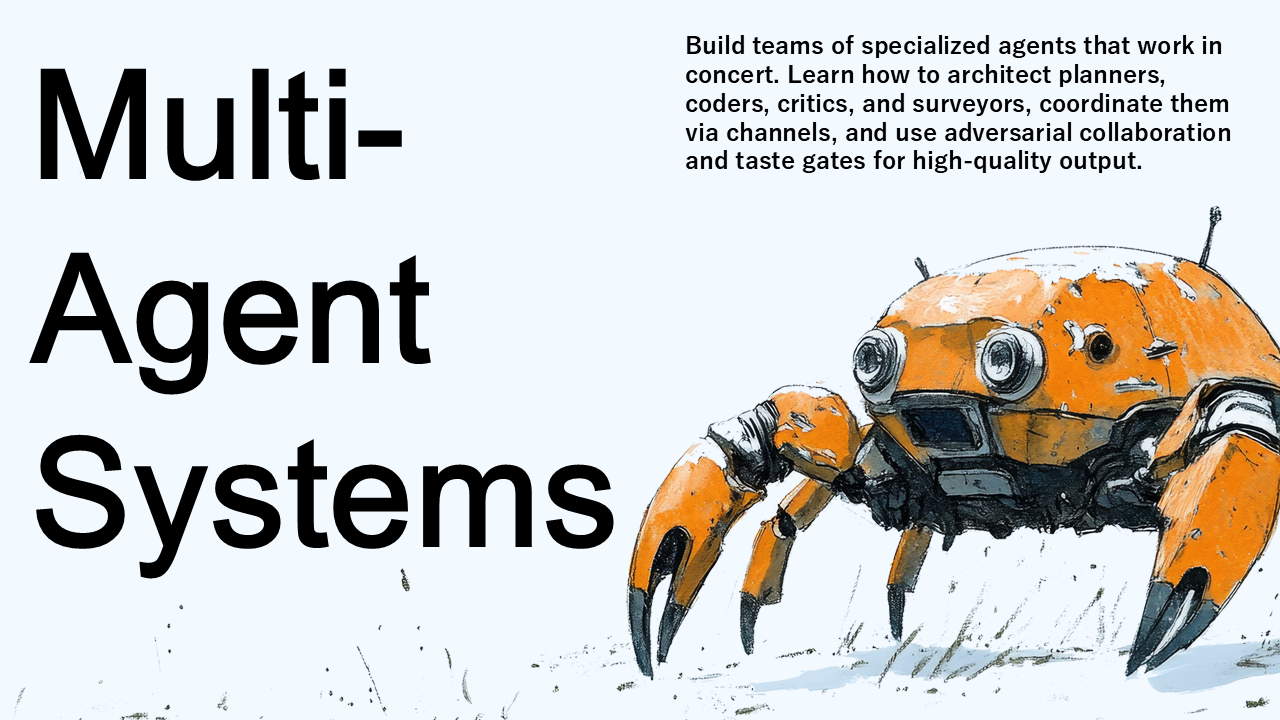
OpenClaw Engineering, Chapter 10: Multi-Agent Systems
Build teams of specialized agents that work in concert. Learn how to architect planners, coders, critics, and surveyors, coordinate them via channels, and use adversarial collaboration and taste gates for high-quality output.
2026-03-25
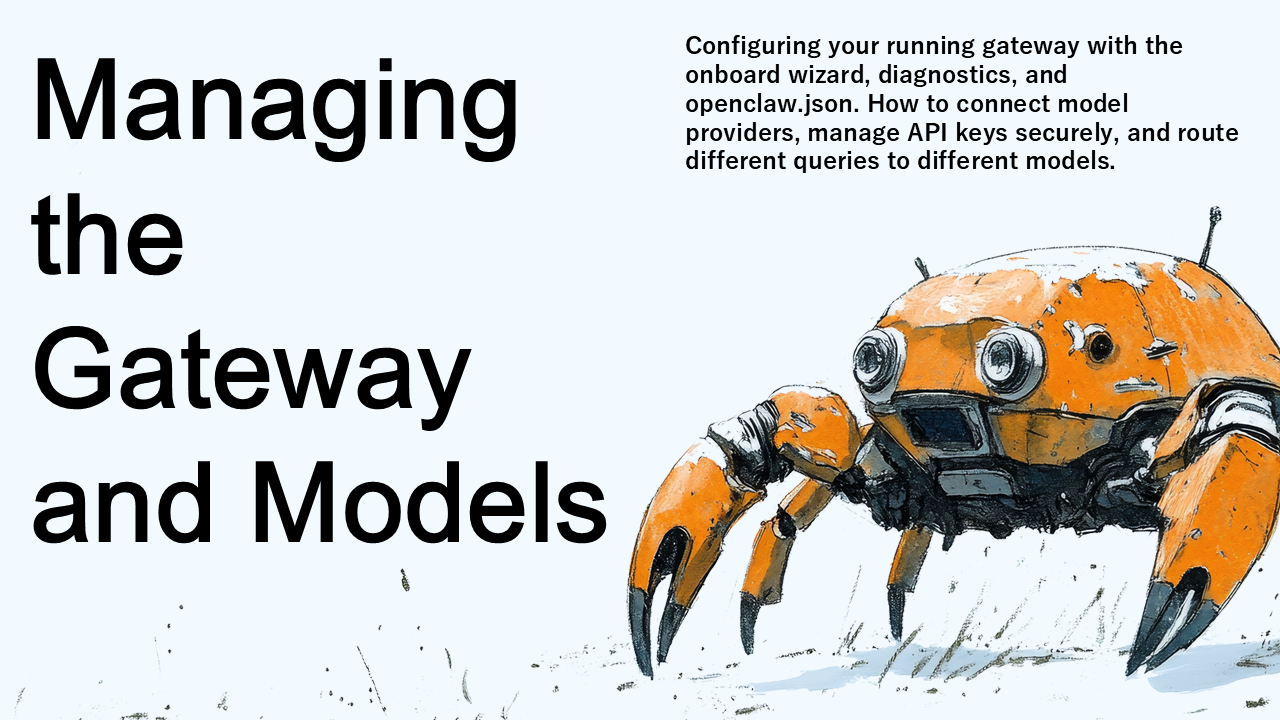
OpenClaw Engineering, Chapter 4: Managing the Gateway and Models
Configuring your running gateway with the onboard wizard, diagnostics, and openclaw.json. How to connect model providers, manage API keys securely, and route different queries to different models.
2026-03-19
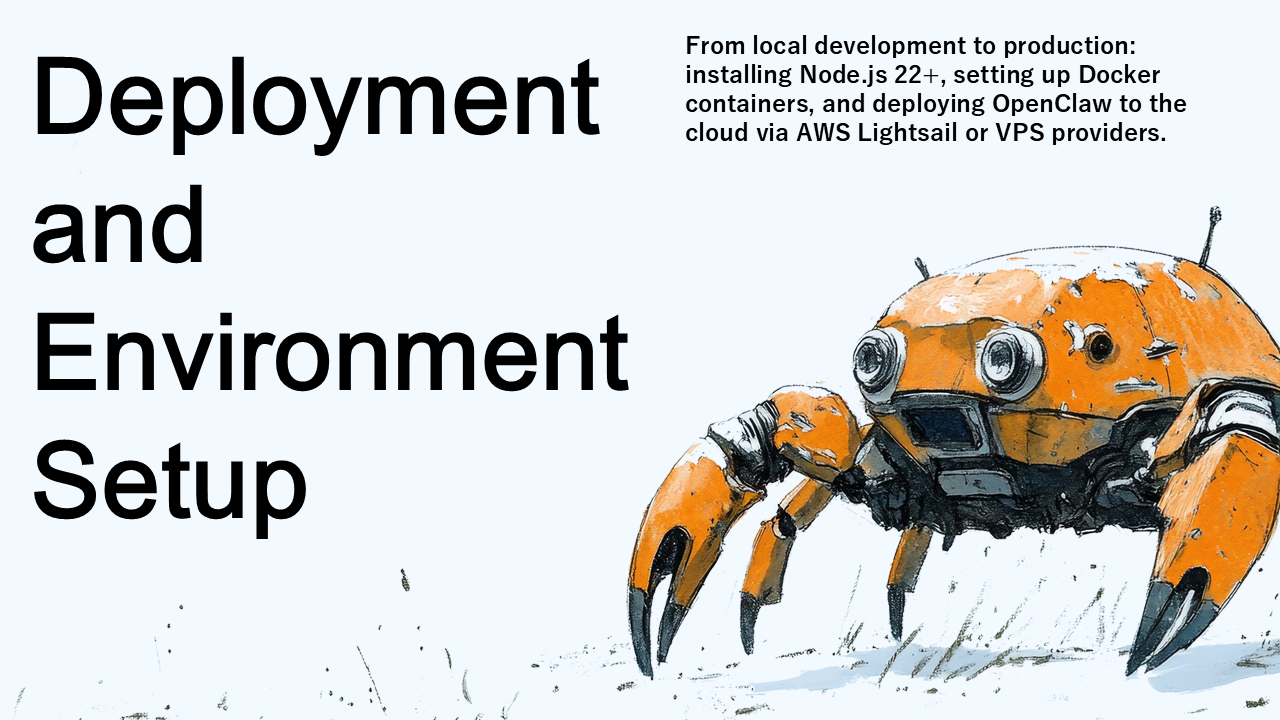
OpenClaw Engineering, Chapter 3: Deployment and Environment Setup
From local development to production: installing Node.js 22+, setting up Docker containers, and deploying OpenClaw to the cloud via AWS Lightsail or VPS providers.
2026-03-18
Chapter 8: Scheduled Tasks and Autonomous Execution — Making Claude Work While You Sleep
Chapter 8 of Master Claude Chat, Cowork and Code covers scheduled automation with Claude Cowork — cron-based recurring workflows, sleep/connectivity handling, error strategies, and applying GTD principles to AI task automation.
2026-03-09
Master Claude, Chapter 3: Understanding Entropy and Prompting Fundamentals — Why Your Prompts Fail and How to Fix Them
Chapter 3 of Master Claude Chat, Cowork and Code explains why some prompts work and others fail — through the lens of entropy and probability. Covers XML-structured prompting, chain-of-thought reasoning, multishot examples, and a standard prompt template you can use immediately.
2026-03-04
Master Claude, Chapter 2: The Three Pillars of Claude — Chat, Cowork, and Code
Claude is not one product — it is three. Chat for reasoning, Cowork for desktop automation, Code for terminal-based development. Chapter 2 of Master Claude Chat, Cowork and Code explains the architecture of each and the decision framework for choosing the right one.
2026-03-03
Art of Coding, Chapter 17: AI, Automation, and the Role of the Engineer
How AI changes engineering roles. Why automation removes drudgery but makes human judgment more valuable, and what "curation" means for the future programmer.
2026-01-15
Art of Coding, Part VII: Beyond Today
Introduction to Part VII. As AI writes more code, what becomes the engineer's irreplaceable role? A look at how automation transforms—but doesn't diminish—the craft.
2026-01-14
Art of Coding, Chapter 16: Ethics and Longevity
How ethics and longevity intertwine in code. Why the systems you write today remain your responsibility for years, and how empathy shapes sustainable software.
2026-01-13
Art of Coding, Chapter 15: Code as a Team Sport
Code as a team sport: shared ownership, documentation as craft, and respecting the reader. The human practices that make software sustainable and teams thrive.
2026-01-12
Art of Coding, Chapter 10: Anti-Patterns to Avoid
Anti-patterns are the structural traps that silently erode codebases. Learning to recognize them early is one of the most valuable skills a developer can have.
2026-01-05
Art of Coding, Chapter 7: Error Handling and Resilience
Designing for failure, not avoiding it. How graceful error handling, clear logging, and balanced defense build systems that endure.
2026-01-01
Art of Coding, Chapter 5: Consistency and Style
Consistency is kindness. How coding standards, formatters, and idiomatic style shape code that teams can actually live with.
2025-12-29
Art of Coding, Chapter 4: Maintainability and Scalability
How to build code that bends instead of breaks, systems that grow without collapsing, and anticipate change without over-engineering.
2025-12-28
Art of Coding, Part II: Principles of Clarity
Part II introduces clarity as the compass of software: readability, maintainability, and the consistency that makes teams move faster.
2025-12-26
Art of Coding, Chapter 1: Code That Speaks
Chapter 1 of the Art of Coding series. Why beauty in code is not decoration but survival — clarity, empathy, efficiency, and what separates code that works from code that lasts. Plus: what AI-generated code means for craftsmanship.
2025-12-24
7.2 Householder Reflections
A clear, intuitive, book-length explanation of Householder reflections and why they form the foundation of modern QR decomposition. Learn how reflections overcome the numerical instability of Gram–Schmidt and enable stable least-squares solutions across ML, statistics, and scientific computing.
2025-10-03
3.2 Measuring Errors
A clear and intuitive guide to absolute error, relative error, backward error, and how numerical errors propagate in real systems. Essential for understanding stability, trustworthiness, and reliability in scientific computing, AI, and machine learning.
2025-09-14
Chapter 3 — Computation & Mathematical Systems
A clear, insightful introduction to numerical computation—covering norms, error measurement, conditioning vs stability, and the gap between mathematical algorithms and real implementations. Essential reading for anyone building AI, optimization, or scientific computing systems.
2025-09-12
Numerical Linear Algebra: Understanding Matrices and Vectors Through Computation
Learn how linear algebra actually works inside real computers. A practical guide to LU, QR, SVD, stability, conditioning, and the numerical foundations behind modern AI and machine learning.
2025-09-01
Monitoring, Logging, and Telemetry|Mastering Microsoft Teams Bots 5.3
Learn how to monitor and support your Microsoft Teams bot in production using logging, Azure Application Insights, and alerts. This section shows how to track user events, diagnose failures, and create telemetry that makes your bot reliable and supportable.
2025-04-17
Deploying to Azure|Mastering Microsoft Teams Bots 5.1
Learn how to deploy your Microsoft Teams bot to Azure for production use. This section walks through setting up an Azure App Service, configuring environment variables, connecting to Bot Channels Registration, and testing your bot in the cloud.
2025-04-15
Categories
Tags
Search Logs
Hello World bot 1239
IT assistant bot 1210
Deploy Teams bot to Azure 1207
Microsoft Bot Framework 1105
Teams bot development 1085
Teams production bot 1075
bot for sprint updates 1061
Zendesk Teams integration 1048
Teams app zip 1044
Microsoft Teams Task Modules 1027
Teams chatbot 1024
Bot Framework Adaptive Card 1022
Teams bot tutorial 1013
Bot Framework example 1008
Task Modules 1007
Teams bot packaging 1005
Bot Framework proactive messaging 995
C 993
Graph API token 991
Bot Framework CLI 978
Azure CLI webapp deploy 976
Bot Framework prompts 971
Adaptive Card Action.Submit 965
Azure App Service bot 952
Microsoft Graph 935
Azure Bot Services 934
Adaptive Cards 906
ServiceNow bot 906
Azure bot registration 904
identity in Teams 875
Development & Technical Consulting
Working on a new product or exploring a technical idea? We help teams with system design, architecture reviews, requirements definition, proof-of-concept development, and full implementation. Whether you need a quick technical assessment or end-to-end support, feel free to reach out.
Contact Us